|
Amalgamated Bank |
For nearly a century, Amalgamated Bank has served as America’s socially responsible bank. Rooted firmly in the labor movement, we are a champion of working people and proudly support the forward-thinking organizations, companies and individuals across the country who are working to make the world more just, compassionate and sustainable. We are America’s largest certified B Corp bank and a member of the Global Alliance for Banking on Values. We don’t just have a mission. We are on a mission: to support those who support others, to invest in progressive and impactful causes and to advocate true financial opportunity for all.
Our majority area of impact is through our social and environmental products and services. As a green leader in the financial industry, we recognize that all people and businesses have a role to play in helping build a clean and just economy. We are proud of offer products and programs that align with our mission such as:
- We have pledged to double our portfolio to environmentally and socially responsible companies by the year 2020 from $350 million to $700 million.
- We offer personal products such as the Give Back Checking/Savings accounts, Donate the Change ATM card; Solar HELOC Loan, for example. Through Amalgamated Investment Services, we offer investment opportunities designed to help the bottom line and create lasting change, including Aria: 100% Fossil Free Portfolio — Contains no investments in coal companies, oil and gas producers or fossil-fired utilities
- We have strict policies about not lending money to any company that pollutes the planet
- Working with the GABV, we are the first US bank to commit to measure carbon outputs of our lending portfolio
- Together with D.C.’s Property Assessed Clean Energy Program, we helped finance the preservation of 84 units of affordable housing in the Phyllis Wheatley YWCA. The outcome will generate 60 kilowatts of solar power and decrease annual utility bills by $6,000.
- As shareholders, we successfully persuaded multiple companies to assess and report on becoming net-zero carbon in line with the Paris Climate Agreement, including CarMax, GameStop and Lowe’s.
- We received South Pole’s Climate Neutral label based on our commitment to reduce our impact on the environment through the purchase of high quality renewable energy and carbon credits.
|
|
The Green (Thumb) New Deal: “Climate Victory Gardens” Tops 1,000 Milestone, Green America Releases New How-To-Guide |
WASHINGTON, DC – March 13, 2019 – Green America marked a major milestone this month: over 1,000 registered Climate Victory Gardens in the U.S., a major achievement on the road to the target for 2019 of 5,000 such carbon-capturing plots for fruit and vegetables. The existing 1,100 Climate Victory Gardens already equal 140 football fields of healthy plants that are healing the soil. Green America took note of the occasion to release Climate Victory Gardening 101: A toolkit for growing healthy food for a healthy planet.
The Climate Victory Garden 101 Toolkit details step-by-step instructions for planting a Climate Victory Garden and 10 carbon capturing practices.
Climate Victory Gardens were inspired by the “Victory Gardens” planted during WWI and WWII. By 1944, nearly
20 million victory gardens produced eight million tons of food to feed Americans at home and for the troops abroad. The Climate Victory Garden campaign seeks to recreate this spirit to empower Americans to take immediate action on climate change, right in their own backyards.
The announcement comes as U.S. gardening levels are hitting an all-time high. According to the National Gardening Survey, 77 percent of American households are gardening, and Millennials are increasingly taking part. Green America’s Climate Victory Gardens program and toolkit show them how to practice gardening in a way that creates healthy soils that can help to reverse climate change.
“The climate change data is clear, and we all need to take action to protect the planet,” said Jes Walton, food campaigns manager at Green America. “If you’re looking for a way to reduce your impact on the climate, then Climate Victory Gardens are one great way to do your part—the amazing fruit and vegetables you grow will be a bonus. We like to think of what we are doing as the Green (Thumb) New Deal!”
“Climate Victory Gardens are a great way to address two major problems at once: climate change and the lack of access to healthy foods faced by millions of Americans,” said Jillian Semaan, food campaigns director at Green America. “We’re exciting to see people planting Climate Victory Gardens in communities across the U.S. and around the world, helping people eat fresh food while sequestering carbon.”
“I believe that growing things, especially our own food, is an act of preservation and will ultimately save us,” said Catherine M.F., who has a Climate Victory Garden in Minneapolis.
“I feel connected to the earth and to myself when I am working in my garden, it’s my meditation,” said Yolanda W., who has a Climate Victory Garden in Colorado.
“I’m excited to supplement my family’s food with fresh herbs and produce that we grow. It makes a positive difference for us,” said Monica F., who has a Climate Victory Garden in Arlington, Virginia.
The Climate Victory Garden 101 Toolkit outlines the following carbon-capturing practices for Americans looking to transform their home garden into a Climate Victory Garden:
- Grow Edible Plants
- Keep Soils Covered
- Compost
- Encourage Biodiversity
- Plant Perennials
- Ditch the Chemicals
- Integrate Crops and Animals
- Use People Power, Not Mechanization
- Rotate Plants and Crops
- Get to Know Your Garden
More information on Climate Victory Gardens is available here: https://www.greenamerica.org/climate-victory-gardens. Climate Victory Gardens across the U.S. are being mapped here: https://www.greenamerica.org/climate-victory-gardens-map.
On March 20, Green America will hold a webinar on Climate Victory Garden planning, design, and how to grow $700 worth of produce with limited space. The webinar is free and open to the public. Advance registration is required.
ABOUT GREEN AMERICA
Green America is the nation’s leading green economy organization. Founded in 1982, Green America provides the economic strategies, organizing power and practical tools for businesses and individuals to solve today’s social and environmental problems. http://www.GreenAmerica.org
|
|
Climate Victory Gardens guide |
|
|
Issue #114, Green American Magazine - Your Home, Detoxed! (Spring 2019) |
|
|
10 Carbon Capturing Practices |
|
|
Need Help in your Climate Victory Garden? Find (or Become!) a Master Gardener |
Climate Victory Gardeners are joining together to build a movement that brings healthy food into into our yards and communities, while drawing carbon from the atmosphere to fight climate change. This campaign is built upon the successes of the historic victory gardens of World War II, but today we’re in somewhat uncharted territory, relying upon the expertise of other gardeners to learn best practices for building soil health and strong communities. Master Gardeners are an invaluable resource to all gardeners, in all areas states. Catherine McDonnell-Forney tells us about her journey becoming a Master Gardener and highlights valuable resources for Climate Victory Gardens in all their many stages.
I am a Climate Victory Gardener and a University of Minnesota Extension Master Gardener volunteer. I have tried, in my little corner of the world, to create a space for myself, my family, and my environment to live more equitably by restoring the prairie on part of my property (tiny though it may be), creating a habitat for local wildlife, and growing some of our own food. I have two children, and I want nothing more than for them to have a happy, healthy future and I believe that restoring and respecting our environment and understanding and taking part of our food production is key to that.
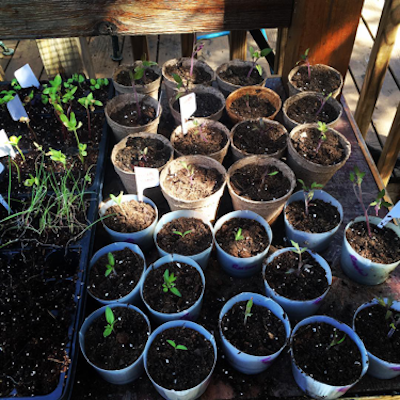
I started my own gardening adventure in earnest when my spouse and I purchased our home in 2009. I had never gardened before, so I relied on lots of great online and library resources. One resource that I kept coming back to was the University of Minnesota extension service. Not only was the Yard and Garden website an invaluable resource, so were the Master Gardeners I met at info booths at Farmers Markets and through the Ask an Expert online answering service.
My house is situated on the northside of a very small urban lot (about a tenth of an acre). The soil is “urban fill” (you can look up your soil type on the USDA soil survey), so not terribly healthy. I was unsure of any harmful chemicals (like lead or arsenic) in the soil so chose to grow food in raised beds. In the intervening years, I’ve had soil tests done, which you can have done at relatively low cost through most Extension services, and there is no lead or arsenic. I’ve grown tomatoes, peas, beans, lettuces, potatoes, garlic, lots of herbs, hot peppers, winter squash, zucchini, tomatillos, onions, and more than I can even recall. I also have a sour cherry tree, two nanking cherry trees, elderberry trees, hardy kiwi, hops, strawberries, blueberries and raspberries. My front yard has been converted to garden, it takes up about a quarter of my property. I grow mostly Minnesota natives, but also a few flashy non natives (Icelandic irises, for instance).
In all of my gardens, I practice no dig gardening. This means I do not till the soil. This helps rebuild the health of my soil and makes my plants healthier. AND it’s less work for me! At the end of each growing season in my vegetable beds, I carefully remove any dead plants. Anything diseased goes to the municipal compost - we are very lucky in Minneapolis to have yard and kitchen waste pick up for compost - and everything else goes into my compost bins. I then top off all bins with fresh compost and that’s it! My fruit trees get a similar addition of compost and my natives are mostly left alone - I leave much of their dead growth in the garden to breakdown over the winter. Many native insects lay their eggs either in the garden debris or in the stems of hollow plants, so it’s a must to leave those items in your garden. All of this work has allowed me to reduce my carbon footprint several ways: growing food closer to home, restoring the soil on my own land and creating a carbon sink and teaching and inspiring others.
I was inspired to become a Master Gardener through the extension program at the University of Minnesota. One of my coworkers at the time was a Master Gardener and encouraged me to consider becoming a Master Gardener myself.
Who are Master Gardeners?
Master Gardeners are your neighbors! Master Gardener programs are volunteer programs through Extension services at land grant universities throughout the country that train individuals in basic horticulture practices. These people then work with the public to pass on that knowledge.
What can Master Gardeners do for you?
All 50 US States and eight Canadian provinces have Master Gardener services, with the sole purpose of serving the public. Master Gardener volunteers are trained and there to help YOU! Are you new to gardening and don’t know where to start? Check out your local services; many programs have classes or public speaking events you can attend for free or low cost. You can also find a question and answer booth, often at a farmer’s market. Did you find a really cool insect in your garden? Likely, your local Master Gardener can help you identify it, take a picture and Ask an Expert!
Master Gardeners help new gardeners and homeowners learn how to create a more climate friendly space - either by growing their own food or creating gardens (carbon sinks) on their properties and teaching experienced gardeners and homeowners more environmentally friendly practices.
How do you become a Master Gardener?
Ready to share the wealth of knowledge? Anyone can become a Master Gardener. In Minnesota, the process involves completing an application, answering questions that require some research, and then an interview process. Once you are accepted into the program, you complete 48+ hours of basic horticulture education, which includes topics like basic vegetable and flower growing, tree care, Integrated Pest Management, and much more. All the information and guidance that we, as Master Gardeners, pass on to the public is research backed. We learn to teach best practices that are sustainable and help guide our neighbors and community members toward a healthy environment, people, and community.
After this course work, a Master Gardener completes 50 hours of volunteer service and 12 additional hours of continuing education, either at events like informational sessions at a University or college, conferences, workshops or webinars. the first year. You are paired with a mentor who lives near you and has similar interests to help you though your first year. It’s a bit overwhelming at first! Following the first year, Master Gardeners only have to complete 25 hours of volunteer service and 12 hours of continuing education per year to stay active.
Don't be overwhelmed by the commitment, anyone can do it!

That all sounds pretty grueling, especially if you’re a working parent of two kids. While it is a lot of work, it’s really fun and rewarding. I’ve answered questions at farmers markets, worked on educational projects with elementary school kids, worked on prairie restoration sites, and helped design rain gardens. I’ve helped people appreciate beneficial insects, attract more wildlife, grow their own food, keep trees healthy, and so much more. I’m an active member of the Climate Victory Garden facebook page where I get to share and learn from other gardeners and Master Gardeners. I get to share my passion with others, which I can’t really think of anything I’d rather be doing!
My training as a Master Gardener has helped guide my practices and enabled me to help others learn. Over the years, I have seen more and more people in my community embrace environmentally-friendly practices and develop more interest in food security, and I enjoy being a part of this process. I hope you’ll reach out to a local Master Gardener or consider becoming one yourself!
A Few Resources
-
Find a master gardener near you - Here you can find the contact information for Master Gardeners in every state, along with links to the extension programs that train Master Gardeners. -
Ask an Expert - This is an answering service. You can ask questions on all sorts of topics including food preserving, gardening, tree care, and insect identification! This resource matches you with someone in your area with the expertise to answer your questions. - Extension Articles - This site has an abundance of great articles, webinars, and videos about a wide range of topics, all things food, farm and garden related.
About Catherine McDonnell-Forney
I was born and raised in the beautiful city of Minneapolis, Minnesota, where I still live with my spouse, two kids, two dogs and two cats. Long, cold winters leave me dreaming of flowers, veggies and bugs. I am going into my fifth year as a University of Minnesota Extension Master Gardener and loving every minute of it. I also work full time as a communications manager for a small nonprofit.
|
|
Midwest Grains Initiative |

GOAL: Get 5 million more acres of small grains grown in rotation in the Upper Midwest by 2021.
We are a group of farmers, small businesses, and consumer brands working together to get 5 million more acres of small grains grown in rotation in the Upper Midwest by 2021.
JOIN US!
Small grains like barley, oats, wheat, and rye that were traditionally grown in the Upper Midwest are uniquely positioned to help consumer brands achieve the sustainability goals that consumers are demanding: reduction in GHGs, soil erosion, and pesticide use, and improved water quality, soil health, and ecosystem diversity. When added to a farmer's typical corn and soybean rotation, small grains not only reduce inputs like fertilizers and pesticides, but also improve overall farm profitability.
The millennial consumer, representing over $200 billion of spending power, is purchasing products made with responsibly sourced ingredients, and rewarding brands that share their values in environmental, social, and economic responsibility.
Consumer brands that are tuned in to trends recognize the need to source high quality ingredients that reflect their customers' values: the health of regional watersheds and the oceans they impact, the long-term health and viability of soils, the reduction of greenhouse gases, and the health of rural communities.
Farmers in Minnesota, Wisconsin, Iowa, and Illinois are ready to make the change we all need. Now it's time for brands to show them they have partners in the marketplace. Join us on this journey to get small grains back into the rotation!
|
|
Our Approach |
<p><img align="right" alt="chart" hspace="10" src="/sites/default/files/subsite/charts.jpg" /></p>
<h2>A SYSTEMATIC APPROACH TO COMPLEX CHALLENGES</h2>
<h3>The Center’s Innovation Network approach is part of a larger community of practice referred to variously as Collective Impact, Social Labs and other social change methodologies.</h3>
<p>Our Innovation Networks are distinguished by our highly-effective stakeholder selection methodology, our integration of human-centered design practices to produce solutions that work for real people in the real world, and our ability to swiftly move toward systemic solutions.</p>
<hr />
<h3>Collective Impact</h3>
<p>Collective Impact is the commitment of a group of actors from different sectors to a common agenda for solving a specific social problem, using a structured form of collaboration. Initiatives must meet five criteria in order to be considered collective impact: </p>
<h3>Common Agenda</h3>
<p>All participating organizations (government agencies, non-profits, community members, etc.) have a shared vision for social change that includes a common understanding of the problem and a joint approach to solving the problem through agreed upon actions.</p>
<h3>Shared Measurement System</h3>
<p>Agreement on the ways success will be measured and reported with a short list of key indicators across all participating organizations.</p>
<h3>Mutually Reinforcing Activities</h3>
<p>Engagement of a diverse set of stakeholders, typically across sectors, coordinating a set of differentiated activities through a mutually reinforcing plan of action.</p>
<h3>Continuous Communication</h3>
<p>Frequent communications over a long period of time among key players within and across organizations, to build trust and inform ongoing learning and adaptation of strategy.</p>
<h3>Backbone Organization</h3>
<p>Ongoing support provided by an independent staff dedicated to the initiative. The backbone staff tends to play six roles to move the initiative forward: Guide Vision and Strategy; Support Aligned Activity; Establish Shared Measurement Practices; Build Public Will; Advance Policy; and Mobilize Funding.</p>
|
|
Minority-Owned Green Businesses |
|
|
Veteran-Owned Green Businesses |
Having served in the military, and/or having incurred a service-related disability, veteran-owned businesses are eligible to receive 3% of federal contracting opportunities, due to The Veterans Entrepreneurship and Small Business Development Act of 1999.
|
|
Michael Young |
|
|
Dama Distributing |
Massive petrol based plastic waste that has been created by the cannabis industry. Most recycling plants will not take the plastic containers since they have been contaminated with cannabis. Thus almost every plastic package sold in the industry has not been recycled. They end up in landfills or our oceans. We are working to eliminate all petrol based single use plastics from this industry.
|
|
The Uplifters' Prima PBC / dba: PRIMA |
We know that our business activity — from powering our office and crafting product to working with people every day— has a real impact. We believe in hyper-transparency, and are committed to the truth and the openness that you deserve. As we build out our Betterment Report, which includes sustainability and impact reporting, we’ll keep you up-to-date on our efforts and progress.
We are hyper-focused on maximizing sustainable and recycled content where we can, using readily recyclable materials like glass and polypropylene in our packaging, and drastically reducing single-use plastic containers.
Paper/Cardboard: all of our unit cartons are made from SFI (Sustainable Forestry Initiative) Certified paper stock our shipper boxes are 100% recycled content and 100% recyclable
Plastics: and plastic in our tube is 60% PCR (post-recycled content and 100% recyclable),
Packaging: all of our packaging is 100% recyclable with 65% PCR plastic
|
|
Swap Out Toxics to Green Your Home |
Next time you’re doing a home improvement project, look to green products to reduce your exposure to toxic chemicals. Find more at GreenPages.org.
A big part of what makes a house a home are the efforts made to create a space that’s nurturing and safe to everyone there. The products we buy for our home are part of those efforts, but we can mistakenly purchase conventionally manufactured products that aren’t truly made with our home’s health in mind. Instead, many housewares are unsustainably made with precious natural resources, treated with toxic chemicals, and made by underpaid workers. But shifting our buying habits in support of businesses that meet high environmental and social sustainability standards can change that. Here are a few alternatives to common toxic products for your green abode.
Floor finishes & Carpets
Like paints, conventional floor finishes and stains including lacquer, shellac, varnish, and sealers often contain VOCs and phthalates, the latter of which are commonly used in vinyl flooring.
Carpets are often treated with chemical compounds like formaldehyde, phthalates, and benzyl benzoate for stain-, fire- and moth- resistance. VOCs are often emitted both from carpets and gluing installation.
Green Alternative: Healthy Finishes & Sustainable Carpet
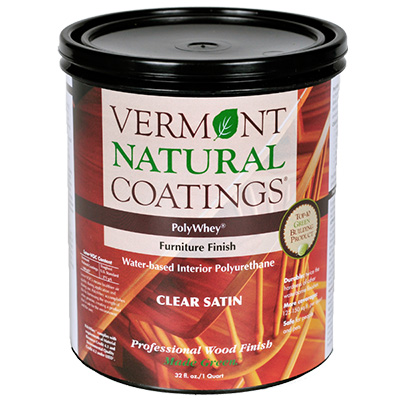
Vermont Natural Coatings makes PolyWhey Floor Finish, which replaces toxic ingredients with natural whey protein derived from cheese making and can give the finish you’re looking for without the toxic gases. Customers can opt for versions for heavy- or light-traffic floors, depending on where it’s being applied.
While some homeowners may opt for the sleek appeal of wood or tile flooring, carpeting does provide benefits such as insulation, noise reduction and can even be a safer choice for active little ones. Organic and Healthy Inc., offers an array of natural and eco-friendly carpets and rugs including organic wool with hemp or jute backing, and treated with no pesticides or stain-proofing chemicals.
Plastic wraps
Plastics contain BPA, DEHP, and other chemicals that are known endocrine disruptors. When heat is applied, these chemicals can leach into food and increase exposure to health risks.
Green Alternative: Waxed Cloth

Bees Wrap has brought another old-time tradition back to the modern day. The company produces organic cotton wraps coated with a mix of beeswax, jojoba oil, and tree resin. The mixture creates pliable sheets people can use to seal in the freshness of their food and its best qualities are being washable, reusable, and compostable!
Living Room Furniture
Beyond its practical use, furniture can bring personality, style, and warmth to a home. Unfortunately, many furniture companies manufacture with an unsustainable, built-to-break mentality, leading to waste, and discount furniture is often made by underpaid workers. Some companies also treat furniture with flame retardants, which have been associated with reproductive, developmental, and neurological health risks as well as cancer.
Green Alternative: Sustainable Furniture
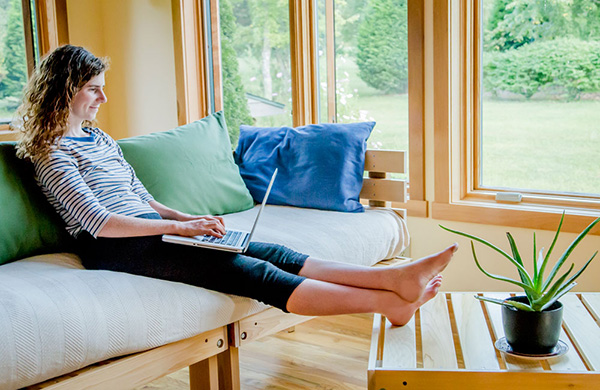
For cozy and peace-inspiring home additions, check out Carolina Morning’s selection of body-friendly furniture made with organic cotton, wool, kapok fiber, buckwheat hulls, beeswax, and flax seed. The company has also ditched plastic packaging for deliveries.
Nonstick Cookware
Teflon has been both the signature brand and chemical ingredient of nonstick cookware products but, it’s also infamous for its adverse health effects from the noxious gases it can emit.
Green Alternative: Ceramics

Xtrema, is a company specializing in ceramic cookware. All products are made from 100 percent ceramic without any lead, toxic glues, polymers, coatings, or dyes, plus products are tested for chemicals before leaving a manufacturing facility.
Paints
Many water and oil-based paints contain Volatile Organic Compounds (VOCs), which after off-gassing, can cause respiratory irritation, nausea, headaches, and dizziness according to the EPA. Biocides and fungicides containing toxic chemicals are also used in paints to prevent mildew.
Green Alternative: Milk Paint
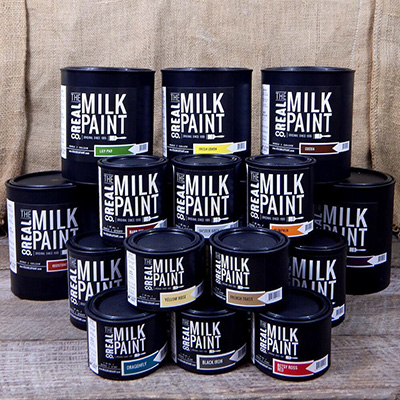
Milk paint is a natural alternative to conventional paints dating back thousands of years. Real Milk Paint is a 2016 winner of Green America’s People and Planet Award and makes non-toxic, biodegradable milk paints in a variety of colors. It’s a durable alternative to conventional paints that can be safely applied to walls, furniture, and even children’s toys.
|
|
Turning Crisis into Creation with Green Affordable Housing |
Residents and community health workers of Seattle’s Yesler Terrace development. Community health workers are trained in “Breathe Easy” air quality practices by the American Lung Association.
A new movement is creating affordable housing options with clean air, energy efficiency, and climate resilience in mind.
Whether you’re a young adult apartment-hunting for the first time or an experienced home owner, most Americans can anticipate the challenges of finding an affordable place to live. In 2017, a third of Americans lived in housing that was not affordable to them—meaning their housing cost more than a third of their income.
In addition to the financial strain from increasing housing costs, our built environment has a direct impact on our health, yet research shows that low-income communities are disproportionately exposed to health hazards in the home.
The green affordable housing movement emerged from a desire to simultaneously address economic disparities, environmental sustainability, and human health. Leaders in the movement are pioneering the development of housing that is affordable, safe, and conducive to a climate-friendly future, and it has already shown positive ripple effects in society.
In March 2018, Congress passed an omnibus spending bill that increases Low Income Housing Tax Credit (LIHTC) allocations by 12.5 percent each year for four years (2018-2021). While this increase certainly helps grow affordable housing, it falls short of the large-scale investments we need at the local, state and federal level to meet our nation’s needs.
About 4.8 million American households receive some form of subsidized housing assistance from the Department of Housing and Urban Development’s (HUD) and cost-burdened households who do not participate in HUD programs are likely to seek affordable housing targeted to their income. The advent of green affordable housing in the past 30 years shows that policymakers, housing developers, and community leaders are in empowering positions to change the environmental health conditions for millions of Americans.
The Affordable Housing Crisis
Big cities like New York and San Francisco no longer dominate conversations around affordable housing, because the number of cost-burdened Americans has doubled since the 1960s, according to a 2018 Harvard University report, and the impact is felt across American cities from Birmingham to Toledo.
HUD defines “lower income” as 80 percent of the median income of the area where one lives, and “very low income” as 50 percent of the median. From 1987 to 2015, the demand for affordable homes swelled as the population of very low-income renters in the US grew by 6 million.
But as demand rose, the US homeownership rate among young Americans aged 25 to 34 declined from nearly 50 percent in 2005 to 35 percent in 2015, according to US Census data. Today in big cities like Austin, Las Vegas, New York, and San Francisco, homeownership rates have settled around 50 percent. As consequence, the number of people renting in the US is higher than at any other point in the last 50 years.
Economic and social policy think tank the Urban Institute attributes these trends to stagnated livable wages, limited access to credit, student loan debt, the Great Recession and changing attitudes about homeownership.
Across America, swift renovation of urban neighborhoods has led to increased costs of living in those neighborhoods, known as gentrification. Gentrification is accompanied by an influx of higher-income people, as they move into trendy developments and shop at new businesses. But for residents who’ve lived in an area beforehand, often well-established communities of color, gentrification means displacement as property values rise to the point of unaffordability.
In 2018, Miami became the first city to study “climate gentrification” or the movement of higher income people living in coastal neighborhoods to more secure, inland areas. Miami Mayor Francis Suarez signed a resolution to study the effect of climate change on housing prices, with the goal to inform the city on measures that will allow residents to stay in their communities in spite of the rising sea levels crowding inland neighborhoods.
In 2017, the Prevention Institute published a report that defined “green gentrification” as processes in which enhancements like parks and bike trails can attract luxury developers to a neighborhood and unintentionally lead to gentrification. Though the report reveals how complex the issue of gentrification can be, it asserts that preventing gentrification is possible by making equity a core principle of green affordable home developments.
Nationally, rent prices have increased by 2.8 percent from 2016 to 2018 and today’s median rent is $1,445, according to the real estate database company Zillow. When considering these factors and the slow pace of new affordable homes being built, which is at a new low, it’s easy to understand why advocates call our current predicament a crisis.
Last year, HUD Secretary Ben Carson introduced the Make Affordable Housing Work Act, which would require those who receive housing subsidies to pay 35 percent of their income on rent and triple the minimum monthly rent for families with the lowest income from $50 to $150. Carson said that increased rents will motivate residents to find higher paying jobs and therefore, curb dependency on government assistance. While Carson’s proposal has not yet been approved by Congress, it has illuminated the vulnerable state of lower income residents’ housing.
In response to Carson’s proposal, Diane Yentel of the National Low Income Housing Coalition told the New York Times that the demand for affordable housing wasn’t about dependence and that “today’s housing crisis is squarely rooted in the widening gap between incomes and housing costs.”
For our nation’s lowest income populations, lack of affordable housing could have serious consequences, and force people to choose between bills, which can lead to eviction, job loss, and homelessness.
Financial institutions also play a role in the housing market. Over the last decade, there have been numerous Department of Justice (DOJ) cases concerning mortgage lenders and banks that have put a disproportionate financial strain on people of color.
In 2012, Wells Fargo agreed to a $175 million settlement following a DOJ investigation that found 34,000 incidents in which the megabank had charged African Americans and Latin Americans higher mortgage rates and fees compared to white customers with similar credit backgrounds. As homeownership continues to be a foundational building block for household and generational wealth, such practices contribute to economic divides between Americans.
Key Features of Green Affordable Housing
Solar panels, which create on-site energy generation, so residents only pay a small percentage of their energy needs to a utility company.
Energy-efficient appliances like refrigerators, washer/dryers, and dishwashers use less energy and reduce bills.
EPA-certified Energy Star appliances are commonly used in affordable housing
LED lights use less energy and last longer than traditional incandescent or even fluorescent bulbs.
Low-flow fixtures attached to showerheads, toilets and faucets save water and reduce the cost of water bills
Low-emissivity windows (usually called Low-E windows) have a special coating which reflects interior temperatures back inside, keeping homes warmer in the winter and cooler in the summer.
Insulated walls keep heated or cooled air in, and outside air out, meaning residents can save on heating and cooling bills.
The Green Affordable Housing Movement
Walker Wells, a leader in the field of sustainable building and neighborhood development, traces the green affordable housing movement’s roots to the United Nations’ 1992 Earth Summit held in Rio de Janeiro. There, inspired by the concept of sustainability and its relationship to economy, equity, and the environment, organizations like Global Green began forming. Today, Global Green leads research and community-based projects, including those in affordable housing that aim to address society’s need for affordability and the environment’s demand for sustainability simultaneously. Wells joined Global Green in 1999.
“One of the things that we acknowledged early in our work was that we were experiencing urbanization,” Wells says. “People were increasingly moving to cities, and instead of demonizing city governments and businesses, we should help them improve their practices.”
Global Green takes part in the green affordable housing movement by advising housing developers, project managers, and government agencies and providing resources for energy-efficient appliances, energy monitoring, green building materials, and design that maximizes access to natural resources like daylight and fresh air. Energy efficiency is a common priority for green affordable housing, because reduced energy use cuts the cost of electricity, heating and water bills.
In 2007, Global Green and the nonprofit Community Housing Works debuted Solara, a 56-unit multifamily affordable apartment complex in Poway, California.
Solara was one of the first affordable home developments to not only incorporate these features, but also produce a high percentage of on-site solar energy generation. Two years after its debut, Global Green researchers found that the development had produced 87 percent of its total electricity needs on-site with solar panels. Solara also helped Global Green cement the financial strategy of bundling tax credits (including LIHTC), utility incentives and rebates to fund similar projects, which was replicated at the Los Vecinos development in Chula Vista, California.

Caption: Residents at Los Vecinos housing development in Chula Vista, CA. Credit: City of Chula Vista.
In the aftermath of Hurricane Katrina, Global Green launched its Holy Cross Project in New Orleans’ Ninth Ward, one of the communities hit hardest by the storm. The project created the Community and Climate Action Center, which serves as an emergency shelter and educational space for climate-resilient practices like water management by showing residents how to use rain barrels and plant rain gardens. The project has also built four LEED-certified homes that have saved residents $1,200-$2,400 a year in utility bills since 2012. The next wave of the Holy Cross Project will be the construction of affordable mixed income rental units built with solar panels, energy monitoring systems, and energy-efficient appliances.
Breathing Easier in Affordable Homes
Green affordable housing has the potential to restore environmental health and justice in communities and improve the overall quality of life in the home. For those living in low-income housing developments, the risk of exposure to environmental health hazards is three-fold when considering the site the housing itself is built on, the building materials used, and the actions property managers take to protect residents. Considering property management is especially relevant to residents who receive HUD housing vouchers and live in privately-owned housing in which renting to a negligent HUD-contracted landlord could mean prolonged exposure to health hazards like black mold, vermin, and leaks.
In 2017, the EPA and HUD confirmed that about 70 percent of Superfund sites—contaminated areas considered to be a hazard to human health—are near low income housing developments. While both agencies have committed to collecting more research on this issue and the EPA has begun cleanups on some lead-contaminated sites across the country, further steps remain to be seen.
The National Center for Healthy Housing estimates 5.7 million Americans live in “substandard housing conditions,” or those that cause significant illness, injury or death. In 2018, the World Health Organization (WHO) identified substandard housing as a contributor to various health conditions and provided home environmental guidelines for water and air quality, asbestos, lead and indoor gas emissions.
“People with lower incomes and people of color tend to live in areas that have a greater burden of outdoor air pollution,” says Robin Dodson, an environmental exposure scientist with the Silent Spring Institute. “But I think when we discuss total exposures, we need to include indoor air pollution and chemicals like hormone disruptors and carcinogens which can build up in the home and are equally important.”
In 2017, Dodson and a research team conducted a study on subsidized housing in Boston that had been renovated to meet certain green standards, mostly for energy efficiency. Collecting samples pre- and post-occupancy, the research team was able to narrow down pollutants that came from the building itself and those that came from tenants’ personal items. In the end, TDCIPP (a cancerous flame retardant), benzophenone (a hormone disruptor), and dibutyl phthalate (a type of phthalate) were all detected from the building, which Dodson says demonstrates the need to broaden green building standards so that they go beyond ruling out VOCs and also eliminate other hazardous chemicals.
Though there are regular HUD inspections for interior air quality and HUD-sponsored developments aiming to meet green building standards, the intention to promote healthy air quality could be stronger and ultimately varies across communities. It’s also important to note that while energy efficiency can’t account for all health risks, there is a relationship between energy efficiency and health.
“For example, most of our projects have a bathroom fan that’s on at a low speed all the time, and it’s not using a lot of energy because it’s very small. The benefit is that it pulls humid air in the bathroom which can cause mold,” says Wells. “And we also need the fan on because we’ve sealed up the building in other places to save energy. So there’s a trade-off between the energy spent and the air quality benefit.”
Seattle’s “Breathe Easy Homes” are an example of a strong move toward green air quality standards. Built in 2007, the Seattle Housing Authority, King County, and University of Washington developed affordable homes created around techniques to improve air quality including fresh air ventilation systems, fans, airtight wall construction and insulated windows. After construction, the number of residents who made an asthma-related visit to the clinic decreased from 62 percent to 21 percent in a period of three months.
For Wells, this is the kind of evidence-based impact that shows green affordable housing can make a difference, by giving residents some breathing room financially and in their personal health.
“People may not be conscious of all these green features, which is probably good because if it’s done well it should just be part of the building, but what they get is the degree of care put into the project,” says Wells. “And what we get from an emotional level is that the residents feel like they’re valued, like we spent a lot of time making a high-quality place for them to live because they’re a person of value.”
|
|
6 Simple Steps to a Safer, Germ-Free Home |
The easiest way to create a germ-free home and eliminate toxic chemicals from your life is to not bring them into your home to begin with. Wouldn’t it be nice to be able to start fresh with a new build out of the greenest of green materials, buying as little as possible, and then, always green? Unfortunately, problematic chemicals are already in our lives, and starting fresh isn’t even really green, because it’s wasteful and would be extremely expensive.
Mike Schade from Safer Chemicals, Healthy Families, talked to us about how we can mitigate the effects of “chemicals of concern” as the organization calls them, including VOCs, phthalates, and flame retardants. We’re listing them out from small steps to take, to big steps.
1. Wash your hands
(20 seconds)
Almost like viruses, toxic chemicals can enter your system most easily through your mouth—you could be touching dust particles that have trapped chemicals, then touching your mouth or food, and ingesting those chemicals. The simplest way to limit your exposure to chemicals is old-fashioned soap and water. Avoid antibacterial soap that can contain nasty chemicals and encourage antibiotic-resistant bacteria.
Anything plastic is made from petrochemicals (that means plastic is an oil-based product). Things that are plastic that are likely to heat up, like a television, laptop, or phone, is treated with flame retardants before it’s sold, Schade explained. When the technology heats up, the flame retardants become gaseous and enter the air in the room, where they may settle in dust. It’s important to wash your hands after handling electronics for this reason.
2. Take off your shoes
(30 seconds)
Take off your shoes at the end of the day. They may have tracked in dust, or chemicals your feet came in contact with over the course of a long day. Where have your feet been? Maybe they’ve gone from your house to sidewalk, to car or bus floor, to the office, a public restroom, into a store or two, back into your car or public transit or bike, and then back into your home? Your shoes have been through a lot.
Keep a natural fiber mat by the door to wipe your shoes on and leave there. If you have cold feet, leave slippers by the mat for use inside the house.
3. Open doors and windows
(2 minutes)
Did you know outdoor air is typically of higher quality than indoor air? Let your house breathe a bit by opening up doors and windows when weather allows. If you have poor ventilation, frequent cold weather, or respiratory issues like severe allergies or asthma, an air purifier with a HEPA filter can do even more to refresh your air, though it’s not energy-free or as cheap as opening your windows. HEPA stands for High-Efficiency Particle Absorber. To qualify as HEPA, a filter must remove 99.7 percent of particles 0.3 micrometers or larger.
Learn about how trees near your home can filter the air outside your windows.
4. Call companies and state representatives
(3 minutes)
Schade has made a mantra of “you can’t buy your way to a better home,” meaning at this point, some products have no toxicant-free alternatives. We must all create the nontoxic marketplace we want to see. He said that when you call, companies are listening.
“Customer service staff at companies are usually very friendly and want to find a solution to your problem. They might not have the answer, but they will often relay the messages to their higher ups, and real change can be made this way,” Schade says.
Safer Chemicals, Healthy Families created an annual report card on toxic chemicals policies from major retailers called “Mind the Store.” In its 2018 update, the campaign found that average grades from companies show steady improvement year-over-year, showing that putting pressure on businesses does work.
Though it may seem scary, calling a business or representative only takes three minutes and can make a big difference in the long term use of chemicals of concern. Getting answers and even just making your voice heard to a company can be an empowering experience.
An email, tweet, or tagging a company in a photo can also be effective in getting answers and communicating when you want them to make changes, Schade says.
California, Washington, and Oregon have all passed laws limiting the use of flame retardants on furniture and mattresses, because of community activism.
The best part about leaving a voicemail for your elected representative or emailing a company is that it doesn’t just benefit your family. When companies improve their practices and states put tighter restrictions on chemicals, even people who aren’t aware of toxic chemicals will see the benefits.
5. Dust, vacuum, and wet mop
(1-2 hours)
Unless you love cleaning, this is probably the least fun step, but it can be extremely effective. A study from the Silent Spring Institute found an average of 26 chemicals in household dust, including hormone disruptors, phthalates, parabens, pesticides, and flame-retardants.
It’s easier to get rid of dust than to swapping out products (see step 6), so that makes cleaning a relatively simple step towards the health of your family.
The Environmental Working Group recommends vacuuming three times per week with a vacuum equipped with a HEPA filter. Remember to change the filter frequently. Schade also recommends dusting and wet mopping on hard surfaces. Sweeping tends to push around dust instead of picking it up.
When dusting, stay away from conventional cleaners, which can reintroduce VOCs, artificial fragrances, and hormone disruptors. Instead, use natural ingredients. Make a dusting spray using one part vinegar, four parts water, and 1-2 drops of an essential oil (like lavender or lemon). For more natural cleaner recipes, read our article “10 Simple Ways to Clean Green.”
Steam cleaners can also be used to disinfect furniture, flooring, and even countertops using only water. Though steamers can be expensive, they can replace chemical cleaners and therefore be a good investment in your health.
6. Replace products with the safer alternatives
(a few minutes to a few hours)
You can’t shop your way to a green life, but you can definitely replace problematic materials with less problematic ones, especially when you’ve gotten a good life out of what you already have.
To create less waste, Green America recommends using items with chemicals as safely as possible (like vacuuming your mattress regularly instead of tossing it today). Schade recommends bringing toxic products you’re ready to part with to a local hazardous waste collection site.
When it’s time to replace a product or renovate a part of your house, consider using the greener versions of conventional products. See some ideas on p. 24, and find green products and services, including green builders and architects at GreenPages.org.
|
|
Plants that Clean the Air |
Plants aren’t just pretty to look at—they can actually purify the air in and around your home, and clean toxic soil, too.
Whether moving into a new building or just bringing a product home for the first time, you might smell some of that “new mattress/rug/clothes smell.” That smell might be a marker of something new and exciting, but it comes from toxic VOCs released during manufacturing. Not to fear— bring some new houseplants in to help! Plants have the incredible potential to improve your air quality. Outside, plants can improve soil health, too.
Pollution in and around your home can be a scary reality to confront, but these natural ways of reducing air and soil contamination are great steps towards reducing toxicity exposure of you, your family, your pets, and your garden.
In a 1989 NASA study, scientists learned that when plants “inhale” CO2 and “exhale” oxygen during photosynthesis processes, they also inhale air pollutants. They purify the air by essentially scrubbing it of cancer-causing VOCs and releasing clean oxygen. Microorganisms in potting soil digest toxic chemicals. The study was intended to help scientists decide whether plants should be included in international space travel, but the results can help those of us living in regular homes and apartments back on Earth.
Choosing Indoor Plants that Clean the Air
When it comes to choosing plants to use as air purifiers in your home, the bigger and leafier the better—and hairy and waxy leaves are even more effective. How many you need depends on your space, based on airflow and ventilation. A stuffy TV room could have more built-up air pollutants than an airy living room, but there’s no reason more plants can’t be merrier in every room of the house.
Remember that diversity is your friend, as different species remove different pollutants from the air. Happy plants filter air more efficiently, so consider where they’re placed to optimize the sun and temperature in your home (some plants might like to be next to an eastern window but not too close to a heat vent, for example). Read up on your plants or ask someone at a gardening store to find out about the plants you chose.
Plants for Indoor Air Quality
Based on NASA’s study and , these are some of the best plants for air purification (in no particular order):
- Gerbera Daisy (Gerbera jamesonii): Known for removing benzene and trichloroethylene
- Boston Fern† (Nephrolepis exaltata bostoniensis): Removes formaldehyde and xylene
- Golden Pothos*† (Epipremnum aureum): Removes formaldehyde, benzene, xylene, and toluene
- Bamboo Palm (Chamaedorea seifrizii): Effective at removing formaldehyde, benzene, trichloroethylene, and xylene
- Peace Lily*† (Spathiphyllum): Removes formaldehyde, benzene, trichloroethylene, xylene, and ammonia
- Chinese Evergreen* (Aglaonema modestum): Known for removing formaldehyde and benzene
- Weeping Fig*† (Ficus benjamina): Removes formaldehyde, xylene, and toluene
- Snake Plant/ Mother in Law’s Tongue*† (Sansevieria laurentii): Effective at removing formaldehyde, benzene, xylene, toluene, and nitrogen oxides
- English Ivy*† (Hedera helix): Effective at removing formaldehyde, benzene, xylene, and toluene
- Spider Plan (Chlorophytum comosum): Known for its ability to remove formaldehyde, xylene, and toluene
- Aloe Vera (Aloe barbadensis miller): Known for removing formaldehyde and benzene
- Rubber Plant* (Ficus elastica): Known for removing formaldehyde
- Dracaena Janet Craig* (Dracaena deremensis): Removes formaldehyde, benzene, trichloroethylene, xylene, and toluene
* Toxic for pets to eat. If you have pets, remember to check the ASPCA’s Poisonous Plants list before adding plants to places where critters could get to them.
† These are invasive species, to be kept potted and indoors only. If you ever decide to give up these plants, don’t leave them in the wild. Give the potted plant to a friend, or throw the plant and roots in the trash.
Besides helping you breathe easier, indoor plants have been shown to lower blood pressure, reduce stress, and lessen cold symptoms.
Choosing Outdoor Plants that Clean the Air
Amazingly, outdoor trees can reduce your indoor air pollution, too. This is because particulate matter that might enter through open windows or on the bottoms of your shoes is filtered by trees and other plants between the street and your front door.
A study from Lancaster University shows that having trees between the road and your front door can reduce indoor particulate matter by half. Just like inside, the bigger the leaf, the better at filtering the air—depending on where you live, evergreens may be preferable for year-round filtration.
When growing anything outdoors, make sure to plant diverse species native species to your region, which need less water and inputs to thrive and reduce the proliferation of invasive species. If you’re not sure, ask at a locally owned garden store, or go to The National Wildlife Foundation’s native plant database at NWF.org/NativePlantFinder.
Trees for Outdoor Air Quality
Common trees with the most ability to remove particulate matter:
- Eastern red cedar (Juniperus virginiana)
- Red maple (Acer rubrum)
- American elm (Ulmus americana)
- White poplar (Populus alba)
Plants in your yard or garden can work for you by drawing toxins out of the soil. You’ll know if your soil is toxic if you test it (see "Test Your Soil" below), which you should do if you have doubts about the previous uses of your yard, and always if you’re planning to grow food.
Plants absorb minerals from the soil to grow—minerals that could be toxic at large quantities, like copper, lead, nickel, and mercury. If you use plants to draw out toxicants, don’t compost them after you pull them out, which will re-disperse the minerals back into the soil. Instead, put them in the trash.
Plants for Soil Health
- Mustard greens/Indian Mustard (Brassica juncea)
- Herbs in the mustard and cabbage family (look for the scientific name Brassicaceae or Cruciferae families)
- Sunflower (Helianthus annuus)
- Aster (Aster amellus)
- Vetiver grass (Chrysopogon zizanioides)
- Colonial Bentgrass (Agrostis capillaris)
- White lupine (Lupinus albus)
If you test your soil and find that it’s in bad shape, but you still want to grow food, it’s ok to use raised beds and purchase soil. Just make sure the bag says it’s enriched with things like compost and natural materials, not chemical fertilizers.
Test Your Soil
Most of us don’t know the full history of our homes and the land they’re on. Soil tests can identify threats and imbalances in your yard or garden and give direction on how to fix them. When you know what’s in your soil, you can grow healthier foods and build safer play spaces.
Soil test results can identify the presence of toxic chemicals, beneficial carbon levels, pH, and nutrient levels. Healthy garden soils have the incredible potential to feed your family, beautify your community, and fight climate change.
Results will include detailed instructions on how to amend your soil, and garden stores may also be able to give recommendations if you bring in your results. Spring is a great time to test your soil, when the ground is thawed and digging won’t disturb too many plants.
How to test your soil:
Universities in every state offer cheap, easy at-home tests and professional scientific results. Green America’s food campaigns manager Jes Walton did a basic test plus soil carbon evaluation, which cost less than $50 and took under an hour on her part (Read Jes’ full story about how her soil test went). Find contact information for your local university soil test lab.
Labs may have testing supplies available for pickup, or they will send them to you by mail, and you can return soil samples the same way. While you can find supplies online or at local garden stores, we suggest using a local university to ensure that tests are conducted in professional labs. The scientific advice you’ll get with your results can make all the difference to a healthy yard or garden.
Specifics on each test may differ, so be sure to read the instructions, which may ask you to collect samples from certain depths and mix soil from many test sites.
|
|
Supporting Women-Owned Green Business during Women's History Month |
March is celebrated as Women's History Month to commemorate the accomplishments and contributions of women to American history. It originally began as a local, week-long celebration in Santa Rosa, California after the Education Task Force of the Sonoma County Commission on the Status of Women planned and executed a Women's History Week celebration in 1978. Other communities caught onto the movement and hosted their own Women's History Week celebrations until 1980, when President Jimmy Carter issued the first Presidential Proclamation declaring the week of March 8th - appropriately falling on International Women's Day - as National Women's History Week. Finally, in 1987, Congress passed Public Law 100-9 which designated March as the Women's History Month we know today.
In celebration of Women's History Month and International Women's Day, the Green Business Network at Green America is proud to stand with women and our incredible women-owned Green Business Network members. Comprised of 3,000 businesses, the Green Business Network is home to both rising social- and eco-enterprises and the most established green businesses around. We support women-owned business because of their contributions to a socially- and environmentally-responsible green economy.
Women entrepreneurs are crucial in that they spur social change through their corporate responsibility and contribute to economic development. "Women, it seems, are more inclined to want their investments aligned with their values while men are more likely to compartmentalize - invests in one compartment, moral and political values in another," wrote Joseph Keefe President and CEO of Pax World Management. Socially-responsible investing (SRI) is another way of putting your money where your values are. Much like #VotingWithYourDollar, SRI means investing with the intention of a financial, environmental, and social justice gain.
Additionally, women are an important part of economic vitality: as of 2019, women own 4 out of every 10 businesses in the U.S., where 50% of those are owned by women of color, totaling over 1.8 trillion in revenue. Women also bring diversity to male-saturated industries and inspire inclusivity and fresh ideas. When women leaders inspire other women to become leaders, issues like social inequity and gender inequality are addressed.
We are proud to stand with our certified women-owned members who adopt business practices that protect people AND the planet. They challenge themselves to bring the goals of social and economic justice, environmental sustainability, as well as community health and development into all their activities - from production and supply chain management to employee relations and customer service. Join us in supporting the green economy and women entrepreneurs who are making an impact through their green businesses.
You can find more about our certified women-owned green business members in our online directory.
|
|
The Room-by-Room Home Detox Guide |
Marie Kondo’s show "Tidying Up" inspired people across the country to identify what brings them joy and help them tidy up. If you’re not a Netflix user, her book The Life-Changing Magic of Tidying Up (Ten Speed Press, 2014) is a guide to the same. The show made me think hard about consumption habits, but also it came out right when the team started working on this issue.
You can pick things up and see if they spark joy, but unfortunately, you can’t pick most things up and discover if they contain toxic pollutants—chemicals are largely unlabeled in home goods and construction materials we’re surrounded by day in and day out.
This home detox guide aims to identify the high-impact items in your home—the ones that would make the biggest impact if they were greened (or sometimes even just cleaned). To read the health problems associated with these chemicals of concern (at the top of each item), see "13 Toxic Chemicals Lurking in Your Home." There’s an article about swaps you can make to swap toxic chemicals with green options. Of course, we couldn’t fit all great green products on that page, so check out GreenPages.org to find green products and services from certified Green Business Network® members.
Take yourself on a tour of your home, and you might be surprised by what toxic chemicals you'll find polluting it. Here's what you can do to clean those out, for good.
Your Room-By-Room Home Detox
Living Room

Furniture
Chemicals Concerns: VOCs, formaldehyde, PBDEs
Whether furniture is made from wood, particle board, or upholstered foam, it may be releasing VOCs, formaldehyde, and/or PBDEs into the air from materials themselves and glues that bind them. Furniture without flame retardants isn’t usually labeled as such, so call the manufacturers to find out what chemicals your furniture was treated with.
Better Options: Natural fibers like cotton, wool, wood (that is unfinished or finished in an eco-friendly way) are the best bets for safe furniture. Seal edges of particle board and pressed wood with a zero-VOC sealant. Consider buying second-hand furniture or use a green refurbisher to add new life to an old piece.
Labels to Look for: Certified Indoor Air Quality by SCE Global Services. Forest Stewardship Council (FSC) certifies sustainably sourced wood but doesn’t address chemicals added during manufacturing.
Hard Flooring
Chemicals concerns: Hard floors beat carpets for air quality because they don’t hold onto as much dust. But, stains and finishes (like lacquer, shellac, varnish, and sealers) used on hard floors have the same issues as paint, so use the same caution you would with paint, and buy stains and finishes labeled as low-VOC or zero-VOC. Make sure you or your contractor keeps your home well-ventilated when applying coatings and as they dry.
Better Options: Look for floors made from refurbished wood. Other options are bamboo (more durable and faster-renewing than wood), cork (hypo-allergenic, fire-resistant, and faster-renewing than wood) natural linoleum (hypoallergenic and biodegradable) floors.
For safer finishes, look to oils from renewable sources, like linseed or tung oils, though check first with the manufacturer about additives. A low-VOC shellac can also be a good bet because shellacs are heartier and will need to be applied less often than other finishes. (See more about natural floor coatings.)
Labels to Look for: Green Seal-11, Greenguard Gold. Forest Stewardship Council (FSC) certifies sustainably sourced wood but doesn’t address chemicals added during manufacturing.
Carpet/Rugs
Chemicals concerns: formaldehyde, VOCs, benzyl benzoate, phthalates, PBDEs
Conventional carpets are often treated with chemicals for stain-, fire- and moth-resistance, and they may be made with petroleum-based fibers like polyester. From the carpet itself to glue and padding, installation of new carpet and flooring can fill the air with hundreds of VOCs, which can take years to dissipate. Carpeting is notorious for trapping toxic lawn chemicals, VOCs, and allergens tracked in from outside.
Better Options: Carpets made from wool are naturally flame-retardant and may not be treated with as many chemicals as a petroleum-based polyester carpet (call the manufacturer to find out). Carpet tiles allow you to replace just the worn parts as a carpet ages, which reduces how often you need to bring heavy-emitting new carpet into your home. Have carpet nailed down instead of glued, because glue also contains toxic chemicals. Avoid carpets marked as stain- or water-resistant because those finishes contain toxic chemicals.
If you’re ready to live without carpeting, see the hard flooring section. You can still use area rugs made from natural materials (wool, jute, sisal).
Labels to Look for: Greenguard Gold, Green Label Plus (certifies low emissions for indoor materials). Goodweave (for rugs, not carpets) certifies that no child labor is used in your rug, but does not certify rug materials.
Kitchen

Plastics
Chemicals Concerns: phthalates, BPA/BPS, DEHP, petroleum-based products
So many foods are sold in reusable plastic packaging, (yogurt, cold cuts, peanut butter), so green-minded and frugal folks may save plastics for food storage. The problem with plastics (whether reused or bought specifically for dishes and storage) is that chemicals in plastics are known endocrine disruptors. Never use plastic (even if it’s labeled heat-safe or BPA-free) for microwaving items, as heat can release the chemicals from plastic into food. Avoid putting hot food into plastic containers for storage. Plastic wrap is petroleum-based, includes phthalates, gets thrown away almost immediately, and is not recyclable, so avoid that wherever possible.
Better Options: Use heat-resistant glass or ceramic storage containers and dishes for storage and heating food. Use a plate turned upside down over a bowl instead of plastic wrap, or consider a natural alternative like beeswax wrap.
Labels to Look for: Look at the recycling number on the bottom of plastics—the highest-quality (and least likely to leach the worst chemicals) are plastics are 2, 4, and 5. Glass is still better whenever you can use it. Stainless steel works for storing food, too.
Cookware
Chemicals Concerns: PFCs, PFOA
The health problems associated with nonstick cookware make it not worth the time you might save scrubbing. The nonstick coating Teflon has been associated with “Teflon flu,” an ailment that comes from breathing the fumes of an overheated nonstick pan (and the same chemicals you breathe go into your food). Teflon was made with a chemical called PFOA until that chemical was found to be dangerous (in 2013), and it was replaced with PFCs, which have not been proven to be safer.
Better Options: Look for cast iron, stainless steel, carbon steel, heat-safe glass, and ceramic-coated cookware. Crock pots and instant pressure cookers are also safe as they’re typically ceramic or stainless steel. Anondized aluminum is sometimes considered a safe alternative to nonstick Teflon pans, but its treatment may scratch off over time, making it a lesser option than the others above. Follow safety instructions for heat-safe glass especially, which can have bad reactions to quick temperature changes.
Labels to Look for: There aren’t labels specifically for nontoxic cookware, so follow the “better options” advice above.
Bathroom
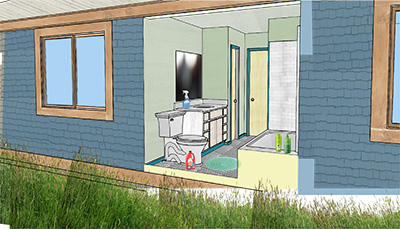
Body Care Products
Chemicals Concerns: parabens, phthalates, lead, VOCs
Under FDA legislation, body care products are all lumped under the term “cosmetics,” which covers everything from perfume and makeup to toothpaste, soaps, shampoos, lotions, and lots of other products. Unfortunately, the FDA does not require safety testing of ingredients in “cosmetics.” According to the Environmental Working Group (EWG), women are exposed to 168 chemicals every day through the use of cosmetics, and men to 85. Some of the most common and highest-impact chemicals include parabens, phthalates, and lead.
Better Options: Look up your favorite products on EWG’s Skin Deep Cosmetics database, which ranks the safety of cosmetics on a scale of 1-10 based on ingredients’ association with cancer, hormone disruption, and allergies. You can find cosmetics made by Certified Green Businesses at GreenPages.org.
Labels to Look for: EWG-verified, USDA organic. The Leaping Bunny seal certifies no animal testing is done on animals.
Bathroom Cleaners
Chemicals Concerns: VOCs, formaldehyde, hormone disruptors
Conventional household cleaners contain VOCs, formaldehyde and harsh acids. The word “fragrance,” can indicate some of dozens of ingredients, including hormone disruptors and VOCs. Beware of greenwashing from companies that make cleaners: A study from the University of Melbourne found that 80 percent of VOCs used for fragrance were present in conventional products and those labeled green or natural.
EWG’s Guide to Healthy Cleaning database gives cleaning products letter grades based on ingredients’ association with asthma, allergies, reproductive toxicity, cancer, and environmental toxicity.
Better Options: Find cleaners made by truly green companies with safe ingredients at
GreenPages.org. You can also make most of the cleaning products you need with natural ingredients on p. 23.
Labels to Look for: USDA organic, EWG-verified, Natural Products Association, certified member of the Green Business Network®.
Bedroom

Mattress
Chemicals Concerns: PBDEs, VOCs, formaldehyde
Adults spend about a third of their lives in bed, and babies may spend more than half their time in bed— while their bodies are vulnerable and growing rapidly. Finding safe mattresses for the whole family is important, even if they will be used for fewer years in a crib. Between foam, coatings, and covers, mattresses are too-often filling your bedroom and your body with toxic chemicals. Conventional mattresses and mattress pads off-gas formaldehyde and other VOCs that can cause respiratory irritation and other health problems. Many manufacturers also treat foam with cancer-causing flame-retardant chemicals.
Better Options: Get a mattress made of cotton, wool, or natural latex and one of the organic labels below. Polyurethane and foam mattresses are often cheaper, so if you’re buying those, look for a certification for low-VOC emissions. Ask the manufacturer if a mattress is treated with fire-resistant chemicals and if it has a vinyl cover (vinyl is made from phthalates and other chemical additives that have been lined to cancer, birth defects, and chronic diseases). A mattress cover made of polyurethane laminate (PUL), fabric, or polyethylene is safer.
Labels to Look for: Global organic textile standard (GOTS), Oeko-Tex standard 100, Greenguard GOLD, Global Organic Latex Standard (GOLS). Organic labels (USDA Organic and Organic Content Standard 100) certify the percentage of organic materials but don’t address added chemicals like VOCs and flame retardants.
Bedding
Chemicals Concerns: Formaldehyde, PFCs
Chemicals that resist flame, water, moths, stain, and wrinkles are often added to textiles like sheets and blankets. Avoid labels that correspond to those qualities: permanent press, no-iron, water-repellant, and flame retardant. Firefighters and scientists agree that flame retardants do not significantly prevent fires and can make smoke more toxic.
Better Options: Buying organic may reduce chemicals inputs, because organic cotton is grown without pesticides, but it doesn’t address what fabrics were treated with during manufacturing. Labels will typically tell you the materials but not added coatings, so the best bet is to call the manufacturer.
Labels to Look for: USDA Organic, but no labels exist to certify safe bedclothes specifically.
Paint
Chemicals Concerns: VOCs, formaldehyde
Both water- and oil-based paints use VOCs as solvents. Other chemicals added to paint extend shelf life and prevent mildew. Make sure you or your contractor keeps your home well-ventilated when painting and as it dries.
Better Options: Use super-low or zero-VOC paints and stains—they’re common and becoming cheaper. If you don’t see a label, ask the person mixing your paints. Consider milk paints as an alternative to water-based latex or oil paints.
If your home was built before 1978, test for lead paint. If you find it, have your kids’ blood tested for lead and find a professional to cover or remove lead paint. Ask contractors if they’re EPA-certified in Renovation, Repair, and Painting (RRP).
Labels to Look for: Green Seal-11, which limits VOCs, lead, mercury and carcinogens. Low-VOC and No- VOC are trustworthy manufacturers’ labels.
|
|
13 Toxic Chemicals Lurking in Your Home |
These widely-used, toxic chemicals may hide anywhere from skin cream to a frying pan. Let's explore what they are and where you can find them in your home.
Asbestos
A mineral that is resistant to heat and chemical corrosion and can be mixed with other materials to strengthen them. Though asbestos use has declined, it has not been banned in the US. Building materials still legally may be up to one percent asbestos, and old buildings are more likely to contain higher percentages. Homes should be checked for asbestos before any renovation—check roof and floor tiles especially. Asbestos fibers can be inhaled and accumulate in the body and cause inflammation, scarring, respiratory diseases, and cancer.
Benzyl benzoate
A common insecticide that is used medically to kill lice or scabies. It is also used as a food additive for flavor, in fragrances, and in plastics. It is a suspected neurotoxin.
Bisphenol-A (BPA)and Bisphenol-S (BPS)
Used to make transparent, hard plastic known as polycarbonate used for baby bottles and linings of metal cans. BPS is a common substitute for BPA since public outcry reduced use of BPA in plastics. Studies are showing the chemicals are similarly toxic. BPA/BPS are endocrine disruptors, and exposure may cause obesity, reproductive cancers, and infertility.
DEHP
A common class of phthalate—a liquid plasticizer used in hydraulic fluids and PVC plastic. It may leach into food and water through plastic and could cause damage to reproductive organs, lungs, kidneys, liver, and fetuses.
Endocrine disruptors
The endocrine system regulates hormones and the glands that secrete those hormones in the body. Endocrine disruptors (a.k.a. endocrine modifiers or hormone disrupters) are chemicals that interfere with the endocrine system by mimicking or inhibiting natural hormones. They can cause reproductive damage and have been implicated in cancers of the reproductive system.
Formaldehyde
(A.k.a. methanal, methyl aldehyde, or methylene oxide) A smelly, colorless, flammable gas used in pesticides, building materials, textiles, cosmetics, and home goods. The “new” smell of a mattress, piece of clothing, or car comes from formaldehyde. It is a carcinogen and suspected gastrointestinal, immune, nerve, reproductive, respiratory, and skin toxicant.
Lead
An abundant metal that may be found in a home in the form of old paint on toys or walls, in pipes, or in makeup. Lead is a neurotoxin that accumulates in the body and can cause brain damage and behavioral issues, and is especially harmful to children. There is no safe dose of lead.
Polybrominated diphenyl ethers (PBDEs)
Used as fire retardants in foam furniture, carpet padding, electronics, plastics, textiles, and building materials. PBDEs build up in people’s bodies over time and have been associated with tumors, delayed brain development, and thyroid issues.
Parabens
A preservative in pharmaceuticals and cosmetics, parabens are used in toothpaste, shampoo, moisturizers, and shaving gels. Parabens are endocrine disruptors that can be absorbed through the skin, and they have been linked to cancer.
Phthalates
A softening agent used in plastics and in a variety of beauty and skincare products. Studies have identified phthalates as endocrine disruptors. They may also cause liver and kidney lesions, lead to a higher risk of certain cancer, and exacerbate asthma and allergies in some children.
Per- and polyfluoroalkyl substances (PFAs)
PFAs are a class of chemicals including PFOA, PFOs, and GenX. They repel water and grease, so they’re used in the manufacturing of nonstick cookware, stain-resistant clothes and carpet, and even the inside of microwave popcorn bags. PFAs accumulate in the body over time and can lead to cancer, heart disease, and immune system damage.
Perifluorinated chemicals (PFCs)
PFCs repel grease and water, and are heat-resistant, so they’re popular in many products from fast food containers to paints, flooring, and furniture. Studies have linked them to cancer, thyroid issues, damage to immune and reproductive systems, high cholesterol, hypertension, and birth defects.
Volatile organic compounds (VOCs)
A category of chemicals that evaporate into the air and react with sunlight, which pollutes indoor air. The word “organic” means that these chemicals contain the element carbon. Formaldehyde is an example of a VOC that’s likely to be in your home. Some VOCs can be lumped under the term “fragrance” (though not all fragrances are VOCs). VOCs may cause eye, nose and throat irriation in the short term, and cancer, liver damage, kidney damage, and nervous system problems in the long term. VOCs pose a particular risk to infants and fetuses.
Ready to take action on toxic chemicals?
Read our room-by-room guide to detoxing your home. And take these six simple steps to a safer home.
|
|
You Home, Detoxed: Green American Feature |
In 2008, we published our “Heal Your Home” issue on avoiding toxins and the case for precaution, which went on to become one of our most popular issues. In the following decade, the main chemicals likely to be lurking in your home are still there—and not just because you haven’t renovated.
In an ideal world, we would not be reporting on home-polluting chemicals in 2019. But as we know all too well in the environmental and social justice movements we work with, change can be maddeningly slow.
In 2019, indoor air remains more toxic than outdoor air “even in the largest and most industrialized cities” according to the Environmental Protection Agency. This is because toxic chemicals remain ubiquitous in building materials, products, foods we buy every day, and dust that lingers in our homes. We can see this play out in the aftermath of the Camp Fire in California, where toxic ash from burned possessions and buildings is keeping residents from being able to safely camp on their own properties.
But outside, things aren’t always pretty either. City dwellers are likely to be affected by pollution from busy streets, gas stations, airports, and train stations that contribute to disproportionate breathing, heart, and brain issues for urban families, according to the Health Effects Institute.
As always, folks with less money are affected the most and are least likely to afford to “buy change” by swapping out more toxic items or moving to less polluted neighborhoods. Public housing residents are more likely to be afflicted with asthma and other health conditions because of exposure to mold, toxic flame retardants, and other chemicals. Communities of color are more likely to live near and breathe pollution from nearby coal plants, mines, and factories.
Safer Chemicals, Healthy Families’ “Mind the Store” scorecard ranks chemicals policies for 400 major retailers that sell furniture, products, and food. Nearly half of retailers ranked failed to adopt any policies to ensure chemical safety of their products in the three years the scorecard has been produced.
There are always reasons to hope and inspiration to keep pushing, however. Mind the Store has reported major progress from some leaders (including Apple, Target, Walmart, and Ikea) and 72 percent of companies evaluated for the past two years have improved their scores.
In the past decade, activists have pushed legislators in the right direction. Despite strong opposition from the chemicals industry, communities have made progress, says Ivy Sager-Rosenthal of the nonprofit Toxic-Free Future.
“Science has advanced so we know more about chemicals, especially toxic flame retardants, nonstick PFAs chemicals, and phthalates,” Sager-Rosenthal says. “On the policy front, there are a lot of states stepping up and taking the lead to regulate chemicals more thoroughly than we’ve ever done before.”
While we can make changes to our homes and lifestyle to limit toxicants, it’s impossible to buy our way to a truly safe home. For that reason, we must continue to put pressure on companies and lawmakers until dirty chemicals are eliminated from the marketplace.
|
|
Ready Your Finances for a Climate Disaster |
Personal finance expert Tony Steuer will help you prepare your money for nature’s worst.
Caption for header image: Neighborhoods in Houston and its suburbs faced extensive damage from flooding after Hurricane Harvey in 2017. Credit Karl Spencer via iStock.
Tony Steuer is a financial preparedness advocate, insurance expert, and author of several books about understanding insurance. In his new book, Get Ready! A Step-By-Step Planner for Maintaining Your Financial First Aid Kit (2019), Steuer provides readers with the organizational advice and practical steps needed to secure financial information in the event of an emergency.
As we work to reverse climate change, it’s also important that we survey our natural environment and do our best to prepare for climate events. Green America’s Sytonia Reid interviewed Steuer on the relationship between climate change, insurance, and financial preparedness.

Green American/Sytonia: You mentioned in Get Ready! that a first aid kit is something that people hope they’ll never have to use but when the time comes, they’re glad they have it. Are there things you do to make people feel more comfortable with getting financially prepared for an emergency?
Tony Steuer: I think the key is that people are intimidated by things they don’t understand, and it helps to believe you know something and are in control. Information in the financial services industry tends to be overly complex, so it’s especially important to have resources that explain financial information in a way that the average person can understand.
Green American/Sytonia : Most people can predict that when disaster strikes they may have to pay for home repairs and maybe an extended stay at a hotel, but are there other financial costs associated with emergencies that people may not realize?
Tony Steuer: One of the main things is that it may cause a disruption of work, and that the person may have to work something out with their employer so they can take care of private matters like looking for a place to live, filing insurance claims and shopping, or if you’re able to rebuild your house, that means you’ll have to oversee that process. So it can get really complex and time-consuming in terms of all the things people have to take care of.
Green American/Sytonia: How is climate change affecting the insurance industry?
Tony Steuer: Climate change is a macro-level issue for the industry, meaning that it’s leading to more practices that will affect the whole industry because the insurance companies will ultimately have to pay money for repairs. So they’re trying to figure out how to accurately price homeowners insurance policies, earthquake policies, flood policies, and the whole gamut to take into account the fact that there are larger claim incidents occurring much more frequently than they used to. With wildfires, the insurance industry is looking at adjusting rates in the future, which will effect consumers.
Insurance companies, county governments, and safety inspectors are also taking a serious look at where people are building or rebuilding their houses and what enhancements are being put in place in terms of fire safety.
Financially speaking, premiums will probably increase, and we’ll see a more concerted effort to build homes that can survive climate events. There may potentially be more restrictions to rebuilding in areas prone to natural disasters.
Green American/Sytonia: Are there certain types of insurance policies that are especially helpful for people who live in areas vulnerable to climate events? For example, those who live on the Gulf Coast and have higher chances of weathering hurricanes?
Tony Steuer: Definitely. I think something people don’t realize is that there are homeowners insurance policies that may not cover certain events like flooding or earthquakes.
People tend to buy the insurance that they’re sold rather than taking a look at what their actual risk is. There’s a mismatch between what people think is covered and what actually is covered, so people should take a look at supplemental policies that take into account their actual risk.
Green American/Sytonia: Where can people go to find out their actual risks based on where they live?
Tony Steuer: When you buy a house, your real estate agent gives you piles of disclosure packets, which have a lot of information about the foundation your property is built on, like its soil and sedimentary qualities, its structural components and environmental hazards. I think that’s a good place for homeowners to start because it can save you a lot of time on research.
For renters, it’s trickier because nobody will hand you that information. You can start by looking at risk maps and researching what natural disasters your area might be prone to. Google your city name and “natural disasters” and see what pops up, and talk with people who’ve lived in your area for a long-time to find out what’s been historic.
Green American/Sytonia: I live three blocks away from a designated flood zone. Considering the threats climate change poses, could current risk maps be optimistic?
Tony Steuer: Many of these risks maps are averages, and when you have an average, it means there’s good chance of over- and under-estimations. One of the first things they teach you as a first responder to an emergency is to make sure the scene is safe so that you don’t become a second victim. So the point there is that if there’s a possible or likely risk, it’s best to protect yourself against that risk. The flood doesn’t see the designated risk map. It just floods.
Even people who aren’t convinced that climate change is real can see there’s been more intensified natural disasters. In the investment world, there’s the saying, “historical performance does not guarantee future performance” and I think that applies here. Just because you may be in a zone that hasn’t flooded in 100 years, doesn’t mean it won’t flood this year or in the future.
Green American/Sytonia: It was exciting to see that Get Ready was designed to be applicable to people in all stages of life. But from another angle, are there ways in which getting financially prepared for a disaster would differ for people across different economic backgrounds?
Tony Steuer: When running a home, you’re essentially managing a micro-business, and whether you’re making minimum wage or several million dollars a year, every business has income. And then there are expenses, from rent or a mortgage and car payments, all the way to a second home or private plane.
We all have the essential task to keep our expenses less than our income. And just like any business, our home businesses have to pay taxes, get insurance, and pay for healthcare.
What I’ve found interesting is that it doesn’t seem like when people make more money they’re more likely to be financially set in an emergency. They may have more cash in their bank accounts, but it gets back to being financially literate. Regardless of income or education level, we all face the issue of understanding our money.
Green American/Sytonia: Have you completed the Get Ready! planner yourself?
Tony Steuer: I’ve got portions of mine complete. I’m going through it and taking notes of any places where I get stuck, so that I can share my experiences and more tips with readers. People who have questions are always welcome to contact me through my website where they can also take a financial preparedness quiz and receive a personalized report when they’re done.
[Editor’s note: Steuer’s book is a workbook to complete, not an explanation of insurance and financial planning concepts. We recommend talking to your insurance broker or financial advisor for specific personal questions, or finding a socially responsible financial advisor at GreenPages.org.]
|
|
Reduce, Reuse, Reimagine...and Then Recycle |
Header photo caption: Beth Porter (left) and Kristin Brower, Green America’s development manager, pose in front of baled recycled materials at Prince George’s County Recycling Facility before they’re shipped off to processing plants.Photo courtesy of Beth Porter.
Author Beth Porter on the challenges and opportunities of the US recycling system.
Late last year, Green America’s climate and recycling director Beth Porter released her first book, Reduce, Reuse, Reimagine: Sorting Out the Recycling System (Rowman & Littlefield, 2018). The book takes a comprehensive and engaging look at our recycling system in the US: what’s good, what’s not so good, and how we can pitch in to make it better.
Green American editor-at-large Tracy Fernandez Rysavy talked to Beth about what it will take to fix what’s broken in our recycling system, and how we can maximize our recycling—and our reuse—at home.
Green American/Tracy: You note in the book that the US recycles only 34 percent of our waste. How does that compare to other countries?
Beth Porter: It depends on what part of the world we’re talking about, because some countries have more developed waste management structures than others. Germany, Sweden, and Taiwan’s recycling rates are twice that of the US’—60, 62, and 64 percent respectively. So we could do much better.
There are a number of reasons we’re stuck and we’ve been stuck for decades now. A lot comes down to consumer confusion, not just about what to recycle, but also on communicating the why. There’s so much emphasis on the fact that we should recycle, and that’s it. People ask me, “What is the return on my investment? What are the results of complying with these rules?”
People want to know recycling is worthwhile and that it is actually good for the environment. [Proving those things] could really escalate recycling rates.
Green American/Tracy: How do you answer people who ask you these questions?
Beth Porter: Recycling is a big job creator. Roughly 600,000 people in the US work in recycling, but worldwide, that number is much higher. For one job created at a landfill, ten jobs are created in recycling, because there are more processes involved in recycling.
Most of us think of the disposal benefit: recycling helps keep stuff out of landfills and reduces the need for incinerators, which have a lot of negative impacts.
Recycling also displaces the need for extraction of new, virgin materials for products, by taking all the stuff we put in our recycling bins and using it in manufacturing and new production, so we don’t need to do so much heavy mining and deforestation. Also, lower amounts of energy are used when manufacturing facilities process recycled materials instead of new, virgin materials, because recyclables have already been through processing.
Green American/Tracy: You mention “moral licensing” in the book, where people engage in good behavior, but then reward themselves by indulging in not-so good behavior. How can we overcome moral licensing, so we recycle and reuse more?
Beth Porter: I found studies showing that when people have local recycling programs, they tend to waste more. It’s the most responsible disposal method, but it doesn’t erase the responsibility to use fewer resources.
The moral licensing phenomenon seemed at first like human nature—like “I worked out this morning, so I’m having a piece of cake.” (And I’m certainly guilty of that!) But in Europe, it’s not as common. In southeast Asia, it’s very minimal. Consistent behavior is more important there than swinging on the pendulum of good action, bad action, good action.
Curbing moral licensing happens at an individual level. A big thing we can do is try to observe ourselves when we buy something unnecessary or pick up a single-use item—be aware and take a pause. When we take a pause, we interrupt this behavior.
Green American/Tracy: While individuals can do a lot to curb waste, companies need to act, as well. On that note, I was fascinated by your discussion of “planned obsolescence.” Can you talk more about that?
Beth Porter: Planned obsolescence is when companies design products to have a working expiration date from the moment they’re produced. Common examples are electronics, smart phones, automobiles, even textbooks—anything we know has a shelf life or time limit that starts from the moment we produce it.
There’s a big push in the US called “the right to repair.” There are right-to-repair laws introduced in 18 states to guarantee that electronics would be able to be repaired by a wider selection of businesses than currently exists.
For example, Apple products under warranty can only be repaired by authorized Apple service stores, or you void the warranty. These practices incentivize us to buy stuff and dispose of it quickly, since we’re not able to easily repair items that are pretty much essential.
France is implementing clever policy mechanisms to attack planned obsolescence. In 2015, it passed a law demanding that French manufacturers and vendors explicitly state a product’s estimated lifespan on product labels. Manufacturers also must inform vendors how long spare parts for a product will be produced, so vendors can inform buyers. Failing to do so can result in a hefty fine. Additionally, France now directs manufacturers to provide a two-year warranty for all sales.
Ending planned obsolescence would result in a slight increase in product prices, but since you wouldn’t have to replace things so often, they’d be cheaper in the long run, and use fewer resources.
Green American/Tracy: What are the most common mistakes people make that contaminate their recycling?
Beth Porter: If the wrong materials accidentally get into a batch of recycling during processing, they can ruin the entire batch. So we can take steps at home to help prevent this kind of contamination.
First, wish-cycling is a colloquial term for when we throw stuff in the recycling bin and don’t know if it’s recyclable, but we hope it is. It’s a well-intentioned habit, but it can make recycling less effective and less profitable. People think, “My plastic fork, paper napkins, and batteries are made of recyclable materials, so I’ll put them in my bin, and someone will sort it out.” It’s true, someone will, but adding in things that aren’t accepted for curbside recycling slows down the system, adds extra transportation-related emissions, and increases costs for recycling facilities. Wish-cycling batteries and electronics has increased fires in trucks and in recycling facilities, too.
Plastic bags are a big one you should leave out of your bin. They are recyclable only through those special drop-off boxes at your local grocery store. If you put them in your curbside bin, they can get erroneously sorted at recycling facilities and cause contamination, because they are flimsy. But the biggest problem is they can get caught in machinery and can shut down the entire facility for the time it takes to remove them. In fact, avoid wish-cycling anything that can tangle in machinery: bows from gifts, garden hoses, string, and so on.
Instead of wish-cycling flimsy plastic, you can go to Plasticfilmrecycling.org to see all the types you can recycle at your grocery store—dry cleaning bags, zip-lock bags, films that wrap toilet paper, etc.
Broken glass is also a pretty big contaminant. Glass is infinitely recyclable, but broken glass can ruin batches of other recyclables. Worse, it’s hazardous for people hand-sorting recycling. Companies have safeguards, but it’s important to remember there’s someone on the other side of the bin.
Contamination can also happen when we put something with food or beverage residue into our bins. Make sure things are empty and dry. Dump out excess food (obviously, food waste is something to avoid when possible, as well). Give items a quick rinse. Then towel or shake dry.
Whenever I give that advice, people ask about water waste, which is a great question. We don’t need to scrub and spend copious amounts of water. We don’t need to make recyclables beautiful.
Green American/Tracy: What are the keys to fixing our recycling system in the US? Is it up to governments, or can individuals do something to help?
Beth Porter: Historically, a lot of the push to increase recycling programs comes from communities. In the book, I share stories of people who got recycling started or expanded in their communities. It’s necessary to force the hand of the government at times. Obviously, our political situation right now is not ideal for environmental issues, but surprisingly, recycling can be bipartisan. There’s a bipartisan recycling caucus in Congress.
Since recycling decisions are often made at the local level, there’s a lot of influence you can have just by letting elected officials know that these issues are important to you.
Also, share your knowledge about recycling rules. Be the friend people can text to ask if something is recyclable.
Green American/Tracy: Like you are!
Beth Porter: [laughs] Yes. My boyfriend is so patient. Any time we had a dinner party and someone heard I was working on a book on recycling, they’d have, like, 30 questions.
|
|
Your Home, Detoxed |
Chemicals in everyday household products have been linked to serious health concerns. Getting rid of toxicants can mean a healthier life for all.
|
|
aTana, Inc. |
We strive to support the slow fashion movement. We create products that are timeless and the consumer will want to keep forever. We provide a lifetime warranty on all of our products. Our packaging is recyclable (all cardboard/paper based). We will never support the leather industry, also helping to protect rainforests and land from cattle raising. We are 1% for the Planet members and a portion of our sales each year goes to fight plastic pollution.
|
|
Stone Pier Press |
Improving our food system so it's healthier, cooler, and kinder.
|
|
Chopper & Otis |
Below are listed based on the product types we carries:
1. We carries only the eco-friendly dog toys brands that are verified using recycled and plant-based biodegradable materials. We holds high standard on what brands we bring on Chopper & Otis because we want this platform to be a place where every product is eco friendly and it an outlet for all the green dog brands can be appreciated their value and effort for our dogs and our environment All the brands are following FDA and APPA standards. Our current brands are Cycle Dog, Beco Pets, Le Sharma, P.L.A.Y. and planet dogs.
2. For our products for humans, we work with HAENOW as our tshirt provider. HAENOW is certified 100% fair trade organic cottons, printing process and factory. We also contribute to the native energy for carbon-offset on each tshirt printing.
3. Our greeting card is printed with green printer and with 100% recycled paper card and envelops. Our beanie is co-branded with beyondBeanie and made with 20% alpaca / 80% acrylic and each sale donate and help kids in Bolivia.
On the packaging, we use only the recycled currated boxes, recycled tissue paper and minimum packaging. We do not use any plastic in our processing and order fulfillment. We also provide invoice, packing slip and refund form online through our website and email to reduce the paper waste.
|
|
Soil Testing in your Climate Victory Garden |
It was early spring, and I had just moved into a new house—tiny, but with a great big yard for a garden. The landlord had spent years landscaping, with fruit trees, native shrubs, and perennial grasses along the fence line—I was lucky. In the middle of the yard was a 15 ft x 15 ft plot of dirt, a blank canvas for my summer. Sure, this was a rental, but I was eager to dig in the dirt and grow organic veggies in this rural town with meager grocery stores.
It looked like the house had once been a garage, one likely built during the era of lead-based paints. So, I had no idea what was lurking in the thin, sandy soil. Aware that my crops would be pulling nutrients (and possibly toxins) from that soil, I decided to test the soil before planting. I hoped this would reveal anything to be concerned about, while guiding me on how to make the soil a more hospitable place for my garden. If you have any reason to suspect contaminants in your soil, you should get it tested.
Most of us don’t know the entire history of our homes and the land they’re built on. And, renters likely know even less. In some cases, your yard may have had uses in the past that make it unfit for growing food altogether. Or, there could have been potentially polluting industry near your home and garden in the past.
If you have any question, it’s best to test.
Even in my rural location, I was able to find a local agricultural extension office for the state university—which is in a city over 200 miles away. That’s to say that no matter where you live, help is nearby. I got the soil testing kit from this local office; the kit consisted of a simple plastic tube and some instructions. You can also contact the university or lab directly to have a kit mailed to you. In some cases, even a large ziplock will do for collecting soil—it depends on the lab.
While you may be able to find test kits online or at local garden and hardware stores, we suggest going through a local university to ensure the tests are conducted in professional labs. And the professional, scientific advice you’ll get back with your results can make all the difference in a healthy yard or garden. You can find the contact info for your nearest office here.
Early spring is a great time of year to test your soil. It’s best to do it when the ground is thawed and digging won’t disturb growing plants. But really, you can a sample just about any day of the year.
When you’re testing your soil, be sure to follow the instructions, as each lab has a different process that should be followed for the best results (here’s an example from my kit). In my case, the sample really consisted of a composite of smaller soil samples from different parts of my garden. I chose several locations, dug six inches down for the sample, mixed the soils together, let them dry, and filled the tube. Many kits, including mine, include a questionnaire for the lab to better understand the past, current, and future uses of the soil.
The questionnaire is also usually where you tell the lab what to test for. I requested the routine garden test, which looks specifically at fertility (including pH, organic matter, nitrates, phosphorous, potassium, zinc, iron, copper, and many others). A routine test is often sufficient, unless you have specific concerns about your soil. Because I was planning to grow a Climate Victory Garden, I was also curious to know the soil carbon levels, with the hopes of sequestering more carbon in my garden as time went on—so, I added that test.
If you’re concerned about toxins in your garden, you should get your soil tested. Many labs offer inexpensive add-on tests for heavy metals like lead, cadmium, molybdenum, or chromium (these are especially recommended if you live near a mining site or if biosolids like sewage sludge may have been used on or near your property). Pesticides are tougher to test for and often much more expensive to measure, but some labs do offer these tests, so reach out to them if you have specific concerns. You may also contact the National Pesticide Information Center to find more detailed information and contact information for local experts.
For me, the soil collection and paperwork took me less than an hour. The two tests cost less than $50 (including shipping). A good investment in my books! Especially considering all the professional advice that came with the results. Not to mention the healthy food I’d be eating from my garden in no time.
Drop the soil and paperwork into the mail and wait for a response. Or, if you’re lucky enough to have a lab in your community, you can drop it off in person. And, incredibly, many labs will return your test results within a week. This depends on how many tests you ask for and how you receive your results—email being the fastest option.
My results listed the elements tested, the amounts found in my soil, and suggestions on how to improve.
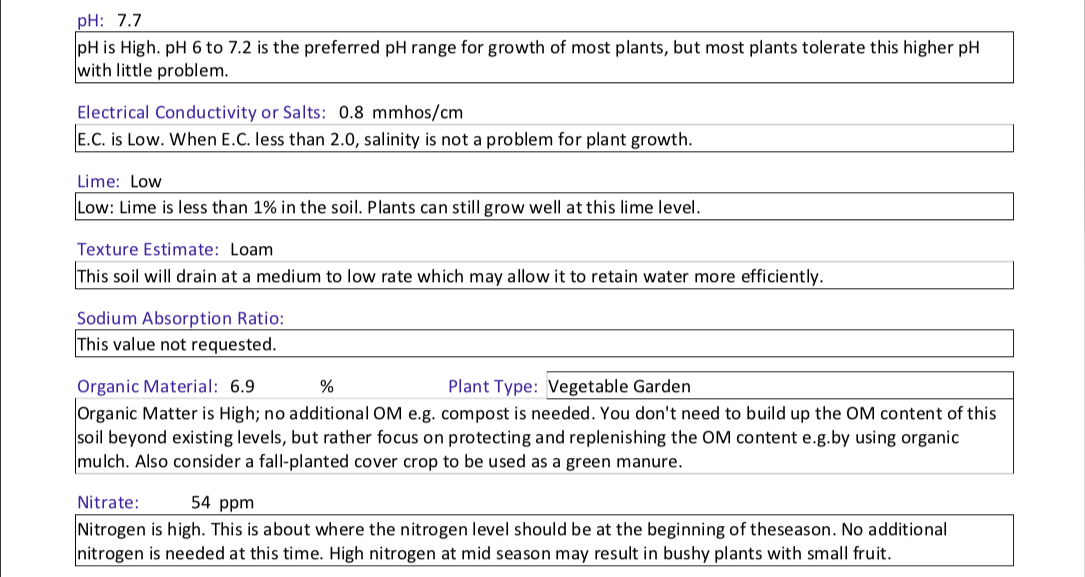
Next it was time to amend, heal, and build my soil for a strong gardening foundation. Some of this was easily done by simply adding lacking elements, while others will take several seasons to correct. Give yourself time to incorporate the test’s recommendations; it can take time to balance these elements before your soil is ready to be planted in. Often, labs provide contact information for follow up questions.
In the meantime, if your soil proves to be safe, you can still grow food. Some plants thrive in soils with higher or lower nutrients or pH levels than others. In fact, some food crops can even help you improve your soils—for example, legumes like beans and peas can help your soil become more nitrogen rich, if that’s the element it’s lacking.
Soil testing is a great way to ensure you’re setting yourself up for success in the garden. Knowledge is power, and healthy soils have the incredible potential to feed your family, beautify your community, and fight climate change. |
|
6 Reasons to Support Black-Owned Businesses |
Big companies have a history of oppressing small businesses and putting a heavy burden on low-income communities, including Black communities and Black-owned businesses. For example, Amazon’s presence in Seattle caused rising housing costs and pushed out local mom-and-pop shops. But diversity builds economic vitality, uplifts communities, and promotes productivity and resilience. For a green economy, holistic sustainability is impossible without the inclusion of all.
6 Reasons to Support Black-Owned Businesses
1. Close the Racial Wealth Gap
We can trace the origins of today’s racial wealth gap to Jim Crow-era practices like redlining and job discrimination which segregated African Americans from higher paying jobs and homeowner ownership opportunities that ultimately prevented wealth building. The 1935 Social Security Act did not afford coverage to domestic and agricultural workers, many of whom were African American, and its requirements for residency and payroll information also excluded the large number of African Americans working menial, “off the books” jobs and migrating North at the time.
Today, the median wealth for white families is about 12 times that for Black families averaging around $140,000, and one in four black households have zero or negative net worth compared to less than one in ten white families without wealth. Even more concerning is that by 2053, the median wealth for Black families is projected to fall to zero.
Small businesses and entrepreneurs have been longtime wealth builders in our society. By supporting more Black-owned businesses, Green Americans can create more opportunities for meaningful savings, property ownership, credit building and generational wealth.
2. Strengthens Local Economies
When small businesses flourish, so do their communities. But banks often hinder that prosperity by discriminating against African American and other entrepreneurs of color seeking small business loans. A 2017 study by the National Community Reinvestment Coalition actually found that banks were twice as likely to provide business loans to white applicants than Black ones and three times as likely to have follow-up meetings with white applicants than more qualified Black ones.
If consumer spending accounts for 70 percent of the entire US economy, imagine what directing some of that spending power to Black-owned businesses across the country can do. 48 percent of small business purchases are recirculated locally compared to only 14 percent of what’s circulated by chain stores. Supporting Black-owned businesses in turn supports families, employees, and other business owners, as well as attracts community investors who provide banking services, loans, and promote financial literacy--all things that build economic strength.
3. Fosters Job Creation
Many African American business owners fund their own businesses due to the lack of capital mentioned earlier. This means that most Black-owned businesses are sole proprietorships that don’t make enough money to pay employees. 2012 US census data showed that Black-owned businesses created 1 million jobs compared to white-owned businesses which created almost 56 million.
In 2018, the unemployment rate for African Americans fell to 6.6 percent, which was almost double that for white Americans and higher for other minority groups. Since Black-owned small businesses are likely to hire from the local community, supporting them can foster the job opportunities people need to achieve financial stability.
4. Celebrates Black Culture and Serves Communities
Many Black entrepreneurs start businesses inspired by the richness of African American culture itself--Black-owned clothing stores, hair care and make-up products, and children’s toys are just a few examples. And some Black-owned businesses are created to bring access to services specific to the community’s needs. Sol Sips, an affordable vegan beverage company founded to bring healthier organic juices to Brooklyn’s Bushwick neighborhood, is a great example.
These kinds of business ventures uplift communities, fostering a sense of pride in the people that live there. When you support Black-owned businesses, you get products that are valuable for the unique character they bring. Plus, you avoid spending money at other companies that may not celebrate Black culture, which brings us to another point:
5. Holds other Companies Accountable
By now you’ve probably heard about Gucci’s highly offensive sweater design resembling blackface. While Gucci’s under fire now for all of the decision making that went into the design’s approval and eventual release, it’s not an isolated incident. Many large companies vocally support minorities and their diverse cultures but practice policies that keep systems of injustice intact. Whether it’s H&M’s unsound marketing, Starbucks’ removing people from its store, or Facebook’s hiring diversity problem, African Americans and other minorities often bear the brunt of corporate discrimination.
When you choose a Black-owned business over problematic companies, you vote with your dollar by divesting from these kind of practices and hold companies accountable. And further down the road, you empower successful minority-owned businesses to implement equitable policies.
6. Visibility and Representation in the Green Economy
The prosperity of a green economy depends on the celebration of diversity by and for all peoples. The green movement has historically and presently wrestled with a lack of diversity in its activism and representation, but Green Americans can change this.
Bringing attention to Black- and minority-owned businesses can go a long way in demonstrating that the green movement is everybody’s movement and when minority-owned businesses have a financial platform to stand on, they inspire more people to join the green economy. You can find minority-owned businesses on Greenpages.org, our database of certified members of the Green Business Network.
When you vote with your dollar, are you voting for an inclusive economy as well as an eco-friendly one? Black-owned businesses are a vital part of the green economy. Start by Shopping minority-owned businesses through our Green Business Network.
|
|
Tree Folk Farm |
Green America visited Tree Folk Farm in Denton, TX. Andrea & Matthew Gorham use their one acre farm to create wholesome foods through sound ecological methods. Through regenerative practices such as cover cropping, hand weeding, and no-till, the duo provides a wide variety of mushrooms, fruits, & vegetables for local farmers markets.
|
|
Professional Association Resource Firm - PARFirm |
We do not believe in an outside office that utilizes energy and employees having to travel. We allow our employees to work from home on their schedule. We are extremely flexible and believe family comes first. We are small right now, but as we continue to grow we will not rent an outside office as we believe in making a positive environmental footprint and allowing new employees to enjoy the benefits of a work at home environment.
|
|
Will the Green New Deal Create a Green America? |
Representative Alexandra Ocasio-Cortez (D-NY) and Senator Ed Markey (D-MA) recently introduced their much-anticipated framework for a Green New Deal. The accompanying resolution introduced in the U.S. House of Representatives calls for massive investment in a green economy that would radically reduce climate emissions and enhance social justice nationwide.
“Even the solutions that we have considered big and bold are nowhere near the scale of the actual problem that climate change presents to us, to our country, to the world," Ocasio-Cortez said on NPR of why this deal is so important. Senator Markey compared the Green New Deal to John F. Kennedy’s speech announcing the goal of going to the moon within 10 years, which inspired the country to achieve what many previously thought impossible.
For the past two years, addressing climate emissions has been off the table in the House and Senate and the executive branch has actively worked to weaken the regulations that would lower greenhouse gas emissions and other forms of pollution. The simple fact that the Green New Deal puts climate change and social justice issues front and center and challenges us to shift to clean energy and a huge reduction in fossil fuels in 10 years is hugely important. And unlike climate solutions proposed in prior Congresses, the Green New Deal goes beyond putting a price on carbon and calls for crucial restructuring of the entire US economy. This bold vision is especially crucial as more and more Americans register their concerns about the impacts of global warming and growing inequality, and as scientific research calls for a rapid transition to climate solutions. Overall, the Green New Deal is proposing the solutions we need, at the speed and scale we need, to meet the twelve-year window scientists have given to put into place solutions that will avoid the worst of the climate crisis.
What Does the Green New Deal Call For?
The Green New Deal is clearly meant to be aspirational, and so it should be measured by the breadth and depth of its goals. Overall, those goals are inspiring, both in terms of the major transformation of the energy, transportation, farming and manufacturing sectors, and also for the fact that this transformation needs to benefit struggling Americans, by creating high-paying jobs and by protecting vulnerable communities. Some of the major environmental goals are:
- meeting 100 percent of the power demand in the US through clean, renewable, and zero-emission energy sources;
- upgrading all existing buildings in the US and building new buildings to achieve maximum energy efficiency, water efficiency, safety, affordability, comfort, and durability;
- spurring massive growth in clean manufacturing in the US and removing pollution and greenhouse gas emissions from manufacturing and industry as much as is technologically feasible;
- working collaboratively with farmers and ranchers in the US to eliminate pollution and greenhouse gas emissions from the agricultural sector as much as is technologically feasible (which includes supporting family farms, soil health, and healthy foods for all);
- overhauling transportation systems in the US to eliminate pollution and greenhouse gas emissions from the transportation sector as much as is technologically feasible, including zero emission vehicle infrastructure and manufacturing, and increased public transportation and high-speed rail.
The Green New Deal also contains a strong social justice platform that recognizes the need to include all Americans in the benefits of a green economy by creating spurring economic development, high-paying union jobs and training, involving communities in decision making, and building community ownership—particularly in communities that most impacted by pollution and climate change. It expressly protects the rights of indigenous peoples who have been egregiously impacted by fossil fuels. It also calls for high-quality health care, housing, jobs, and access to clean air and water for all.
Green America has long called for a green economy that combines environmental sustainability and social justice together and it is inspiring to see a major effort in Congress that is calling for a truly green economy for all.
Concerns with the Green New Deal
The overall goals of the Green New Deal are laudable and long overdue. In order to achieve its robust vision, Green America recommends the following measures to help guarantee the success of a transition to a truly green economy:
- The resolution should call for a halt to fossil fuel leasing or the phase out of fossil fuel extraction, in keeping with the call of 600 environmental groups, including Green America to ensure that the Green New Deal rapidly ends our reliance on fossil fuels;
- The phrase “as much as is technologically feasible” should be bolstered and clarified throughout the resolution, so that it does not slow down the progress or impede the goals of the Green New Deal;
- Nuclear, natural gas, and coal-fired power plants should be clearly excluded from the allowable energy mix (even if they can be made to have zero carbon emissions);
- New refrigerant technologies should be supported since refrigeration is a major contributor to climate change, and according to Project Drawdown, reducing emissions from refrigerant technologies could yield the biggest climate impacts;
- The resolution should clarify that carbon sequestration needs to be achieved through agricultural means only, including crops and re-forestation, and call specifically for a move to regenerative agriculture with a reduction in pesticides that will restore soil health, sequester enough carbon to actually reverse climate emissions, and prevent the catastrophic extinction of pollinators and other insects and species worldwide.
- Waste reduction, reuse of materials, and effective recycling for responsible materials management that are urgently needed to reduce our climate and environmental footprint should be included as part of the solutions we need.
Take Action
The Green New Deal is creating an important opening and new momentum for advancing bold solutions to the climate crisis and creating a truly green economy from which all Americans will benefit. In order to fulfill its promise, Green America recommends the specific changes outlined above.
Green America is encouraging our members to call their Representatives and encourage them to support a truly Green Deal. Here’s a message you can leave on voicemail or send through email:
“I support the vision of a New Green Deal – and want to ensure that it will transition the U.S. from fossil fuels to truly renewable sources of energy like solar and wind, electric vehicles, and will not allow for fossil fuels and nuclear energy to be considered part of the solution. The current resolution sketches out a bold agenda which we can and must continue to strengthen, such as including the need to lower emissions from refrigerants and ending the extraction of fossil fuels. I applaud the fact that the Green New Deal works to create high paying jobs and healthcare for all, aims to protect vulnerable and indigenous communities, and I urge that communities of color, indigenous communities, and other economically marginalized communities are included in further legislative drafting and hearings.”
|
|
Maanaki Logo |
|
|
Greenline Community Ventures LLC |
Greenline Community Ventures LLC (Greenline) is an employee and minority-owned, impact-focused investment management firm that specializes in delivering patient, flexible capital to disadvantaged businesses and communities that are underserved by traditional capital providers. We use our extensive financial and community development experience to invest in businesses that generate a positive and sustainable economic, social and/or environmental impact in low-income communities (LICs) and/or for economically disadvantaged groups across the United States. Over the past 16 years, we have invested over $1.9 billion in underserved businesses and projects located in rural and urban LICs in 31 different states generating more than an estimated 30,000 jobs – with an emphasis towards maximizing job quality, labor force fit and availability to LIC residents, minorities and women.
100% of borrowers are located in low-income communities (minimum of 80% or less than AMI, poverty rate greater than 20%) with the vast majority of borrowers located in highly-distressed communities (minimum of 60% or less of AMI, poverty rate greater than 30%).We target borrowers that have a positive economic and/or social impact in its community, include job creation/retention, job quality (healthcare, living wages), job accessibility (to low-income persons and minorities), environmentally sustainable methods, and women or minority-ownership.
|
|
Environmental Justice Toolkit |
|
|
Greenline Community Ventures LLC |
Post-recession trends of bank consolidation, risk aversion and increased cost of doing business have exacerbated the difficulties for small businesses to access traditional loans and financial services. This struggle is further compounded for women, veteran, and minority business owners. Greenline's serves to fill this gap by providing below market loans to small businesses that are creating wealth and quality jobs.100% of Greenline's lending activities are directed at low-income census tracts throughout the United States. Greenline also has a focus on minority or women owned businesses, projects that generate living wage jobs or provide meaningful employee benefits, and businesses with positive environmental impacts. As a certified B Corporation, GIIRS rated gold entity and Impact Reporting & Investment Standard user Greenline has been formally acknowledge for its commitment to social and environmental ethics, transparency, and accountability.
|
|
2/4/2019 Sanjana Reddy |
|
|
2/4/2019 Sanjana Reddy |
|
|
2/4/2019 Sanjana Reddy |
|
|
Will Harris |
Written by Food Tank
In the film, One Hundred Thousand Beating Hearts, filmmaker Peter Byck takes viewers to Bluffton, Georgia to hear from Will Harris of White Oak Pastures about his journey from industrial to re-generational farmer. This is the second film in Byck’s Carbon Nation: Soil Carbon Cowboy series; it continues to highlight farmers and ranchers who are pioneering regenerative grazing practices and soil health.
Harris opens the film reflecting on his journey, “When I was a full-time commodity cowboy, all I thought about was how many pounds of beef I could squeeze out of this farm at the lowest possible price, with no real focus except pounds of beef and how cheap I could do it. Today I never ever think about how many pounds we consume. What I think about all day every day is how can I make this land up.”
Harris, who was born and bred at White Oaks, has transitioned his family’s farm from one focused on industrialized beef production to a farm that focuses on sustainability, animal welfare, and humane agricultural and environmental stewardship.
“The first thing I gave up was confinement feed and hormone implants and antibiotics,” he told Modern Farmer in an interview. “I thought that that’s all I had to do. Then I realized pesticides and chemical fertilizers were wrong, so I stopped using them. And then I realized that we needed to be butchering animals on the farm and not moving them, so we built an abattoir, and I thought we were done. But then I realized we were still running a monoculture– a meat monoculture and a plant monoculture– and to my mind, when you’ve got a monoculture, that’s a sign of a factory farm.”
To transition White Oak Pastures back to its heritage, Harris de-commoditized, de-industrialized, and de-centralized his farming practices, creating a living ecosystem that he takes pride in managing every day.
“Today we don’t feed animals; we feed the microbes in the soil. The microbes feed the soil, and the soils feed the plants and the plants feed the animals, and they breed, and they grow, and we turn them into meat and sell it for money which is like the blood that pumps through our bodies to keep it all going,” says Harris in the film. “It’s really a beautiful system. What’s most beautiful is that in every generation the animals are healthier and healthier, happier and happier.”
According to Harris, “There’s about a hundred thousand beating hearts on this farm on any given day,” that, while may not be enough to feed the world, are certainly enough to nourish his community. “In rebuilding the soil, we are rebuilding a farmer middle class,” says Harris, another area in which he is passionate about supporting.
More on Food Tank
Food Tank: https://foodtank.com/news/2016/10/one-hundred-thousand-beating-hearts-f…
Twitter: @FoodTank
Instagram: @foodtank
|
|
Nattiam LLC |
Sustainable building, ecofriendly furniture and decoration, to protect the environment.
|
|
1/31/2019 Sanjana Reddy |
|
|
Skip The Slip - Green America (2019) |
|
|
1/31/2019 Sanjana Reddy |
|
|
1/31/2019 Sanjana Reddy |
|
|
Green Money Savers |
Living sustainably doesn’t have to be expensive. The staff at Green America is pretty savvy when it comes to being green on a budget, so we’ve rounded up a few of our best tips to save money.
I love shopping at consignment and thrift stores. It’s like built-in recycling because you’re buying used clothes, and you get them at really affordable prices. ” —Amanda Heerwig, foundations & business relations manager
“A lot of people don’t realize that electric appliances use energy even when they’re turned off, and this energy use can add up to $100- $200 to your electric bill per year. To avoid this ‘phantom load,’ use power strips to plug in most of your electric devices, so you can turn several all the way off all at once.” —Sytonia Reid, associate editor
“I enjoy going to garage sales to get clothes for my kids, but if there’s something specific we need—like a black concert outfit (required for band) or a classic white tank for layering—I’ll often shop at ThredUp.com. It’s an online store for secondhand clothing that carries several recognized brands. You can sell your old items on ThredUp, too.”—Tracy Fernandez Rysavy, editor-in-chief
“I like to use a mixture of vinegar and baking soda for cleaning just about anything. It’s cheaper than the cleaning products you would buy in most stores.”—Davina Etwaroo, executive assistant
“I commute by foot and use the time to listen to Audible and make calls. The area I live in now is very walkable and convenient to most of the places I go.” —J, accountant
“Growing your own produce can save you grocery money and help cool the planet, too, if done with regenerative practices. We can teach you how to transform an average garden into one capable of pulling carbon out of the atmosphere, and we hope you'll register your garden. You can also join the climate victory gardens Facebook group to share photos, stories, and tips.”—Jes Walton, food campaigns manager
“I like to ride my bike to the Metro, which saves me money because bike parking is free. We also replaced the light bulbs in our home with LEDs, which reduced our electric bill.”—Todd Larsen, executive co-director
“I’m in love with Beeswrap, reusable food wrap made from organic cotton and beeswax that you can use in place of plastic wrap. I feel better about wrapping up my leftovers in Beeswrap than in plastic wrap [see photo above], and it’s also a lot lighter than a plastic or glass container when I’m carrying my lunch to work. Since cotton and beeswax are compostable, all you do when its year or so of useful life is up is throw it in your compost bin!” —Dana Christianson, membership marketing director
“Dressing for the weather and season in your home is something I like to do. In the winter, you can keep the thermostat low and wear sweaters. In the summer, keep it high and wear shorts, tanks, and thin shirts. Or go without clothes.” —Shireen Karimi, director of digital communications
|
|
Skip the Slip Report 2019 |
|
|
Chocolate Scorecard 2019 |
|
|
Form 990 |
|
|
Hang Up on Fossil Fuels Report - Green America 2019 |
|