|
Clean Energy is Calling Report, 2020 Edition |
The telecom sector uses enormous amounts of energy each year: enough electricity to power all the households in New York City. The four largest companies – AT&T, Verizon, Sprint and T-Mobile – collectively use more than 30 million MWh of electric power each year.
This energy powers wireless access networks, data centers, towers and other infrastructure allowing cell phone users to access data and connect nationwide. Until recently, the vast majority of this sector was powered on fossil fuel energy - but this is starting to change.
Since Green America launched Hang Up on Fossil Fuels in 2017, thousands of individuals have reached out to telecom companies through petitions, social media, calls, and letters urging commitments to 100% clean energy. We've seen a lot of movement since then, and this report lays out the past year's progress and how much more work there is to do.
Based on publicly available data and information provided directly to Green America by companies, we graded each of the companies on actual progress on increasing clean energy and their commitments to adopt clean energy.
KEY REPORT FINDINGS
Clean Energy in Telecoms
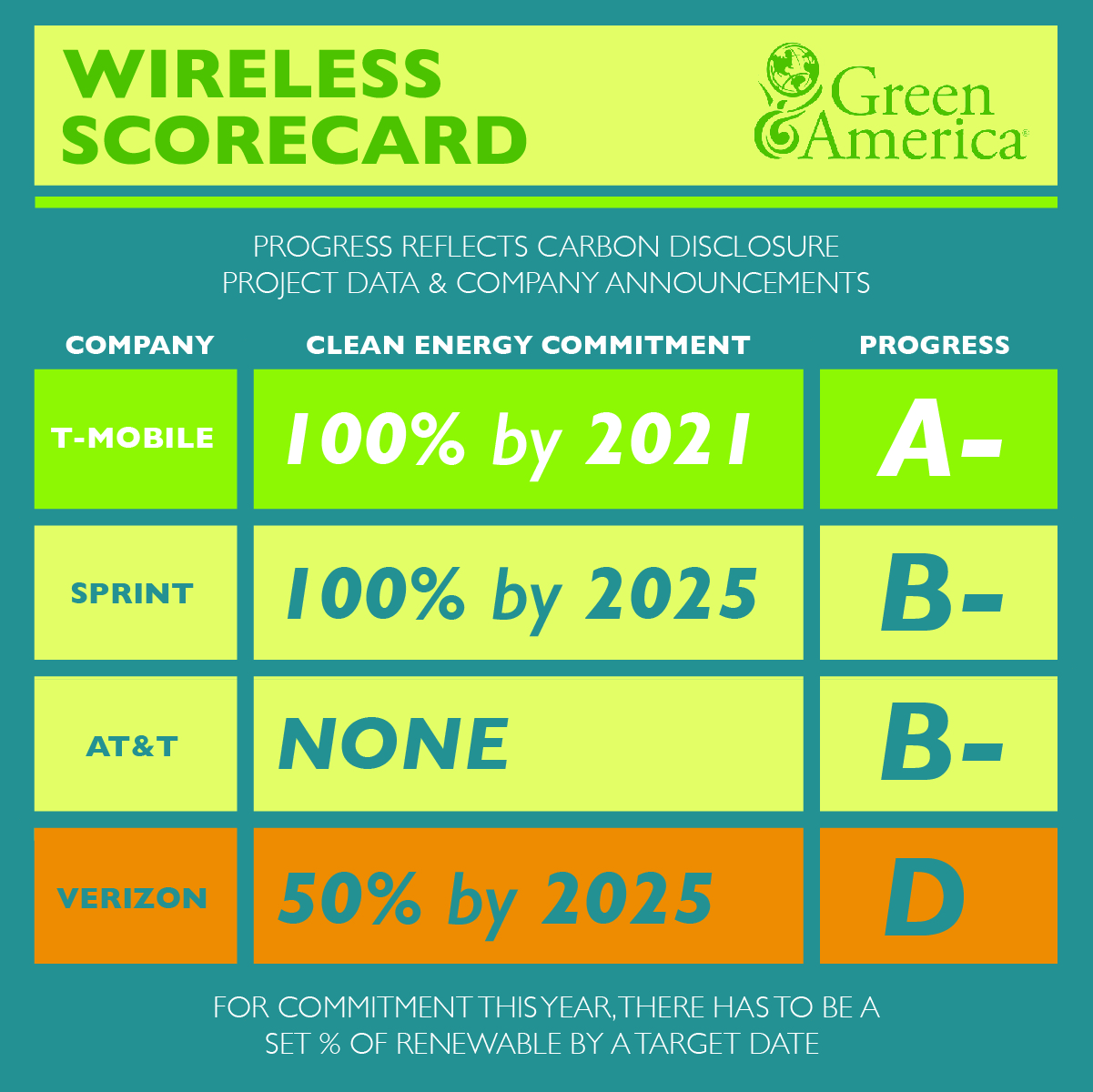
T-Mobile’s commitment to reach 100% renewable energy by 2021 remains the most ambitious goal in the sector. In 2020, T-Mobile reached 95% renewables and completed its merger with Sprint. T-Mobile is preparing an updated timeline for its newly expanded network to reach 100% renewables.
In 2019, prior to merging with T-Mobile, Sprint announced its first clean energy project which the company stated would provide roughly 30% of its energy use. In November of 2019, Sprint announced a commitment to 100% renewable energy by 2025.
AT&T has purchased more than 1.5 gigawatts of clean energy since 2018, which we estimate equals approximately 25-30% of its total energy. It currently does not have a target or timeline for renewable energy.
Verizon recently announced a purchase agreement for 130 MW of capacity as the first move to meet its goal for 50% renewables by 2025, but it remains far from meeting this target. We estimate that Verizon's new wind project will provide 3-5% of its total energy use.
Energy Intensity and Usage
AT&T, Verizon, and Sprint have all lowered their energy intensity (increased efficiency) over the past decade. As a result, AT&T and Verizon have kept their energy use and emissions relatively constant, however, in 2018 AT&T reduced its total energy use and reduced its emissions.
T-Mobile is the only company to see an increase in energy usage over the past decade. In comparing the four companies regarding their energy intensity in relation to revenues or customers, AT&T and Verizon use far more energy per customer than Sprint or T-Mobile.
Overall Greenhouse Gas (GHG) Emissions
T-Mobile has committed to reduce Scope 1 and 2 emissions 95% from a 2016 baseline year by 2025. In 2019, Sprint set a goal of 100% carbon neutrality by 2025. AT&T continues to see progress on its goals to reduce its Scope 1 emissions by 20% and has exceeded its goal to reduce Scope 2 emissions by 60%. Verizon has committed to reduce its Scope 1 and 2 emissions 100% by 2035 from a 2018 baseline year.
In this report we track both Scope 1 emissions (from sources that are owned or controlled by the organization) and Scope 2 emissions (from the consumption of purchased energy). In the telecom sector, Scope 2 emissions are much greater per company than Scope 1 since most of the energy used is purchased electricity, which is why the rapid transition to renewables is so important.
COVID-19 Impacts
As communities take the necessary precautions to avoid spreading COVID-19, we’ve relied more than ever on networks to stay connected while physically distancing. AT&T has reported a 26% increase throughout its core network (business, home broadband, and wireless data). Voice calling has been up between 50-90% since regions began stay-at-home orders. The use of Wi-Fi calling minutes has been up more than 100% since late March. T-Mobile and Sprint both report significant increases in usage as well.
This increased traffic is likely to result in an uptick in energy consumption. As the growth in data traffic is observed to outweigh gains of energy efficiency, and as many workers in the US will continue to work from home after the COVID-19 crisis is over, it is all the more crucial that this sector builds on recent progress and commits to reach 100 percent renewable energy.
Social Justice in Clean Energy
Shifting from fossil fuels to renewables is a key component to advancing environmental justice. Fossil fuel extraction, combustion, and waste disproportionately impact communities of color. Impacts from fossil fuel plants are suspected contributing factors to higher mortality rates in these communities as they are more exposed to pollution and witness significant health impacts.
In the transition to renewables, it is also essential to ensure that jobs in wind and solar benefit impacted and under-served communities. And when solar and wind facilities are built in or near vulnerable communities, those communities must have key roles in the process and obtain benefits from the installations.
Transitioning away from fossil fuels in a sustainable way means ensuring renewable energy firms have responsible labor practices, support all communities, and are advancing diversity, equity, and inclusion throughout their companies.
Solar employs the most people of any electric power generation sector with nearly 250,000 employees, despite most electricity still coming from natural gas, coal, and nuclear power. This demonstrates the incredible potential for job creation as we continue to shift from fossil fuels to clean energy. But unionization in the electric power generating sector is just 4-6% in the solar and wind sectors.
Regarding diversity in the sector, women reportedly make up less of the solar and wind workforces versus the overall workforce average. Latino and Asian employees are more represented in solar and wind power than in the larger workforce. African American employees are underrepresented in both solar and wind power. It is clear that much more work needs to be done to diversify the fast-growing renewable energy sector.
The major telecom companies all state commitments to working with diverse firms, including those that are minority owned, women owned, LGBT owned, veteran owned, disability owned, and SBA-defined small and disadvantaged businesses. But the companies do not indicate a preference for unionized labor or for women and minority employees in their contracts for renewable energy. For more information on employee diversity in the clean energy section and details on each telecom, please see page 9 in our report.
TAKE ACTION
The telecommunications industry can make great strides in reducing fossil fuel use, which requires the major companies achieving clean energy goals in a responsible timeline. Clean energy options are increasing every year, in large part to satisfy the demands set by major corporations, states, municipalities, and other institutional purchasers. It's time for telecoms to #cleanupwireless by reaching 100% renewables by 2025.
Tell Verizon and AT&T to commit to 100% clean energy
Previous versions of our Clean Energy is Calling report can be found here: V1, 2018 and V2, 2019.
|
|
Clean Energy is Calling 2019 (1) |
|
|
In age of climate change, can our lawns be more than landscaping? (Curbed) |
Forget aesthetics: Lawns can raise food, restore habitats, and even store carbon
If Americans want to reduce their environmental footprints, one of the first steps may be reexamining what’s in their backyards. The lawn-industrial complex, and our country’s obsession over manicured carpets of green, has birthed a turf grass behemoth.
Lawns cover roughly 2 percent of the land area in the continental United States, or three times the area of the nation’s second largest irrigated crop, corn. Even in cities, lawns are by far the largest contributor to overall green space. A recent boom in exurban development on the fringes of metro areas suggests that this mass of grass will only increase.
They’re a perfect metaphor for so much about American culture and our relationship to the environment in an age of climate change. Beginning in the ‘50s, the spread of sprawl and suburbia led U.S. homeowners, and the corporations that profited from the sale of seeds, chemicals, and tools, to create a homegrown spin on the French concept of tapis vert, or “green carpet.” A decade ago, a study found that of the 116 million American households, only about 25 percent didn’t take care of some form of yard or lawn. Landscaping alone is nearly a $100 billion annual industry.
For the most part, the vast monoculture of perfectly mowed front yards, the biggest stretch of the American landscape under the control of average citizens, isn’t going anywhere soon. But slowly, and in relatively small ways, that’s starting to change.
Sparked by the recent droughts in states such as California, the idea of the lawn as a space for preservation and responsible stewardship has taken root out West, fueling nationwide trends towards native plantings, drought-tolerant landscaping, and even raising more crops as a path to reducing emissions.
According to Paul Robbins, a professor at the University of Madison and author of Lawn People: How Grasses, Weeds, and Chemicals Make Us Who We Are, there are signs, albeit small, of a significant shift. Americans still judge one another by their lawns, “ascribing the moral failings of outside the house with what happens inside the house.” But environmental values are starting to become part of the calculus.
“Shame used to be leveled against people who didn’t take care of their lawns enough,” he says. “Now, what’s happening is that has become inverted, at least in some places. If you take too good care of your lawn, you’re wasting water.”
:no_upscale()/cdn.vox-cdn.com/uploads/chorus_asset/file/16204412/GettyImages_482278204.jpg)
Getty Images
The connection between the climate, and our homes
Our treatment of our lawns—dousing them with fertilizers, planting non-native species for aesthetics and ease of care, overusing water to keep these plants healthy regardless of the climate, and then trimming and shaping the trees and grass with equipment powered by pollution-spewing gas motors—says a lot about our stewardship of our environment.
But it can also say a lot about growing awareness, and the unrealized potential of collective action.
“We have more land in yards than in parks or other areas we tend to think of as green space and infrastructure,” says Dr. Carly Ziter, a professor at Concordia University who studies the carbon-capturing potential of lawns. “Even though you may think of them as small, they really scale up when you talk about an entire city.”
Ziter’s work has revealed some of the surprising powers of our backyards. A study she conducted in Madison, Wisconsin, found that the typical American lawn can capture carbon better than the land found in an untouched ecosystem.
Soil in residential lawns can also store high amounts of carbon, and planting a certain percentage of native plants does make a difference in supporting biodiversity. Lawns can be an ally in fighting climate change, and, along with trees, can help cool cities and reduce the urban heat island effect.
Of course, using a gas-powered mower can mitigate or even offset that advantage. But this is what her, and a number of advocates, suggest could be the real power of our lawns: small plots of land that allow us to take some form of control in the fight against the seemingly unstoppable forward progress of climate change.
“As a citizen, I can make a difference,” she says. “I can manage it in a way that contributes to the ecological fabric of the city and the life of a city.”
The lawn-care industrial complex isn’t going anywhere
Of course, as if continuing to drive home its metaphorical power, even our great intentions about our lawns can obscure the reality of the overall environmental picture of the turf grass empire.
Statistics paint a relatively grim picture of our collective habits. The lawn care industry continues to grow. Analysts at Garden Research found U.S. gardeners spent a record $47.8 billion in lawn and garden retail purchases last year, roughly $503 per household (a figure that includes outdoor furniture purchases).
Environmental Protection Agency stats suggest that every year, Americans use 800 million gallons of gasoline caring for our lawns, and spill a further 17 million in the process (a spill, in terms of wasted gasoline, within the estimated range of the Exxon Valdez disaster). Artificial fertilizers use nitrous oxide that itself produces additional greenhouse gas, in addition to chemical run-off that seeps into groundwater. Speaking of water, the EPA also estimates the average U.S. household uses 320 gallons of water daily, a third of which is dedicated to landscape irrigation.
The lawn care industry quickly went from niche to industrial-scale over the last century. In the 1920s, the Scott company started selling grass seeds through the mail. After the post-war boom in (mostly white) homeownership, the industry truly became mass market. Even as more and more consumers make nods towards more sustainable lawns, they’re opening up niches and new business lines for succulents and drought-resistant, genetically modified grass strains.
It’s a profit model predicated on continued growth, says Robbins.
“I don’t see changes in that industry,” he says. “The lawn industry isn’t turning over a new leaf but, bless capitalism, seeking new opportunities to make money.”
:no_upscale()/cdn.vox-cdn.com/uploads/chorus_asset/file/16204413/GettyImages_567400735.jpg) A community garden is in the works at Rancho Mission Viejo on June 25, 2104 in San Juan Capistrano, California.
LA Times via Getty Images
A community garden is in the works at Rancho Mission Viejo on June 25, 2104 in San Juan Capistrano, California.
LA Times via Getty Images
Backyard and back to the land
Where some see a lawn that needs ornamentation and new plants, others see a chance to change our relationship with our backyard agriculture into something, while not natural, at least more holistic.
“We can’t continue to go on like this,” says Fred Meyer of Backyard Abundance, an educational nonprofit that promotes gardens and healthy landscaping for food and self-sufficiency. “We can’t have turfgrass landscapes that don’t really help us, or help the rest of the planet.”
Meyer, who founded the group in Iowa in 2006, sees our backyards as a tool, as do many in the urban agriculture movement. Lawns can help feed us, as well as create habitat for butterflies, honey bees, and other creatures.
“Anybody who’s paying attention knows there are a lot more endangered species out there now than there were even just a few years ago,” he says. “Our landscapes can help solve that.”
It may seem like a fanciful suggestion, more virtue signaling than actual accomplishment. But, done at scale, there’s something to the idea of a lawn as a natural staging ground, a mission adopted by a nationwide alliance of volunteers, nonprofits, and government agencies. Some of the more successful initiatives have pushed the idea of gardens as yards as waystops in larger, green infrastructure systems.
A project in Toronto called the Homegrown National Park Project, launched by the David Suzuki Foundation in 2013, encourages Canadians to plant native plants throughout their city, in vacant lots, alleys, and balconies. The program even hired park rangers to help promote new planting. It’s since spawned a follow-up of sorts, the Butterflyway Project, that’s creating a network of native wildflower plantings across the nation.
Others back up Ziter’s point about the power of lawns to reduce emissions by growing more food. Jillian Semaan, food campaign director of the environmental group Green America says that our backyards can become beachheads in a larger regenerative agriculture movement, focused on raising crops without the use of herbicides or pesticides, and help increase self-sufficiency.
Green America has launched a Climate Victory Gardens campaign, echoing the WWII-era program, to promote the idea of growing your own food as an easy way to contribute to the fight against climate change.
:no_upscale()/cdn.vox-cdn.com/uploads/chorus_asset/file/16204417/8d31671v.jpg) A man in Oswego, New York, working on a Sunday morning in June of 1943 on his victory garden.
Library of Congress
A man in Oswego, New York, working on a Sunday morning in June of 1943 on his victory garden.
Library of Congress
“During the original Victory Gardens campaign, the nation raised 8 million tons of food in 1944,” says Semaan. “We thought that would be a great idea, considering the climate crisis we’re in now, to bring back to victory garden concept for the planet.”
Both Meyers and Semaan’s organizations have raised awareness and encouraged action, and according to stats from Garden Research, one of the biggest growth areas in U.S. garden spending has been raised beds for vegetables.
But in terms of the global challenge of climate change, these grassroots efforts likely haven’t moved the needle substantially. Semaan said 1,300 people have signed up online to raise Climate Victory gardens. But it’s more about encouraging engagement that leads to larger collective action, Meyers says.
“Pretty much every environmental measurement is trending in the wrong direction,” he says. “What the backyard movement means is that we can make small differences in our own landscape. They teach us how to advocate for larger scale action in our neighborhood and city.”
A symbol of greater awareness
Can the way we treat our lawns really make a difference, or are they the straw-ban equivalent of action: easy and performative, but ultimately, not taking all the drastic steps necessary to solve the larger issue?
Robbins sees evidence that these lawn trends, and beliefs, are taking root, though to what impact remains to be seen. In Madison, Wisconsin, a university town and liberal bastion, restored native prairie landscapes can be found everywhere. But does a proliferation of wild landscaping signify a commitment to big changes, or dressing up ecological disaster with a nice native shrub?
“I think these things need to be treated with a lot of skepticism,” he says. “People like to perform a certain kind of citizenship. Now, some people simply perform it via something other than nicely maintained turf grass.”
|
|
Stacking Financial Incentives to Reward Farmers for Regeneration |
Working with leaders in the agricultural finance arena, we are collecting and demonstrating the utility of combining multiple “Pay-for Performance” mechanisms, to find the funding sources needed to adequately pay farmers for adoption and maintenance of regenerative agricultural approaches that restore ecosystem functions, specifically GHG reductions, carbon sequestration, water quality enhancement, flood protection, drought and fire protection.
This initiative focuses on aggregating and forging creative collaboration of private and public financiers to create investment vehicles and models for farmer incentives that together create a “golden carrot” for farmers entering the program. Initial focus is on innovations to stave off the crisis faced by family dairy farmers in the North East.
|
|
Clean Energy is Calling 2019 |
|
|
Green America: Sprint Falls to Lowest Grade in Updated Wireless Scorecard and Industry Report |
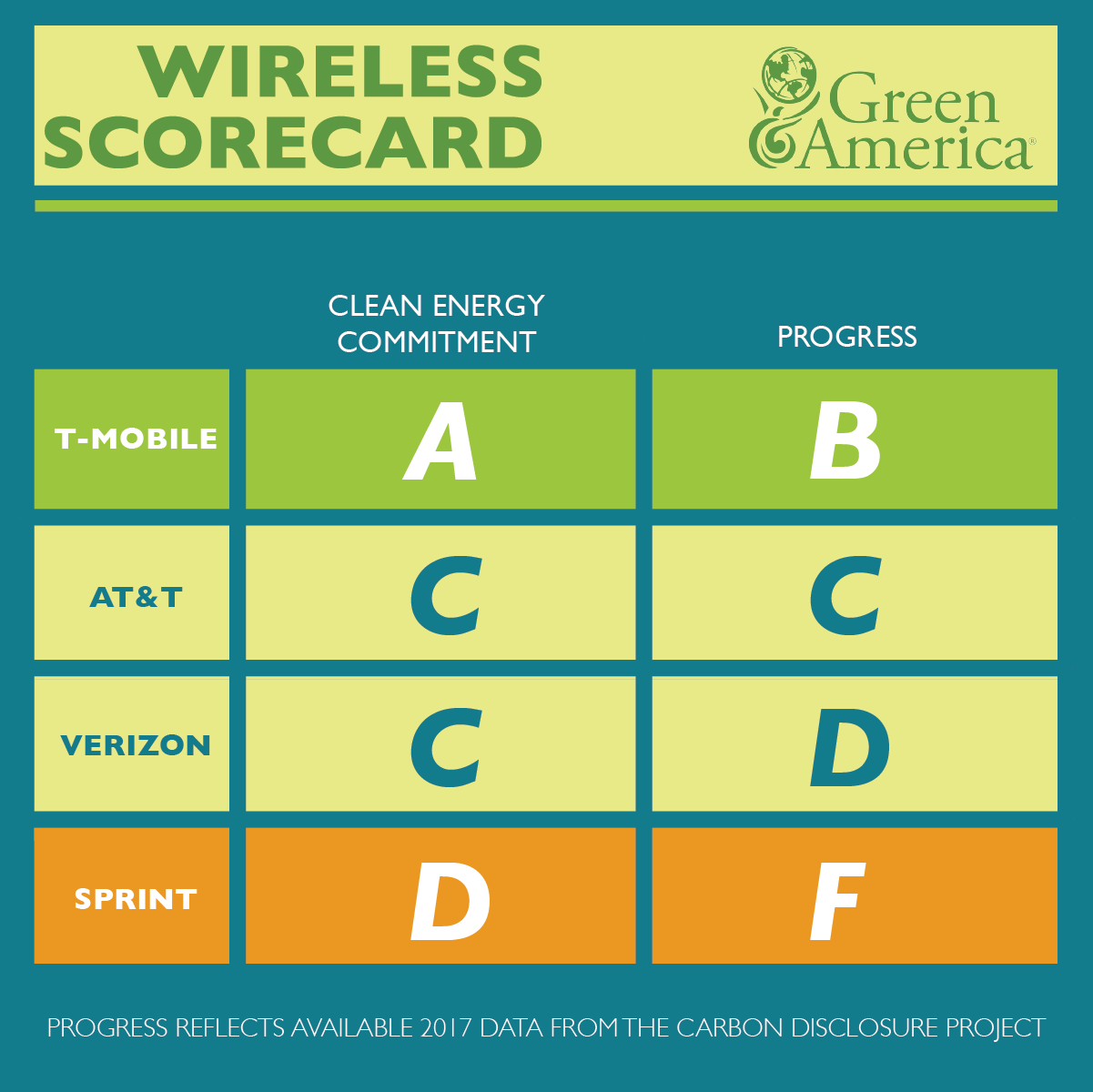
Washington, D.C. - April 30, 2019 – Sprint is now in last place on Green America’s Wireless Scorecard For Use of Clean Energy after failing to meet its goal of 10% clean energy by 2017 or provide updated data. According to Green America’s updated “Clean Energy is Calling” report, T-Mobile is the clear leader with a 100% commitment to clean energy by 2021 and several contracts with wind farms already in place. AT&T, the biggest non-utility purchaser of wind power in the U.S. last year, is in second place with contracts in place to source 820 MW of energy from wind, but no announced clean energy target. Verizon, previously in last place, ranks third with a commitment to 100% clean energy by 2025, a $1 billion green bond to help finance clean energy adoption, but no new contracts in place to get the company to its goal.
The report also highlights the challenges and opportunities of 5G networks. A possible benefit of 5G could be its potential to increase energy efficiency. But 5G also will increase the number of devices that can be connected from 1,000 devices to one million devices per square kilometer. The amount of infrastructure and energy needed to support such a large and fast network could be staggering, making the industry’s transition to clean energy more important than ever.
The telecom sector already uses enormous amounts of energy each year. The four largest companies – AT&T, Verizon, Sprint and T-Mobile – collectively use more than 3 million MWh of electric power each year. AT&T and Verizon, the two leading U.S. companies in the industry, have a combined electricity usage that could power 2.6 million homes for a year. Green America estimates that if all commitments are met, approximately 40% of the four companies’ networks will be powered by clean energy.
“At a time when we are increasingly seeing the negative impacts of climate change, and when the federal government is failing to act, we need companies to step up their commitments to clean energy,” said Todd Larsen, executive co-director of Green America. “Consumers have made clear to the telecom sector that they expect their cell phone carriers to make 100% commitments to clean energy, and with the progress documented in this report, we can see that companies are starting to listen.”
Each of the companies is graded on current commitments and actual clean energy being used. This is based on publicly available data through the Carbon Disclosure Project and reflects 2017 energy use, except for Sprint, which has not released updated data and is measured by its 2016 numbers.
“Green America is excited with the progress we are seeing, but the ultimate goal is to reach 100% clean energy across these major telecom companies,” said Beth Porter, climate campaigns director at Green America. “The impacts of climate change are already being felt by communities worldwide. We need all sectors to rapidly cut emissions and shift to clean energy sources to address the climate crisis.”
Since 2017, Green America, the nation’s leading green organization working to solve environmental and social problems with economic solutions, has been urging telecoms to shift to clean energy through its “Hang Up on Fossil Fuels” campaign, with a specific focus on Verizon and AT&T, the nation’s two largest carriers. Thousands of consumers have signed petitions and contacted their network providers to demand the switch to clean energy.
-----------------
MEDIA CONTACT: Max Karlin for Green America, (703) 276-3255, or mkarlin@hastingsgroup.com.
|
|
Carbon Farming Post 1 |
|
|
Toxic Textiles |
No piece of clothing is worth risking the future of our planet or someone’s health. We need to radically transform the way clothing is made and the way garment workers are treated, and end fast fashion.
Take action for sustainable clothing

Why Toxic Textiles?
The chemicals used to manufacture our clothing put garment workers’ health at risk, pollute communities and taint local resources, AND risk consumers’ health. Exposure to these chemicals can harm reproductive systems, cause cancer, damage the nervous systems, damage the liver, and more.
Clothing that is odor-wicking, anti-wrinkle, flame-resistant? Often made using toxic chemicals!
How Can You Help?
When we first launched the Toxic Textiles campaign, we pushed Carter's, the largest US retailer of children’s clothing, to step up its chemical management and sustainability efforts. Thanks to Green Americans taking action with our campaign, Carter’s has
- launched a website on its environmental, social, and governance impacts
- disclosed a restricted substances list (RSL)
- issued a sustainability report
- announced it will adopt a manufacturing restricted substances list (MRSL)
Now, we are asking the largest clothing retailer in the US—Amazon—to end toxic textiles and respect workers’ rights!
Tell Amazon to end toxic textiles
|
|
Finding Hope for Climate in My Parents' Garden |
If you’re alive and read the news, you’re probably worried sick about the amount of terrible climate change news that seems to come out every week. Things might seem bleak, but thankfully, there’s hope! That hope comes in the form of something that’s not expensive, tedious, or hard to enact. All you have to do is grow a garden.
You’d be surprised how gardening is the solution that’s right under our nose. For a few months now, especially after the latest IPCC report, I’ve been on edge about the state of the world. Would we ever do what we need to do to mitigate or even reverse climate change? I’ve developed a lot of ideas about what I feel news reporters, financiers, scientists, and the average layperson could do.
That’s why I was so surprised and inspired when I saw Green America’s video with Ron Finley and Rosario Dawson about using regenerative agriculture to help combat climate change. One aspect I liked about it is the focus on a solution that can empower people and balance out negative coverage of the world’s problems, which can make people feel despondent, scared, sad, and at worst, force them into denial. I’d been wrestling with a lot of these feelings primarily because finding articles about common-sense and scientific solutions are few and far between. My theory is that it’s easier to sell the negative because, that’s what the news media has geared themselves towards in the past few decades.
That’s the background for my story about gardening. Throughout my inner turmoil, about the state of the state of the planet, my parents were doing their best to calm me down. One thing both my mom and dad said, is that gardening is a great and easy solution for the planet. “I’ve probably knocked out all of our emissions just by making this garden,” my dad joked at one point, gesturing to the garden he was working in.
My dad’s vegetable garden is something he utilizes to ease his stress from work and from the everyday issues of life. His garden includes various seasonal foodstuffs–tomatoes, peaches, bell peppers, chili peppers, and okra in the spring and summer, and collard greens, carrots, and surprisingly, lemons and oranges in the fall and winter. Along with his peach tree, he also works on his pear tree, apple tree, and his and my mom’s new addition--a fig tree. Now, my dad is planning on adding strawberries as well as other fruits and vegetables in his ongoing garden expansion project, which now includes an unused clearing in our backyard.
My family has eaten the food from this garden for years now, and it’s just one of the many gardens my dad has made that we’ve eaten from, tended to, or enjoyed in some way. At almost every house we’ve lived at, my dad would make a garden. If it wasn’t tomatoes, it was flowers. If it wasn’t flowers, it was potatoes. If I wasn’t outside with my dad in his garden, I’d be in the house helping my mom water her many numerous indoors plants. For my entire life, I’ve been surrounded by plants in some way, shape or form. They’re almost like additional family members to me, so much so that I say “Sorry” to them if I accidentally bump into them at my parents’ house. I’ve even got designs to make my own garden, and I’ve started taking care of my first plant, an orchid.
However, even though my entire life history has been tied up in plants, I didn’t realize how necessary gardens could be to changing the environment. In fact, I actively discounted my dad’s statement about the power of gardens. I was too ready to throw in the towel on climate change to hear exactly what he was saying.
Imagine my surprise to stumble upon Green America when trying to, once again, find some solutions for climate change. I’d read about regenerative planting before, but I still wasn’t sure how big the widespread change a garden–or many gardens–could have. However, what I’ve read on Green America’s site has proved my dad absolutely right: Gardens can have the power to save the world.
So long story short, if you’ve got the room to make a Climate Victory Garden for climate change, DO IT! Even if you’ve got a little windowbox garden of herbs, that’s better than nothing. Creating a garden is inexpensive and fun, and just think of the multiple boons you’ll receive from a garden: you’ll have a personal supply of fresh, pesticide-free food, support the plant and animal ecosystems around you, and you’ll have the feelings of happiness and joy from reconnecting with the earth. My dad and my family get tons of benefits from gardening, and I’m sure you will, too.
About the author: Monique Jones is the founder/blogger for Just Add Color, a blog that covers issues of inclusivity in media and popular culture. Jones also writes for Shadow and Act, Mediaversity Reviews, SlashFilm, Comic Book Resources and SyFyWire. You can read all of her freelance articles at her MuckRack page. She can also be found on Rotten Tomatoes as a Rotten Tomatoes-certified critic. |
|
Devine Gardens |
C Attached
|
|
Combs Coffee |
C Attcahed
|
|
Bright Planning |
C Attached
|
|
Telecoms Report 2019 |
|
|
Be Green Bath & Body |
C Attached
|
|
Be Green Bath & Body |
C Attached
|
|
Applied Culture |
C Attached
|
|
Ambient Bamboo Flooring |
C Attached
|
|
All Eco Center |
C attached
|
|
All Eco Center |
C Attached
|
|
Takoma Park Silver Spring Food Co-op |
Donations and sponsorship of local non-profit groups like Crossroads, SEEC, Real Food for Kids, Manna, Historic Takoma and many small schools and other groups
Ran winter coat drive for People of Color Collaborative
Participation in local events including running Earth Day, Thursdays at the Co-op, Takoma Park Play Day, Street Festival
Store composts (Compost Cab), recycles, has only compostable plastic bags in produce and bulk, sells huge variety of bulk materials to reduce packaging, brings in products with thoughtful environmental packaging, runs educational events like Earth Day celebration and Fall Apple Tasting
We are currently working on being able to accept plastic bags for recycling. Even though we don't use them for grocery bagging, many customers want to be able to bring them to their local grocery store
|
|
Carter's: End Toxic Textiles in Children's Clothing |
No piece of clothing is worth harming our planet or someone’s health. We need to radically transform the way clothing is made and the way garment workers are treated.

We're starting with Carter’s children's clothing, which is a leader in the industry, but a laggard in ending toxic textiles.
Children are more susceptible to the health impacts of harmful chemical exposure. When comparing exposure to body weight, children take in more water, food and air per pound than adults, so air pollution, tainted resources, and exposure to toxic chemicals can cause more problems for children than adults. And, some of the most commonly used dyes are known carcinogens.
You made Carter's improve. Now more consumer pressure is needed!
When we launched the Toxic Textiles campaign in 2019, Carter’s shared very little information about its sustainability efforts publicly. Since then Carter’s has taken a number of steps:
- launching an environmental, social, and governance (ESG) website
- disclosing a restricted substances list (RSL)
- releasing a sustainability report
- adopting a manufacturing restricted substances list
This progress is thanks to the over 30,000 individuals who have called on Carter’s to step it up, but there is still a lot of room for improvement!
Campaign Goals:
 Disclose Restricted Substances List (RSL) Disclose Restricted Substances List (RSL)
 Issue a sustainability report Issue a sustainability report
🚧 In Progress: Disclose a Manufacturing Restricted Substances List (MRSL)
 Phase out highly hazardous chemicals Phase out highly hazardous chemicals
Campaign Progress:
|
|
Inspiring Future Climate Victory Gardeners at Moss Haven Elementary |
By Kim Aman (aka Farmer Kim), a school garden educator in North Texas
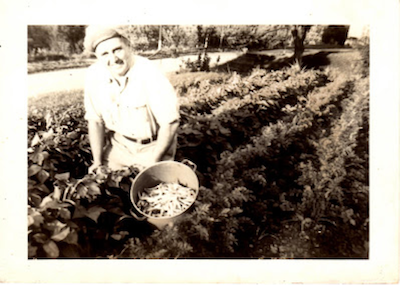
I come from a long line of farmers. For several generations, my family farmed the rich soil in the Central Ohio countryside to feed their community and family. My grandfather was very influential in my early years and taught me about the land and the plants that grew there. He was a huge fan of composting lawn waste and food scraps and was "organic" and “regenerative” minded before they coined those terms. He paid me 5 cents for each weed that I would pull (roots and all), and I always looked forward to working in the yard alongside him. It was there, that I learned many of my first lessons in gardening.
When I grew up, I followed my heart and love of children into the profession of teaching. As a teacher, I constantly looked for opportunities to connect learning objectives with the natural world and take my students outside. As luck would have it, when a group of parents wanted to start a school garden, they invited me to join in the committee work. When our program began to grow, I was able to retire from classroom life and work full time in the dirt. It dawned on me that this was my true passion, combining my love of teaching with the garden.
Moss Haven Farm is a non-profit on the campus of Moss Haven Elementary in Dallas, Texas. Our program has grown to include 25 raised beds, a large farm field where our 500 students grow and harvest food for the North Texas Food Bank, a chicken coop, compost area, native plant area, and a pocket prairie. All K-6 students receive weekly grade-level garden curriculum on our urban farm. Students use organic farming and gardening practices, which complement and inform their learning about ecology and biology in the classroom. These lessons encourage and foster understanding of living systems that we hope they will carry into the future and off the field.
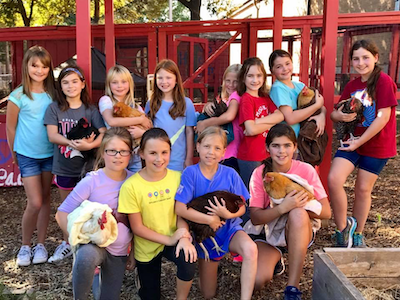
Gardening in the south gives us year-round opportunities to grow food, so our soil is always covered with crops, a major tenet of regenerative agriculture and Climate Victory Gardening. In January, we grow cool season food like garlic, onion, swiss chard, kale, turnips, beets, and carrots. In February, we plant potatoes. In mid-March, after the threat of a freeze, we put our tomatoes in the ground, and as we head into spring, okra, peppers, squash, eggplant, and field peas go in. Our students come alive on the farm, and it’s so fun to see them associating healthy food with the outdoors and the care it takes to nurture the plants
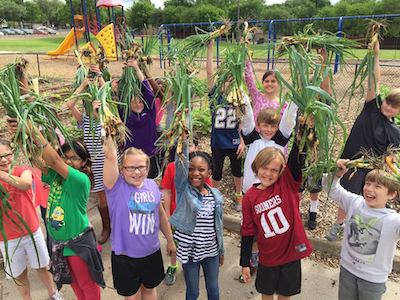
Just like in the days of my grandfather, many hands make light work. We have a Garden Team, who helps with funding, events, social media, and digging on workdays. Connecting with other organizations has helped with the sustainability of our program too. Our partners include Richardson ISD, Slow Food USA, American Heart Association, USDA, Dallas County Master Gardeners, North Texas Food Bank, Grow North Texas, and Bonnie Plants, as well as local service organizations and our community. Not only are these partnerships helpful, they’re a necessity for supporting our efforts to teach students, grow healthy food, and sequester carbon in our soils.
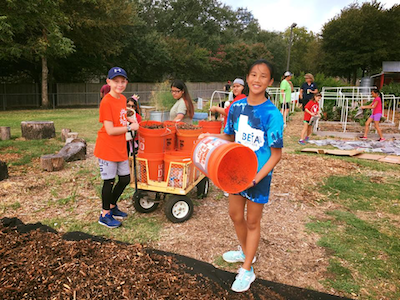
This year we are entering our 8th year at Moss Haven Farm. Our program has made an impact on everyone involved, from the little preschool groups who visit, to our students, staff, and parents. Through this experience, I have become involved in the local food system, working with the Farmers Market Friends, Slow Food DFW, and Grow North Texas. Slow Food USA has given me opportunities to represent the United States as an ambassador and learn from others around the world. Most recently, I was named Slow Food USA School Garden Co-Chair and work on policy, procedures, curriculum, and mentoring throughout the United States, pushing my reach and impact much farther than our school garden. It’s my goal to advocate for and teach the next generation about regenerative farming and gardening practices, so they can continue to grow food and inspire others, like my grandfather did.
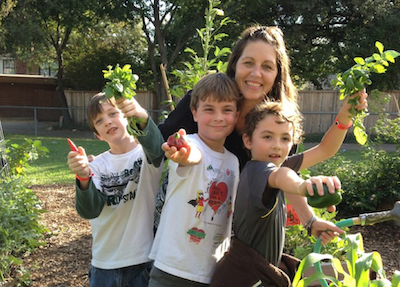
School garden programs take an enormous amount of work and the average school garden in America only lasts about two years. Many factors play into this. It is relatively easy to get a garden up and growing, but maintenance is tricky. Teachers, who are the busiest people on the planet, do not have time to commit to keeping a garden alive but are an important piece of the program, since they are experts at curriculum and connecting it to the garden. We have found that a team effort is critical to keeping a garden program alive and well. If someone moves or is unavailable, there are several other team members who can lend a hand. Connecting a community this way, also builds buy-in and a support system that can lead a program to sustainability. This is all important because it increases the number of people involved in the stewardship and fostering of living, regenerative systems in their own backyards.
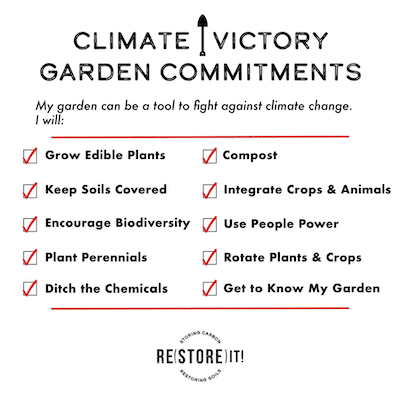
Changing the food system and improving the environment is a passion of mine, and I truly believe that educating the little ones is the way that we can change our broken systems to become more regenerative and resilient. Change happens in the garden, where children can physically experience the lessons we’re trying to teach and the values we’re encouraging. Hard work and fun combine here to inspire. I am a believer in all of the Climate Victory Garden commitments and practices of regenerative agriculture. I work each day to teach and inspire my students to follow along, care for the earth, and each other.
You can find Kim at:
FarmerKimAman@gmail.com
https://www.mosshavenfarm.org
https://www.facebook.com/MossHavenFarm/
https://www.instagram.com/thefarmerkim/
https://www.instagram.com/mosshavenfarm/
|
|
Yahoo News |
|
|
STM Enterprises, LLC |
The major areas of social and environmental impact the STM continues to encourage is reduction of food waste by reducing food overproduction, and eliminating single use plastics at events. Whenever possible, excess food is redistributed to shelters and plate waste is composted by the food provider. I try to bring awareness of these issues to my clients and other event stakeholders so that they can see the impact they have on their bottom line.
|
|
STM Enterprises, LLC |
The major areas of social and environmental impact the STM continues to encourage is reduction of food waste by reducing food overproduction, and eliminating single use plastics at events. Whenever possible, excess food is redistributed to shelters and plate waste is composted by the food provider. I try to bring awareness of these issues to my clients and other event stakeholders so that they can see the impact they have on their bottom line.
|
|
What are some tips for starting a Climate Victory Garden? |
When I lived as a market farmer in Washington State, Saturday afternoons were a celebration of sorts. After a busy week of tending and harvesting up to 200 different herbs and vegetables, I’d invite the community to a weekly farmstand. I’d begin preparations early and by 11am the vegetable display was primed with puffed bags of lettuce and tall, carefully stacked pyramids of freshly picked tomatoes. It was a relief to open the farm gates and finally be able to sit and chat with friends and neighbors.
Locals would gather in the shade of the cedar farmstand, cradling cucumbers and onions, and ask their most pressing gardening questions. The most common one, by far, was, “how can I grow food like this at home?”
“It’s easy!” I’d reply, and groans almost always followed. They told me stories about ripping out huge sections of lawn only to give up because planting vegetables was too much work. Or about the uncontrollable problems caused by piling fresh soil onto a bed without first pulling out all the weeds. They complained about soil too poor to support the growth of healthy plants.
I had to admit that what seems easy to me, someone entirely oriented around growing food, is of course much harder if you’re more accustomed to growing grass. So over time I learned to break down my “It’s easy!” into small steps that can lead to a starter Climate Victory Garden.
So here’s my advice: pick a good spot to plant, start small, and focus on nourishing healthy soil. It takes work but, honestly, it is easier than you think.
Pick a location.
An ideal planting bed gets plenty of sun, has easy access to a water spigot, which helps cut down on the time and hassle of watering, and can be seen from your home so there’s less of a chance you’ll forget about it. But if your only bet is a plot that’s heavily shaded and bone dry, don’t worry about it. It just means you’ll have to work extra hard to build good soil, and pick plants that will thrive without much sun. In short, it can be done!
Prep your garden bed.
Start small to keep the workload under control. If you end up wanting more space you can always add onto it later. While garden beds can be any size you want, you will want to consider the width. Namely, can you easily reach across it to tend plants?
Stepping on beds will compact, or squeeze together, soil particles. Without air pockets, it’s harder for soil to absorb water and store nutrients. Compacted soil also crowds out all those good organisms that break down debris, ward off soil-borne pests, and tunnel through the soil so that plant roots can stretch out.
Some gardeners like to head to the hardware store to buy wood, build a box, and fill it with soil. I’d rather skip the work and expense of that approach, and just build a bed on top of the ground using one of the following three techniques.
1. Sheet mulch your plot.
You’ll need cardboard or newspaper, leaves, grass clippings, compost, and any other organic material you can get your hands on. First, lay moistened cardboard or newspaper over your lawn or dirt. If you plan on planting large woody perennials like fruit bushes, cut a hole in the cardboard and plant your bushes through the hole. Then layer on grass, leaves, and compost in thick layers, about two inches each, and repeat until the materials run out. For best results, you’ll want to do this at least twice.
The thick mat of material not only smothers weeds, it buries seeds so future weeds are less of a problem. You may be surprised at first by the height of your bed. Give it time. Busy soil organisms will quickly shrink the pile of organic material. For now, finish off your heap with some fresh topsoil or well-aged compost if you want to plant right away. Or just let it sit and allow nature to take its course. Over time all those grass clippings and shredded leaves will decompose and morph into soil. Once it does, weed out any fresh green sprouts, and start planting.
2. Minimal to no tillage.
Breaking down soil with a rototiller is a truly effective way to tear out lawn and weeds, and it used to be one of my favorite farming activities. But then I learned it’s also an efficient way to destroy good soil structure, exposing stable soil carbon and releasing it back into the atmosphere as carbon dioxide. So I’ve given up tilling, mostly. To create a new bed, I now use a spade, hoe, and potato fork to dig up clumps of sod until the ground is bare rather than a rototiller. This can take a lot of work. The good news is you’ll only have to do it once.
After clearing out the grass and weeds, you’ll need to loosen and aerate the soil. This lets air and water enter the soil more easily so soil organisms have plenty of pockets of space to call home. Take a shovel and dig a trench along the edge of your new bed, dumping the soil in a wheelbarrow if you have one. Fill the trench by digging a new one right next to the first. As you dig the second trench, toss the soil into the first one. Repeat this process until the entire bed has been trenched and filled. After digging your final trench, fill it with the soil you set aside in the wheelbarrow. Now that all the soil has been loosened, level the bed with a rake, and it’s ready to go.
3. Just add soil.
There’s another way to prepare your planting bed: add more soil. But it’s not quite that easy. First, you’ll have to clear off the grass and weeds, as described above. Then shovel on soil from anywhere in your yard. If you don’t have much soil -- maybe your yard is too weedy, hard to dig up, or just not all that big -- buy a few bags of it from your local garden center. Make sure any soil you buy is dark brown and clear of debris. Add enough of it so your bed is three to eight inches high. Any higher and you run the risk of having soil wash away during big storms or intense rainfall, plus, it may dry out more quickly.
Prime your soil with compost.
Once you’ve eliminated any weeds and grass and built your bed, it’s time to jump-start the growing process by working compost into the top three inches of your soil. Compost is decomposed organic material that can work miracles in a garden. One small handful teems with millions of beneficial soil dwellers, from the tiniest decomposer microbes to nutrient-recycling nematodes and, larger still, soil-moving earthworms. All of these eat carbon for energy and, in the process, break down organic matter into plant-available nutrients that help you grow tasty crops. In addition, these creatures give your soil a porous, open structure so water can penetrate, instead of running off.
Note: You won’t have to add more compost during the planting process if you’ve opted to use sheet mulching or good soil from a gardening store. But you’ll still want to refresh your beds with compost each spring after your garden is established.
Have a gardening question? Send it to: ClimateVictoryGarden@GreenAmerica.org.
Or, post it on the Climate Victory Garden facebook group.
Visit our FAQ page to learn practical skills and become more familiar with carbon sequestration and growing healthy food (and soil!).
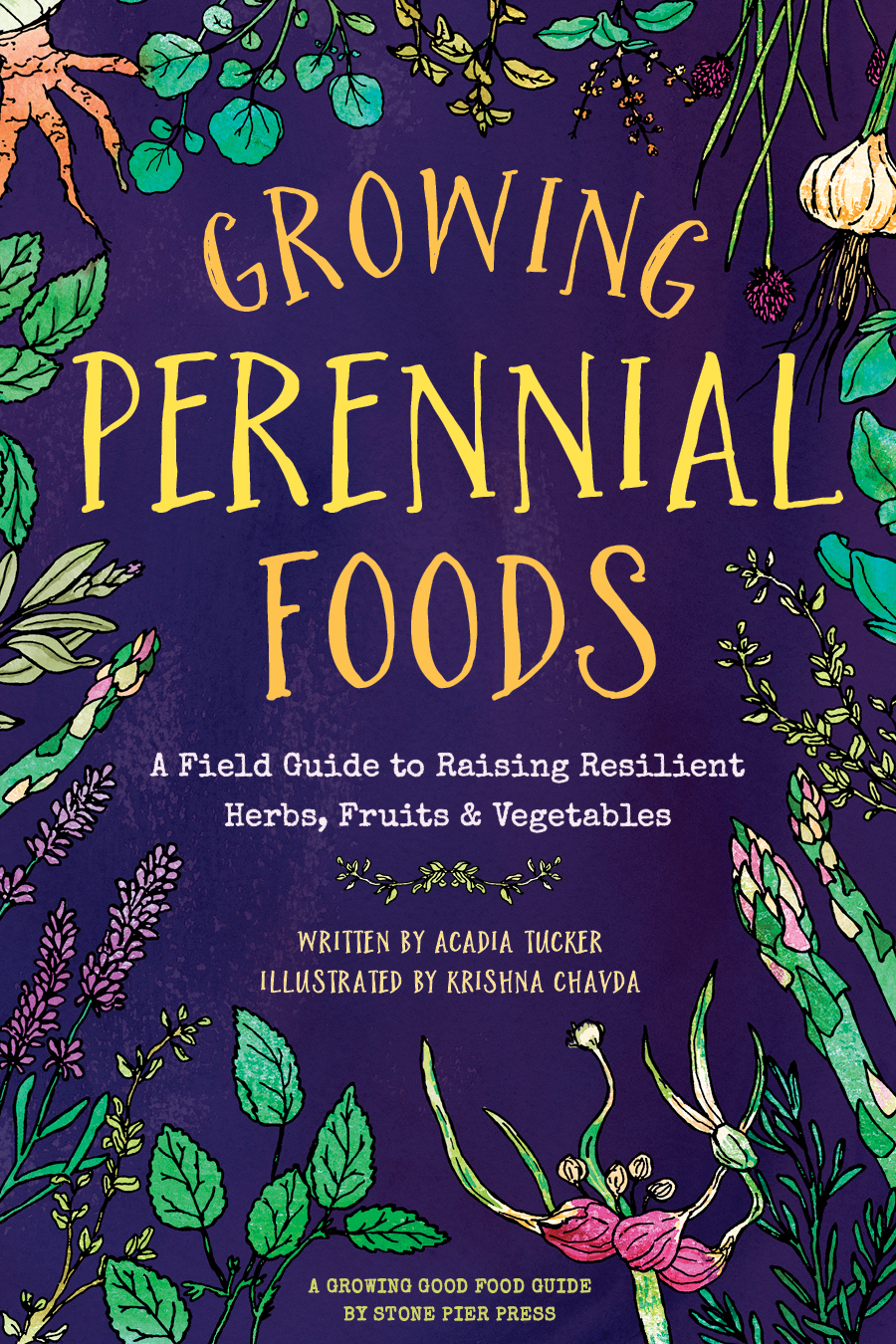 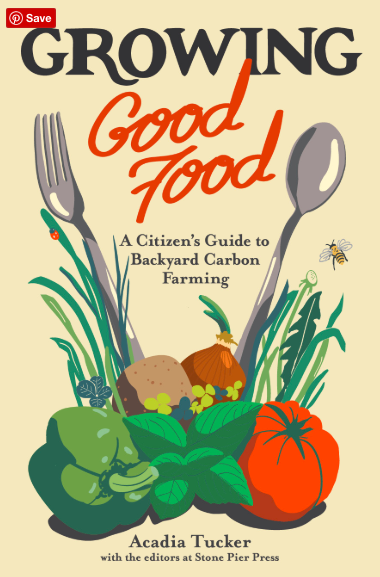
Written by Acadia Tucker, a regenerative farmer, climate activist, and author of Growing Perennial Foods: A field guide to raising resilient herbs, fruits & vegetables and Growing Good Food: A citizen's guide to backyard carbon farming.
|
|
MegaFood |
Back to Soil SuperHeroes
Nourishing Soils to Nourish People
Soil SuperHeroes exist at all levels of the food and agriculture supply chains. And, while the conversation often focuses on producers—farmers and ranchers for example—there is also potential for huge, systemic changes by the companies that bring food to the market. These companies are important links between soil and the dinner table. Or, in the case of MegaFood, the medicine cabinet!
Eating well is crucial for human health, and if you’re taking vitamins or supplements, it’s important to ensure these are sourced from nutritious, whole foods. If these vitamins also help support farmers and an agriculture that’s good for the planet, even better. MegaFood, a vitamin and supplement company, has long had a commitment to sourcing non-GMO and organic, is also a leader in the supplement sector for its commitment to regenerative farming that supports soil health.
Sara Newmark, VP of Social Impact at the MegaFood, speaks to this: “We have a commitment to nourish, and you can’t nourish people without nourishing our soil.”
Involvement of companies like MegaFood is so important in the world of regenerative agriculture right now. Farmers may be interested in building their soil health and adopting regenerative practices, but this involves an investment of time and money, not to mention the fact that improving the soil can be a slow process and one that’s potentially risky during the transition. Companies send a strong message to famers when they say: we understand this situation and value your extra efforts.
Working Directly With Farmers
MegaFoods has a direct relationship with their farmers, providing support and a guaranteed market for their regeneratively-grown produce. They’ve developed a standard for sourcing the ingredients that go into their vitamins, which focuses on the trifecta of building healthy soils, conserving resources, and supporting livelihoods in regenerative agriculture.
This grassroots effort tackles many of the social and environmental issues that plague the food and agriculture industry. At a time when climate change poses a very serious and existential threat to life on earth, it’s important that solutions are explored and developed at all levels of the economy and in all sectors. Agriculture is a major source of the greenhouse gases that cause climate change, and regenerative agriculture has great potential to help fix this. Half of the world’s soil organic carbon has been released into the atmosphere through conventional agriculture. Regenerative agriculture recaptures this carbon in the soil, fighting climate change and ensuring healthy crops. Or, as Newmark puts it, “We know the soil has the ability to heal our planet, and that healthy soil leads to more nutrient dense foods.”
The next step? Widespread, global adoption of these methods and bringing regeneratively grown products into the mainstream. “We want to align food companies and farmers in addressing the climate crisis by encouraging all agricultural supply chains to take concrete and measurable, outcome-based steps to build soil health and sequester carbon.” This big-picture, systemic thinking is crucial for the scale of change needed to fight climate change in time. And, MegaFood is leading by example.
The Soil Carbon Initiative, a partnership between MegaFood, Green America, The Carbon Underground, Danone North America, NSF International, Ben & Jerry’s, and 150 additional stakeholders, is working on creating a global standard to measure and show progress towards soil health. “There is urgency around moving all of agriculture to a system that stores carbon and builds healthy soil. The goal of this standard is to make it accessible AND defendable, so that we can allow for rapid adoption across all farming systems. Afterall, we don't have much time left.”

|
|
Olive Garden Takes Important Steps on Animal Welfare |
We have some good news on the animal welfare front. In response to consumer and investor pressure, Darden companies, which owns Olive Garden and many other restaurant chains, agreed to take several important steps forward to ensure better treatment of animals in its supply chain.
Darden has agreed to take the following steps to improve animal welfare:
- purchase chicken raised without the use of medically important antibiotics by 2023,
- source pork products from suppliers that do not use gestation crates to confine pregnant sows by 2025, and
- continue to source all egg products from cage-free producers.
|
|
Eutree |
Eutree is a lumber supplier and sawmill revolutionizing the way flooring and hardwood products are sourced, processed and supplied. Our timber isn't logged out of forests. Instead, we help urban tree services divert beautiful hardwood specimens from becoming waste. That's why we call our products "Forest Free" (to qualify as Forest Free a tree must have been removed for a reason other than its lumber).
A core belief of our company is that being ecologically minded should not be complicated, difficult, or expensive for anyone. By embracing new ideas, systems and partnerships, true sustainability can become less of a fad and more of an inherent way of life. At the same time, we’re fulfilling a market need for sustainably produced hardwood flooring and other products, at an affordable price. And, the local sourcing fulfills a common goal of green-building certification programs like LEED and EarthCraft.
As part of our Root-to-Fruit program, Eutree’s use of lumber sourced from urban sites is creating an opportunity for dialogue with architects and builders about the critical role of materials in sustainable design projects. Because optimizing the usefulness and economy of materials is a primary component of sustainable design, each locally sourced tree is selected for a specific purpose. This selection criteria is a core value of Eutree’s that allows for intentional design of a product that goes into a home or building.
|
|
Steve Tucker |
Back to Soil SuperHeroes
Expert Talks Principles of Soil Health
A shift in agriculture can make farmers stewards of the land again, just ask Steve Tucker, a dryland farmer in Venango, NE who uses regenerative agricultural practices. Steve believes the healthier the soil, the healthier the plants, the healthier we are as people. Soil health is essential to the way we live. Tucker says “When the soil is better, the impact goes up and down the line, whether it’s the biology in the soil, the wildlife out in the field, or the end product that’s going to a consumer to eat—diversity helps feed the system.”
“Regenerative ag follows the five soil health principles, with the goal of increasing soil carbon in the form of organic matter. These principles can increase soil carbon levels, until the soil reaches a point where it is cyclical’ says Tucker. The five principles are accessible methods focused on the soil: protect/cover the soil, minimize soil disturbance, plant diverse crops, keep live roots/plants in the soil, and integrate livestock into agricultural systems.
When asked how what he does differs from organic farming he stated “It is treating the soil as the source of life. It is about health and understanding the carbon cycle and how it relates to everything else.” Organic and regenerative both aim to grow food without the use of synthetic chemicals and inputs like fertilizers and pesticides, but regenerative focuses on building healthy soils rich in organic carbon, as an essential component and precursor to growing healthy foods. While the five soil principles are not inherent to organic agriculture, they’re fundamentals for regenerative. Organic farming focuses more on non-GMO crops grown without synthetic pesticides and chemicals, which is very important, but won’t result in truly healthy soils and carbon sequestration unless regenerative practices are added to the mix.
Tucker points to integrating animals in agriculture as an example. Climate change has been shown to affect animal and human health, and soils are linked to the atmosphere by being a source of greenhouse gases. Carbon sequestration can be enhanced by improved management practices like no tilling, cover cropping, and encouraging biodiversity to name a few. Tucker believes that integrating livestock is essential for carbon sequestration in agriculture as it provides essential building blocks and restores ancient processes necessary for great soil health. “It’s not only a great principle but it helps implement a plan b strategy. If something should fail, I would easily be able to move the cows to a different location if necessary.”
Regenerative agriculture is not new to Tucker. He has been farming regeneratively for about 25 years, admitting that the transition has been slow but worth it as he has seen his profit margins increase. Steve has become such an expert that many farmers seek advice from him as they too make the transition from conventional or organic to regenerative agriculture. One of his goals is to educate farmers on building soil health and what this may look like for each individual farmer, as it will differ from yield to location to climate. “For me, it’s about benefitting the soil microorganisms, because that world is so unexplored. One of my goals is to find a way to remove all synthetic inputs from the system, which will benefit the health of our soil and produce more nutrient dense food.”
By: Jillian Semaan
Green America
|
|
Moss Haven Elementary Farm |
Back to Soil SuperHeroes
I come from a long line of farmers. For several generations, my family farmed the rich soil in the Central Ohio countryside to feed their community and family. My grandfather was very influential in my early years and taught me about the land and the plants that grew there. He was a huge fan of composting lawn waste and food scraps and was "organic" and “regenerative” minded before they coined those terms. He paid me 5 cents for each weed that I would pull (roots and all), and I always looked forward to working in the yard alongside him. It was there, that I learned many of my first lessons in gardening, and the seed of Moss Haven Elementary Farm was born.
When I grew up, I followed my heart and love of children into the profession of teaching. As a teacher, I constantly looked for opportunities to connect learning objectives with the natural world and take my students outside. As luck would have it, when a group of parents wanted to start a school garden, they invited me to join in the committee work. When our program began to grow, I was able to retire from classroom life and work full time in the dirt. It dawned on me that this was my true passion, combining my love of teaching with the garden.
Moss Haven Farm is a non-profit on the campus of Moss Haven Elementary in Dallas, Texas. Our program has grown to include 25 raised beds, a large farm field where our 500 students grow and harvest food for the North Texas Food Bank, a chicken coop, compost area, native plant area, and a pocket prairie. All K-6 students receive weekly grade-level garden curriculum on our urban farm. Students use organic farming and gardening practices, which complement and inform their learning about ecology and biology in the classroom. These lessons encourage and foster understanding of living systems that we hope they will carry into the future and off the field.
Farming in the south gives us year-round opportunities to grow food, so our soil is always covered with crops, a major tenet of regenerative agriculture and Climate Victory Gardening. In January, we grow cool season food like garlic, onion, swiss chard, kale, turnips, beets, and carrots. In February, we plant potatoes. In mid-March, after the threat of a freeze, we put our tomatoes in the ground, and as we head into spring, okra, peppers, squash, eggplant, and field peas go in. Our students come alive on the farm, and it’s so fun to see them associating healthy food with the outdoors and the care it takes to nurture the plants
Just like in the days of my grandfather, many hands make light work. We have a Garden Team, who helps with funding, events, social media, and digging on workdays. Connecting with other organizations has helped with the sustainability of our program too. Our partners include Richardson ISD, Slow Food USA, American Heart Association, USDA, Dallas County Master Gardeners, North Texas Food Bank, Grow North Texas, and Bonnie Plants, as well as local service organizations and our community. Not only are these partnerships helpful, they’re a necessity for supporting our efforts to teach students, grow healthy food, and sequester carbon in our soils.
This year we are entering our 8th year at Moss Haven Farm. Our program has made an impact on everyone involved, from the little preschool groups who visit, to our students, staff, and parents. Through this experience, I have become involved in the local food system, working with the Farmers Market Friends, Slow Food DFW, and Grow North Texas. Slow Food USA has given me opportunities to represent the United States as an ambassador and learn from others around the world. Most recently, I was named Slow Food USA School Garden Co-Chair and work on policy, procedures, curriculum, and mentoring throughout the United States, pushing my reach and impact much farther than our school garden. It’s my goal to advocate for and teach the next generation about regenerative farming and gardening practices, so they can continue to grow food and inspire others, like my grandfather did.
School garden programs take an enormous amount of work and the average school garden in America only lasts about two years. Many factors play into this. It is relatively easy to get a garden up and growing, but maintenance is tricky. Teachers, who are the busiest people on the planet, do not have time to commit to keeping a garden alive but are an important piece of the program, since they are experts at curriculum and connecting it to the garden. We have found that a team effort is critical to keeping a garden program alive and well. If someone moves or is unavailable, there are several other team members who can lend a hand. Connecting a community this way, also builds buy-in and a support system that can lead a program to sustainability. This is all important because it increases the number of people involved in the stewardship and fostering of living, regenerative systems in their own backyards.
Changing the food system and improving the environment is a passion of mine, and I truly believe that educating the little ones is the way that we can change our broken systems to become more regenerative and resilient. Change happens in the garden, where children can physically experience the lessons we’re trying to teach and the values we’re encouraging. Hard work and fun combine here to inspire. I am believer in practices of regenerative agriculture. I work each day to teach and inspire my students to follow along, care for the earth, and each other.
You can find Kim at:
FarmerKimAman@gmail.com
https://www.mosshavenfarm.org
https://www.facebook.com/MossHavenFarm/
https://www.instagram.com/thefarmerkim/
https://www.instagram.com/mosshavenfarm/
|
|
Indiana Farmer Rick Clark |
Back to Soil SuperHeroes
Indiana farmer offers practical example of how soil health can transform agriculture
By: Ken Roseboro
Organic and Non GMO Report
Rick Clark uses non-GMO seeds, crop diversity, and “farming green” to regenerate soils, reduce pesticides, and produce profitable crops
When yogurt maker Danone North America announced in 2016 that it would transition its products to non-GMO verified, they had to rely on farmers to provide non-GMO feed for the dairy cows that produce milk for its yogurt. One of those farmers is Rick Clark, a fifth generation farmer in Warren County, Indiana.
Clark produces non-GMO corn for Danone but he does much more than that. He has developed a unique system for building soil health, while producing profitable cash crops. Clark’s farm offers a practical, proven example of how regenerative farming methods can transform agriculture.
Rick Clark’s family has lived on the farm since the 1880s. Today it encompasses 7000 acres. Like many large Midwest farms, Clark’s farm produces corn and soybeans. But the similarities end there. Clark uses diverse crop rotations, which help to reduce weeds and insects, while also reducing the need for chemical pesticides.
“Diversification drives the system,” he says.
One-third of his farm is in a three-year rotation with corn, soybeans, and wheat. Another third is in a four-year crop rotation—corn, soybeans, wheat, and alfalfa—for a dairy that produces milk for Danone. The final third is in transition to organic. Clark has planted all non-GMO crops since 2014 when a nearby dairy asked him to grow non-GMO corn for feed. This led to his partnership with Danone.
“Within 36 hours of the truck leaving the dairy, the milk is processed into a cup of non-GMO yogurt,” Clark says. Danone pays Clark a premium for growing non-GMO corn.
Clark also sells non-GMO alfalfa to the dairy and grows non-GMO soybeans and sells them for a premium price to a Cargill facility in Lafayette, Indiana. Non-GMO seed is cheaper and yields as much as GMO seed, according to Clark.
Beyond the economic incentives, Clark says: “I just prefer to not plant GMO seed, and I want to have a symbiotic relationship with Mother Nature.” The symbiotic relationship Clark refers to focuses on building the health and fertility of his soil. “I care deeply about building soil health and will sacrifice yield to maintain soil health,” he says.
Cover crop mixes and “farming green”
To build soil health, Clark plants diverse “cocktails” of cover crops and practices no-till farming by not plowing his fields, which disturbs the soil. He has planted cover crops for the past 10 years and practiced no-till farming with corn for 10 years and soybeans for 15 years.
Clark plants a mixture of cover crops in the fall before the next spring’s corn planting. He calls the mixture “gunslinger,” and it includes five crops that each performs a necessary function for soil health. Haywire forage oats build biomass to protect the soil, sorghum sudangrass promotes the growth of beneficial mycorrhizal fungi, tillage radish helps break up compacted soil, and Austrian winter peas and balansa clover add nitrogen, an essential nutrient.
As with his main cash crops, Clark emphasizes the importance of cover crop diversity. “I’m going to put out as many things as I possibly can in that cocktail for diversification. “We can fall into a trap of a monoculture in cover crops just like we can fall into a trap of monoculture in cash crops.”
Clark also plants cover crops such as cereal rye in the fall before planting soybeans the next spring. He plants corn and soybeans directly into the cover crops in the spring, a practice he calls “farming green.” “We will not plant our corn or soybean crops unless it is into green growing cover crops,” he says. Clark plants earlier maturing varieties of corn and soybeans in the spring so he can harvest and plant cover crops earlier in the fall.
He has seen many other benefits from farming green. These include regenerating and preserving nutrients in the soil, adding nitrogen to the soil, preventing soil erosion, increasing biomass to add “armor” to the soil, reducing water evaporation, and suppressing weeds.
Clark has also dramatically decreased the use of chemical fertilizers and pesticides.
“We use no seed treatments, no insecticides, and no fungicides. We are to the point where we have nearly eliminated synthetic fertilizers. We only use a little nitrogen on our non-GMO crops. So our cost of production is extremely low.”
Meanwhile, his crop yields are high. “We’re extremely profitable,” Clark says.
Transitioning 1/3 of farm to organic
After reducing chemical inputs, the next logical step would be to grow organic, and Clark is doing that for the “challenge.”
“I also want to continue to make the farm better for the next generation,” he says.He is transitioning 2000 acres and will have 400 acres certified organic this June. He plans to grow organic corn using his system of cover crops and no-till. Clark admits that practicing no-till in organic is a challenge. Few organic farmers practice no-till farming; many continue to plow their fields to eliminate weeds. “Some people think this (no-till organic) sounds crazy, but that’s normal for me,” Clark says. “If I can get this figured out, it should be a pretty big deal.”
Many farmers who convert to organic face challenges selling their transitional crops, but Clark has an advantage. “I can use alfalfa as my transition acres. It is easy to grow and I can sell it to the dairy.” Clark is confident he can produce strong yields of organic corn this year, his first producing a certified organic crop. “At $10 a bushel (paid for organic corn) that is quite a return on your investment,” he says.
Regenerative, not sustainable agriculture
Regenerative agriculture with its focus on soil health is a major trend, and Rick Clark is on the leading edge. He doesn’t use the word “sustainable.” “That means staying the same,” he says. “I prefer the word ‘regenerative,’ and I have a systematic approach to regenerative farming.”
He defines soil health simply as “decreasing inputs and increasing yield.” “If your inputs are going down, and your yields are going up, how can you not be building soil health? And that is exactly what this farm is doing.”
Regenerative agriculture is about creating balance. “The fungus to bacteria ratio is getting in balance. Predator to prey insects is getting in balance. That is why I don’t need to use insecticides. I don’t have the imbalance of corn rootworm eating my roots,” he says. “I have the predator that preys on corn rootworm in my system.”
Rick Clark’s success has been recognized. In 2017, he was honored as Danone’s Sustainable Farmer of the Year. More recently, Land O’ Lakes honored him with an Outstanding Sustainability Award, and he was also a regional winner of the American Soybean Association’s Conservation Legacy Award.
Clark’s farm was also chosen, along with 15 other farms in the U.S., to be researched by soil health experts as part of Danone North America’s $6 million soil health research project. The project aims to identify ways to regenerate soils and provide training in soil health best practices to farmers.
Clark is happy to share his knowledge of regenerative agriculture with other farmers. He is often asked to speak at conferences such at the National No-Till Conference this past January in Indianapolis. Soil health is gaining traction among farmers nationwide, and he is confident that others can succeed as he has. He says he “wants to help people.”
“What I like about this is that I’m just a farmer in Indiana, and if other farmers have a plan and care about building soil health they can achieve these things too.”
© Copyright The Organic & Non-GMO Report, March/April 2019
|
|
Your Business Our World |
Supporting local green businesses and as well as encouraging and helping other businesses to find ways to reduce their environmental impact. Thus the social and environmental impact is less in the D.C., VA. MD region.
|
|
Fill Your Easter Basket with Fair Trade Chocolate |
Chocolate bunnies, cute baby animals, brightly colored eggs – these are just some of the cheery images that Easter may conjure up for you. Yet there are dark secrets behind what goes into some of your favorite Easter chocolate treats. Whether you’re observing Easter for religious reasons, making an Easter basket for fun, or simply waiting for Easter candy to go on sale the day after, here are a few things that may have gone into your chocolate. And don’t forget to check out our Chocolate Scorecard to see how your favorite chocolate companies compare when it comes to being good on your taste buds – and being good for farmers with free trade infrastructure.
Child Labor
It has been almost two decades since the dark truth of chocolate came out: that child labor was pervasive throughout the cocoa industry, and our chocolate treats were produced by child laborers. Today, there are still over two million children working hazardous jobs, like applying pesticides or carrying heavy loads, in cocoa fields in Ghana and Cote d’Ivoire. Ghana and Cote d’Ivoire are the two largest producers of cocoa, accounting for about 60% of the global cocoa market.
Two million children. That’s the equivalent of all of the children in the state of Michigan.
And while most major companies have made commitments to source more certified cocoa (e.g. Fairtrade, UTZ, or Rainforest Alliance), certification alone is not enough to address underlying issues that contribute to child labor, such as farmer poverty and lack of infrastructure.
Deforestation
Historically, cocoa farmers have cleared out forest areas to grow cocoa. Once the cocoa trees grow old, farmers move to a different region and begin the process again. But 90% of West Africa’s forests are gone – and a landmark report from the environmental NGO Mighty Earth found that cocoa was a main driver of this. Mighty Earth also found that cocoa that was illegally grown in protected forests was found in most major chocolate companies’ supply chains.
Most major companies have made pledges to end deforestation in cocoa through the Cocoa and Forests Initiative, making commitments to no new deforestation and increasing reforestation and traceability efforts in Ghana and Cote d’Ivoire. Although a promising step, it is crucial for the commitments to be expanded worldwide. Furthermore, in December 2018, a year after the initial CFI commitment to stop deforestation in Cote d’Ivoire and Ghana, Mighty Earth found that deforestation was still occurring.
Forced Labor
The International Cocoa Initiative and Verite recently published a report on forced labor in the cocoa sector of Cote d’Ivoire. Cote d’Ivoire produces about 40% of the world’s cocoa supply. A study published by Tulane University and Walk Free Foundation estimated that 0.42% of adults in Cote d’Ivoire were involved in forced labor, although due to the hidden nature of forced labor and human trafficking, along with size of the cocoa industry in Cote d’Ivoire, the actual number may be higher. Ethically made chocolate is a crucial ingredient in good chocolate, so make sure to buy free trade chocolate.
The Verite report found that migrant workers from Burkina Faso, Mali, and non-cocoa producing regions of Cote d’Ivoire – both adults and children – were most at risk of forced labor. Workers were susceptible to deceptive recruitment, debt bondage, and non-payment of wages. Workers who had to rely on employers for multiple necessities in addition to work, such as housing or food, were also more vulnerable. Wages could be as low as $150 USD for a year’s worth of work – and workers may get hit with wage deductions when they’re paid at the end of harvest season, or not get paid at all.
I’m looking for some chocolate to fill my basket – what should I look for?
The good news is not all chocolate is created equal. Some chocolate companies are leaders in treating workers and the environment well, and produce delicious chocolate.
Check out Green America’s Chocolate Scorecard to see how the major companies compare when it comes to their efforts to address child labor – and learn about some of the sustainable companies that are doing more for people and planet. Shop from Green America Business Network members, as they have to pass our standards for social and environmental responsibility to become members. And finally, look for chocolates who have certifications such as Fairtrade, Fair For Life, or Rainforest Alliance when you go shopping – although certifications alone cannot solve the underlying reasons for the challenges facing the cocoa industry, they are still a helpful tool for companies and consumers.
|
|
Can We Trust Amazon’s Clean Energy Commitment? |
Amazon dominates online retail in the US and cloud-based computing. But the company has not been a leader on climate change, only reluctantly adopting a 100 percent clean energy target for powering its massive servers after pressure from Greenpeace and Green America.
The big problem with Amazon’s sustainability commitment is that the corporate giant never said when it would get to 100 percent renewable, clean energy, unlike many other tech companies who set clear targets and already achieved them.
Over the past four years, with continued consumer pressure, Amazon has slowly moved to using 50 percent clean energy, but then that progress stalled. Greenpeace recently issued a scathing report that called out Amazon for continuing to build servers in Virginia that are powered by fossil fuels.
Now, Amazon’s commitment to a cleaner cloud is being called further into question. Online tech news site Gizmodo just published an explosive exposé showing that Amazon is actively courting business from the largest oil and gas companies to put the power of Amazon’s giant servers to work to make it easier to drill for fossil fuels. Amazon aims to make millions or billions of dollars. The resulting climate impacts will exact a huge cost on all the rest of us, in the form of extreme weather, failing crops, and social instability.
Amazon did announce a handful of new windfarms this week as well. But only one of them is in the US, and it will not be enough to get Amazon anywhere near 100 percent clean energy soon.
Amazon's failure to take climate change seriously was highlighted in a rare public letter signed onto by 4,500 company employees calling on the company to do more to add clean energy, green the company's delivery fleet, provide meaningful climate targets, and be more transparent. Despite this rousing call from his own employee's, Jeff Bezos' annual letter to shareholders, issued the day after the employee letter, fails to mention climate change or clean energy.
We Need to Use Our Collective Consumer Power to Move Amazon
So, the record is clear. We can’t trust Amazon to address climate change. So, what can we do?
1. Take our business elsewhere. Before Amazon, we all somehow managed to get the things we needed in life. And, if we break free of shopping on Amazon, we would likely buy less stuff, and direct our purchases to more small and green retailers.
2. Cancel Amazon Prime if you have it. Amazon Prime, with its free shipping, is the hook that keeps us going back to Amazon. If you cancel Prime, you’ll be less inclined to shop with Amazon.
3. Share the news with friends. The more people who hear that Amazon is not a responsible company, the more people who will take their shopping elsewhere. After you take the action below, share that too.
4. Take our new action on Amazon. We’re asking the company to get to 100 percent clean energy and drop its support for the oil and gas industry.
The only way a company like Amazon improves is by hearing its customers are concerned. So make sure to use your consumer power to let Amazon know you expect more from the company.
|
|
Spring 2019 |
|
|
5 Reasons a Climate Victory Garden is Better than a Lawn |
Ready to ditch your lawn and embrace the joy of growing veggies and playing in the dirt? Great! Your gut, your social life, your pocketbook, and your planet will thank you. Here are 5 reasons a Climate Victory Garden are better than a traditional lawn:
1. You can eat it! Grow your favorite foods in a Climate Victory Garden.
via GIPHY
Your garden can grow half a pound of produce per square foot. That could mean saving hundreds of dollars on your grocery bills. Good tasting, good for you.
2. You don’t have to mow it.
via Gfycat
Mowing the lawn is such a chore. And, mowers are major polluters. With a garden instead of a lawn, you can say goodbye to mowing and hello to fresh food.
3. You can ditch the chemicals in your Climate Victory Garden.
via GIPHY
Lawns are often associated with loads of unnecessary fertilizers and herbicides, but gardens do best when grown regeneratively. That means no chemicals in your yard, food, and home.
4. It’ll help you make friends.
via GIPHY
Gardens mean time outside. Neighbors and passers-by will stop to say hello. Share your bounty with friends. Join garden networks. Spend time in your community. Get ready for garden parties galore.
5. You can fight climate change instead of contributing to it.
via GIPHY
Lawn mowing and chemical use contribute significantly to greenhouse gas emissions. But, healthy gardens can actually store carbon underground for healthier soils and a cooler climate. Think big!
In World War II, millions of Americans planted Victory Gardens to support the war efforts. Now, we can ditch our lawns and plant Climate Victory Gardens to reverse climate change. It’s worked before, and it can work again! This spring, choose a Climate Victory Garden over a lawn!
|
|
4/9/2019 Sanjana Reddy |
|
|
Olive Garden Takes Important Steps on Animal Welfare |
We have some good news on the animal welfare front. In response to consumer and investor pressure, Darden companies, which owns Olive Garden and many other restaurant chains, agreed to take several important steps forward to ensure better treatment of animals in its supply chain.
Olive Garden has agreed to take the following steps to improve animal welfare:
- purchase chicken raised without the use of medically important antibiotics by 2023,
- source pork products from suppliers that do not use gestation crates to confine pregnant sows by 2025, and
- continue to source all egg products from cage-free producers.
While these steps do not put Darden in a leadership position within the industry, they mark an important move in the right direction for the Fortune 500 company with over 1,500 restaurants nationwide.
Consumer and Investor Pressure Pay Off
Green America joined with allies in the Good Food Now Campaign to pressure Darden to purchase foods that are better for the environment and animal welfare, and are sourced locally, and to improve working conditions and pay for its over 150,000 employees. Thousands of Green Americans took action with us to reach out to Darden and joined protests at their restaurants. In addition, Green Century Funds, a Green America Business Member, engaged in a multi-year dialogue and filed shareholder resolutions with Darden to get them to address antibiotic abuse in their supply chain.
Darden clearly has a long way to go to become a more responsible restaurant chain, but if you are a customer of any of their restaurants, please let them know you are pleased with this first step and would like to see them do more to protect people and the planet – including sourcing local and organic foods and better pay for their employees.
Support Green and Local Restaurants
And, if you are looking to use your consumer dollars to support greener options, check out these restaurants from our GreenPages.org, or support locally-owned restaurants in your community, particularly if they use organic and local ingredients.
|
|
How to Shrink Your Carbon Footprint Without Shrinking Your Wallet |
Going green may be trendy, but it’s not just a fad. “The climate crisis is intensifying, with eminent scientists warning that our actions over the coming decade will determine how life on Earth will, or will not, prevail,” said Fran Teplitz, executive co-director of business, investing and policy at Green America, an environmental and social justice nonprofit based in Washington, D.C.
The need to address climate change on a grand scale may feel overwhelming, but each of us can take steps to reduce our individual carbon footprint, or the amount of greenhouse gas emissions we cause, both directly and indirectly. Some environmentally-friendly steps, such as installing solar panels, can cost a pretty penny, but Teplitz noted that there are plenty of ways to shrink your carbon footprint at little to no cost.
As an added bonus, taking actions to reduce your carbon footprint can also save you money. Increasing your home’s energy efficiency, such as sealing leaks, adjusting your thermostat and improving insulation can potentially save you over $1,000 annually. Being mindful about using less energy and water lowers your utility bills, so while you help the environment, you’re also helping your wallet.
5 ways to shrink your carbon footprint
Idea #1: Make your home more energy efficient
Taking steps to improve the energy efficiency of your home is key to reducing your carbon footprint, Teplitz said. For starters, don’t use electricity if you don’t actively need it. This means turning off lights in empty rooms, unplugging technology not in use and not charging equipment 24/7, all of which draw on energy, she said. It also helps to adjust your thermostat to use less heating or cooling when you’re not home.
MagnifyMoney, another LendingTree-owned site, has a list of tips to help you reduce your home’s energy usage, but Teplitz recommends paying special attention to your electric bill. “If you’re still getting paper bills, there will often be special coupons to make energy efficiency steps even more affordable,” Teplitz said. If you get your bill online, visit your utility company’s website or call to find out what programs or discounts are available.
Another important step is to improve insulation to reduce wasted heat or air conditioning, Teplitz said. “This can be done at a variety of differently levels, including the most basic of rolling up a towel and putting it at the base of doors where they might be leakage and seepage of hot air into the cold,” she said. She added that plastic sheeting can be stretched over windows for insulation, which is affordable and can be found at any hardware store.
Taking steps to conserve water in the home, like using water-conserving shower heads or toilets, can also help reduce your carbon footprint—and lower your water bills. “It’s all tied to our carbon footprint since we use energy for everything,” Teplitz said.
Idea #2: Change your transportation habits
One of the most obvious ways to make a difference with transportation is to switch from driving to taking public transportation if you can, Teplitz said. Another option is to bike instead of drive. “Not only is that better for all of us in terms of our physical health, but more and more bike share opportunities are coming to the fore,” Teplitz said. “Also, more parking garages for vehicles now have bike storage and more office buildings are making it easier for people who bike in to have a secure place to leave their bikes.”
If giving up driving isn’t an option, Teplitz suggested carpooling when possible, driving the most efficient routes and piggybacking errands to make your driving trips more efficient. You may also want to consider switching to a more energy-efficient car, which has the added benefit of saving you money on gasoline. The Union of Concerned Scientists, a nonprofit that focuses on using science to address global issues, noted that going from a 20 MPG car to a 40 MPG car can save you more than $18,000 over the car’s lifetime.
How you drive can also affect your carbon footprint; check out these tips from CarbonFund.org.
Idea #3: Shop for food locally and in season
Buying food locally can make a tremendous impact on your carbon footprint, Teplitz said. “For some time, we’ve been seeing the rise of the local food movement, supporting the farmers and growers who are closest to home, ensuring they have strong livelihoods and then cutting down on the cost of trucking in all of that produce,” she said.
Teplitz acknowledges that there may be certain foods that are out of season in your area during certain times of year, like citrus or avocados in the winter in the north. “But how can we shift the bulk of our food consumption to options that don’t require all of that shipping and trucking?” If you have access to a farmers market, obtain as many of your groceries there as you can. Sticking with organic food can also help the environment, Teplitz said, since it not only reduces chemicals in our food, but keeps the soil healthier, which improves its ability to sequester carbon.
Idea #4: Decrease food waste
Tending to issues around food waste is one of the key ways to address the climate crisis, Teplitz said, pointing to the extensive work by environmentalist Paul Hawken, creator of Project Drawdown, an initiative to reverse climate change.
“We put so much energy into food production; not just the shipping, but refrigeration and everything else that goes into how we bring food to the table,” Teplitz said. “When we discard so much of it, that’s so much wasted energy. There’s instances of food waste all throughout the food production cycle.”
To reduce your own food waste, try to avoid buying more food than you can eat, and find creative ways to use leftovers rather than throwing them away. For example, instead of tossing out chicken bones, use them to make stock. If you have food waste you can’t use, you can compost it, Teplitz said. Composting helps the environment by contributing to regenerative agriculture, a method that decreases the amount of carbon in the air by increasing the amount available in the soil.
Idea #5: Start a vegetable garden
Creating a home garden has numerous health benefits, but it can also help the environment. Gardening and farming with healthy soil actually pulls in greenhouse gases and reduces carbon in the environment, Teplitz said.
During World War I and II, Americans were encouraged to start “victory gardens” to help grow food for both their communities and for troops serving overseas. Organizations like Green America are now advocating for everyone to create “climate victory gardens” to decrease reliance on food brought in from long distances and help reduce greenhouse gases through soil. It’s easy and affordable to start your own vegetable garden with a quick trip to a local hardware or gardening store. Plus, if you grow some of your own food, it’ll lower your grocery bill.
The bottom line
While some of these actions may seem small, they all add up to create a large impact. “Our collective actions can truly help protect people and the planet,” Teplitz said. “The time has never been more urgent.”
This article contains links to LendingTree, our parent company.
|
|
New Agriculture Standard that Unites Food Companies and Farmers to Address Climate Change: Just One Month Left for Public Comment |
Washington DC (April 4, 2019)
The Soil Carbon Initiative (SCI), a collaboration of over 150 farmer, brand and soil science stakeholders, including The Carbon Underground and Green America, Ben & Jerry’s (Unilever), Danone North America, and MegaFood, seeks public comment on a new outcomes-based agricultural standard for food and fiber. SCI’s standard, developed with NSF International, seeks to encourage everyone who touches the soil to improve soil health and increase carbon drawdown. The public comment period for the draft standard closes May 6, 2019 at 5 PM EST. The standard draft and submission form for public comment are available at soilclimateinitiative.org.
The negative impact on soil from conventional agriculture not only diminishes its ability to grow food, but leads to severe loss of top soil itself — estimated to cost the US alone more than a trillion dollars a year. It’s also been identified as a major cause of climate change. Soil and climate experts tell us, however, that restoring soil health— and its natural ability to draw back down atmospheric carbon— might be the best chance we have at reversing climate change.
The Soil Carbon Initiative’s new outcome-based verified standard will give both food producers and manufacturers the ability to measure and motivate soil health improvements to help farmers and supply chains transition to more regenerative agriculture, which can restore and maintain both soil and climate health. The SCI standard is designed to be easy and inclusive. Producers in any system – conventional, organic, Non-GMO, biodynamic – are eligible for SCI Verification. Based on demonstrated soil health and carbon sequestration results, the SCI standard rewards commitment to improve, ongoing improvement, and achievement in soil health and carbon sequestration.
For more information, please visit www.soilclimateinitiative.org. To sign up for updates, contact Randi Fiat at rfiat@thecarbonunderground.org or Sarah Andrysiak at sandrysiak@greenamerica.org.
About The Carbon Underground
The Carbon Underground was created to accelerate the restoration of soil and the transformation of agriculture to regenerative practices that will mitigate climate change, support farmers, and improve supply chains, food quality and food security around the world. By working with businesses, scientists, governments and food producers The Carbon Underground creates and manages programs to reverse the threats of climate change, stop topsoil loss, and reduce supply chain stress. www.thecarbonunderground.org
About Green America
Green America is the nation’s leading green economy organization. Founded in 1982, Green America provides the economic strategies, organizing power, and practical tools for consumers, businesses and investors to solve today’s social and environmental problems. Green America’s Center for Sustainable Solutions brings together diverse groups of stakeholders to solve the complex sustainability problems that no individual business, organization, or leader can solve alone www.greenamerica.org www.centerforsustainabilitysolutions.org
|
|
Own Stocks? You Have Proxy Power! |
The spring shareholder season is well-underway, with nearly 400 shareholder resolutions filed at publicly traded corporations on a broad array of social, environmental, and corporate governance issues.
If you own company stock directly, rather than through a mutual fund, you can vote on the resolutions coming before the company. (Mutual fund investors – see the note below.) Don’t toss aside those shareholder mailings – even if they look arduous. Voting your proxies is an important responsibility of stock ownership and allows you to express your agreement or disagreement on key issues facing the company. Be sure to read your proxy ballots carefully – there may be issues you don’t want to miss voting on.
Did you know:
- Bank of America and Facebook are among the companies facing a resolution on gender and minority pay disparity?
- Chevron is facing a resolution on the human right to water?
- Duke Energy investors can vote on the need for a report on coal risks?
- ExxonMobil is one of many companies where shareholders can vote on a resolution seeking a report on its election spending?
- Wal-Mart investors can vote to support adoption of a policy on prison labor in the company’s supply chain?
Concerned investors have filed these and many other resolutions to urge companies to improve their practices and policies in crucial ways affecting people and the planet. We’ve highlighted a number of the companies and some of the resolutions before them to give you a snapshot of the spring proxy votes.
For information on recent shareholder trends and background on the resolutions you may see on your proxy ballots, be sure to download your free copy of the 2019 Proxy Preview. Green America is pleased to co-sponsor this report -- it is truly a must-read for investors who want to understand the scope of the proxy season on social, environmental, and corporate governance concerns.

Not sure how to interpret your proxy ballot? Our infographic can help!
Support for key resolutions affecting people and the planet is growing, with average support now exceeding 25%. As a reminder, double-digit support for these resolutions is enough to send a strong message to the company. It only takes 3% support to allow a new resolution to be brought before a company again, 6% support in the second year, and 10% support in the third year.
If you follow us on Facebook, Twitter, or Instagram, you'll see our campaign to raise awareness for the importance of voting your proxies. Please share posts that convey why you vote, to encourage others to do the same. Go to the resolution list, and click on the "I voted!" digital sticker to share and let people know you're proud to raise your voice on important issues as a shareholder.
So whenever your proxy ballots arrive -- be sure to vote your proxies and vote your values!
Note to mutual fund investors: If you own mutual funds, the fund manager does the proxy voting for you. Since you are the share owner, however, it’s important to know how your fund company is voting on your behalf and to decide if you agree with those votes. On the fund company’s website, at the SEC’s website, or by calling investor relations at the fund company you can obtain a record of the actual votes cast by the fund company. If you disagree with the votes be sure to let the fund manager know. As the 2019 Proxy Preview notes, a number of mutual funds are now voting their proxies in support of shareholder resolutions on climate change, gun control, and the opioid crisis. Be sure your fund manager is voting in support of your values and not against them!
|
|
Green America's Food Label Guide (2019) |
|
|
Validus |
|
|
Year-End |
Original Source links are for use in footer, topmost banner, and right-side orange Menu
|
|
Your Climate Victory Gardening Questions, Answered! |
A big thank you to everyone who attended our webinar Designing for Abundance: Planning your Climate Victory Garden, with Nicky Schauder of Permaculture Gardens. We had so many great questions come out of that session, and many that we weren’t able to answer in the time allotted. You can find questions and answers below. If you have more questions or comments, please post them to our Facebook group or email us at ClimateVictoryGarden@GreenAmerica.org.
Raised Garden Beds
- If you're only working with raised garden beds, are swales or other permaculture methods necessary? Permaculture methods often prefer to look at the whole picture, your entire property and the adjacent properties, for example. But, we understand that many people focus their efforts on raised beds. Permaculture methods can be applied on the small scale, in beds in many cases. Take swales for example: you can still look at your garden beds to figure out where the water may be pooling and create channels to redirect and better distribute the water. Similarly, you may notice patterns around your raised beds. Using swales again as the example, you may find that water gathers or runs off at different points around your bed. Remedying this means less muddy boots and less potential for erosion or rot to ruin your beds.
- Is it necessary to test the soil if you're using raised beds? Soil testing can help you learn about the mineral/nutrient distribution in your soils, while also identifying possible toxins. If you’re growing in a raised garden bed with soils you know to be safe (e.g. from a trusted or tested source), then there’s no need to test soils, but you can do it if you’re curious about providing a happy balance for your plants. If you’re concerned about the toxicity of soil under your garden bed, be sure to place a permeable layer between the bed contents and the ground. Also, there are different tests available, some that are quite inexpensive if you’re looking for basic information.
- What’s the least toxic product to paint/seal wood for a raised bed frame? Some woods are naturally rot-resistant, which make them the most natural option for building a garden bed frame. Cedar, black locust, and redwood are examples of this, with lifespans up to 15 years once exposed to the elements in your garden. There are many recipes for creating natural wood sealants using beeswax, jojoba oil, linseed oil, and others. Here are some example recipes. You might also consider other materials, like pavers.
Animals and Manure
- What should I do if I can’t integrate animals into my garden? The two main reasons we suggest animals are their fertilization and pest management potential. If you don't have animals, you can find manure either from a local farm or purchase it. You can source manure from many different animals, but these often need to be used and treated differently. Some manure—like that of poultry—is very high in nitrogen and can cause undesired effects if applied directly to plants. Other manures may contain grass and weed seeds that were not processed in the animal’s stomach. Ways to combat this are to compost, age, or otherwise treat the manures. Here’s more detailed information, broken down by animal.
Pests
- How can design help with pest management, deer and rabbits in particular? For many animals, fencing is the best option. Deer fences need to be very tall, at least 8 feet. And, don’t forget that deer have terrible eyesight, so give them cues to see and avoid the fencing. Rabbits have the ability to dig around most fences, so you may need to bury your fencing up to a foot underground. For rabbits and other small animals, use a “chicken wire” type fencing with small holes and made from metal instead of plastic.
- What about rats? Gardens can be very attractive to rats. However, gardens and compost piles will not sustain them if they do not contain animal proteins and carbs. So, keep these items out of the compost and keep your trash safely in bins or other hard-to-reach areas. Pet foods kept outside can also attract rats, as does vegetation right up against your external walls (where rats like to travel). This source from the Brooklyn Botanic Gardens is full of great ideas for deterring rats.
- If my problem is too many whiteflies on kale, what's the alternative to balance them? Whiteflies are really tough! And, while it might be counterintuitive, insecticides actually make whiteflies worse because they kill the beneficial insects that eat whiteflies. So, first step is to eliminate all use of those. Infected leaves should be removed or sprayed vigorously with water. If your plants are overwintering, consider removing them entirely and replacing with a variety with less nooks and crannies for the flies to hide in (a flat leaf plant instead of a curly edged plant or dino kale for example). Keep an eye out and protect natural predators and their larvae. Neem oil can also be a good option in particularly bad infestations.
- How do I keep the wild animals and the wind from destroying my plants in a fenceless yard? Some plants are animal resistant, but this depends on what animals you’re dealing with and where you’re located. Many fragrant plants and those with spines—things like catmint and cacti—are good for deterring pests, although animals will eat just about anything if they’re hungry. Some plants are wind resistant and others make good “wind breaks” that protect your garden, like many bushes and small trees. Many of these are inedible—except nasturtium—but make good companions to your garden.
Tilling and Soil Care
- Should we test our soil before we plant? If soil testing is getting in the way of you starting, skip the test and just get into your garden! However, if you’re at all concerned about toxins in your soil, you should test if you’re growing food. If the land was previously used for any sort of industry, a dumping ground or car lot, or if you have nearby mining, you should probably test for toxins. You can also consult a professional for advice.
- What are the best plants to nourish the soil? This depends on your soil type and the nutrients or minerals it may be lacking (note: many soil test results will help you figure out this balance!). Commonly looked to plants include nitrogen fixers like legumes (peas, beans, etc.), because nitrogen is often the limiting ingredient in soil. Dense, low plants—like clover and other cover crops—are good for protecting soils and reducing weeds. Organic matter is good for all soils. We usually say “think: compost!” but nutrient rich plants can also be cut and left on the soil as “green manure”—comfrey is a great example of this.
- How do I garden without tilling? The nuance here is that you may need to aerate your soil and loosen things up for a plant’s roots to penetrate. But, the more soil we can leave intact, the better. That means less disturbance to fungi and other microorganisms’ habitat, which supports healthier plants and a soil that is better at sequestering carbon. If you do mix up the soil, for example when you’re applying compost, try to stay near the surface. Gently bury worms that may have been exposed. And, plant immediately or put some sort of covering over the soil so it’s not exposed to the elements before planting.
- How can I improve my sandy soil? How can I improve my clay soil? I love these two questions, because although you might not expect it, the answer is the same to both: increase your organic matter. In our Climate Victory Gardens, we can easily do that with compost! This balances both types of soils by helping them absorb and hold water.
- I'd like to know more about what weeds indicate about the soil. Is there a good book or other source? Weeds can tell you what’s lacking in the soil, and what may be out of balance (nutrients, composition, pH, and more. Here’s a great resource to get started: Using Weeds to Read the Soil: Some Basic Concepts to Get Started
- What’s the best way to remediate pesticides from the soil? This is a question with an unsatisfactory answer. Testing for these types of toxins can be prohibitively expensive. The National Pesticide Information Center suggests contacting state agencies for information specific to your concern. Also consider asking your local agricultural extension agent. Many pesticides are designed to dissipate from soils after short periods of time (a few years at most), while others may be systemic (which requires soil replacement unfortunately).
Permaculture and Other Gardening Questions
- What is "living mulch"? Living mulch is just a fancy way of saying “plants that cover the ground”. Regenerative gardening practices focus on protecting the soil and its ability to sequester carbon and grow healthy food. These are plants that grow so thickly they block weeds, reduce erosion, and may fix nitrogen or provide other benefits. Living mulch can be planted as a cover crop (the only crop at the time, used to benefit the soils) or as a companion plant (planted with other food crops, which work together to benefit each other and the soil).
- What are the most efficient ways to water? We received many questions about sprinklers. If you have an existing sprinkler system, keeping it may be the most efficient option if its water lines aren’t a concern for where your garden or deep-rooted plants will be. However, it’s important to pay close attention to ways you can reduce waste too. Make sure water is being absorbed by your soils, catch and use rainwater when you can, water during cooler times of day, and water directly instead of spraying in dry climates.
- How much direct sunlight is required? Will the garden work in a shady yard? In fact, some plants do better in the shade! The trick is to choose the right plants. If your garden doesn’t receive at least two hours of sun or more consistent dappled sunlight, it might not be a good fit for growing vegetables. What are options for people that live in urban areas with little to no space? Join a neighbor in their efforts, find a plot in a community garden, have a container garden, or even plant on your windowsill.
- Do you need to do crop rotation of annuals in permaculture design for vegetable garden? Yes, if you are planting annuals and want more yield, more diversity, and also fewer bugs. No, if you do not have the time and would like to establish more of a perennial system/food forest in your plot. But you have to make sure that you are constantly composting and "building soil." Trees in a food forest do not need to be rotated, only annual plant areas do. That being said, if you are a commercial grower, soil scientist Elaine Ingham did amazing work eliminating the need for crop rotation on a tomato farm (annual crop) in South Africa just by ensuring that the soil biology was balanced.
- How can I engage young children in the garden? Set a goal with the children, and expect to get dirty! Keep a bucket near the door for peeling off wet and muddy clothes on the way back indoors. Grow hearty plants that have a quick and dramatic growth curve to keep their attention, like peas and beans. Give the children tasks and even their own responsibilities and control over “their” parts of the garden.
|
|
2019 04 02 Monica Flores |
|
|
International Campaign for Responsible Technology (ICRT)* |
|
|
Social Accountability International (SAI) |
|
|
Sustainable Purchasing Leadership Council (SPLC)* |
|