|
Program Coordinator, Agriculture & Climate Programs, Center for Sustainability Solutions |
|
|
Emma Kriss |
|
|
Green Your Undies: Organic Cotton Underwear and Other Options |
You're in your underwear almost all day, every day, and it's right up against your most delicate skin. Doesn't it make sense to be green there, where you don't want toxic pesticide residues, or anything less than the best? We get asked all the time about brands for green underwear, and we've answered.

Cotton bikini by Blue Canoe
Choose cotton over conventional with Blue Canoe. The San Francisco company offers women’s underwear in six different styles, ranging from bamboo-based thongs to aubergine hip huggers. One of the simplest styles, however, is the Cotton Bikini. Available in three colors, this pure panty is made in the USA of 100% organic cotton.

Panties by Natural Clothing Company
From patterned boy shorts to lacy low-rises, Natural Clothing Company offers a sizable selection of undergarments. In a sea of underwear options, its Comfort Intimates line, made of viscose from bamboo, are among the softest. The bamboo used to make the textile bears rapidly renewable qualities and delivers a smooth and silky texture. Processed in a Worldwide Responsible Accredited Production (WRAP) factory in China, the underwear is available in four colors.
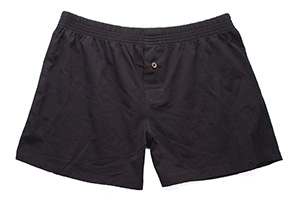
Boxer by Amren Tulano
Amren Tulano, a woman-owned, Los Angeles-based company, offers a medley of organic cotton-based underwear. A sexy staple to its six-style selection is the lace that adorns the waistband of the women’s styles, including the Black Organic Cotton Hipster with White Lace. For men, the company offers a Black Organic Cotton Boxer. Its underwear is all fair trade and made in the USA.
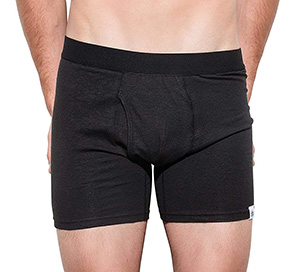
Boxer brief by WAMA Underwear
Given hemp’s natural anti-microbial, anti-odor, and anti-bacterial properties, WAMA Underwear opted to use textiles derived from the plant as its primary underwear material. The company developed a hemp-cotton-spandex blend for all its undies that softens with every wash. WAMA only works with suppliers that adhere to the Supplier Code of Conduct, ensuring safe and fair labor practices. You'll be comfy in a pair of WAMA underwear.

The Original Un-bra by Decent Exposures
In the market for an eco-friendly bra that’s custom to your needs? Try the Original Un-Bra in Organic Cotton from Decent Exposures. This oh-so-soft piece pulls on like a sports bra, though you can customize it by adding a front closure, if you prefer. Its wide straps help ease shoulder pressure for curvier women. The Un-Bra comes in a wide variety of colors with a racer back or scoop back, and breastfeeding moms can add nursing flaps as well.
Find more green underwear companies by searching our directory of Green Business Network certified businesses, the GreenPages.org.
|
|
10 Green Gifts Under $100 (With 5 Under $25) |
Skip crowds at big-box stores or the mall and shop with certified green businesses that are committed to environmental and humanitarian missions. When you buy green gifts, you’re supporting small-business owners and getting high-quality sustainable gifts made from natural and sustainably-sourced materials.
Buying green gifts is also a great way to introduce friends and family to the ideas of living green and voting with your dollars. When they ask where you got their present, tell them where and why you shop green!

What's better during the holidays than a delicious, hot cup of coffee? A delicious, hot cup of coffee flavored like the spirits of Kahlua and Irish Cream laced with Gran Marnier! You can get a bag of Velasquez Family Coffee's Drunken Uncle Holiday Coffee ($7.50) in regular or decaf, and whole bean or ground.
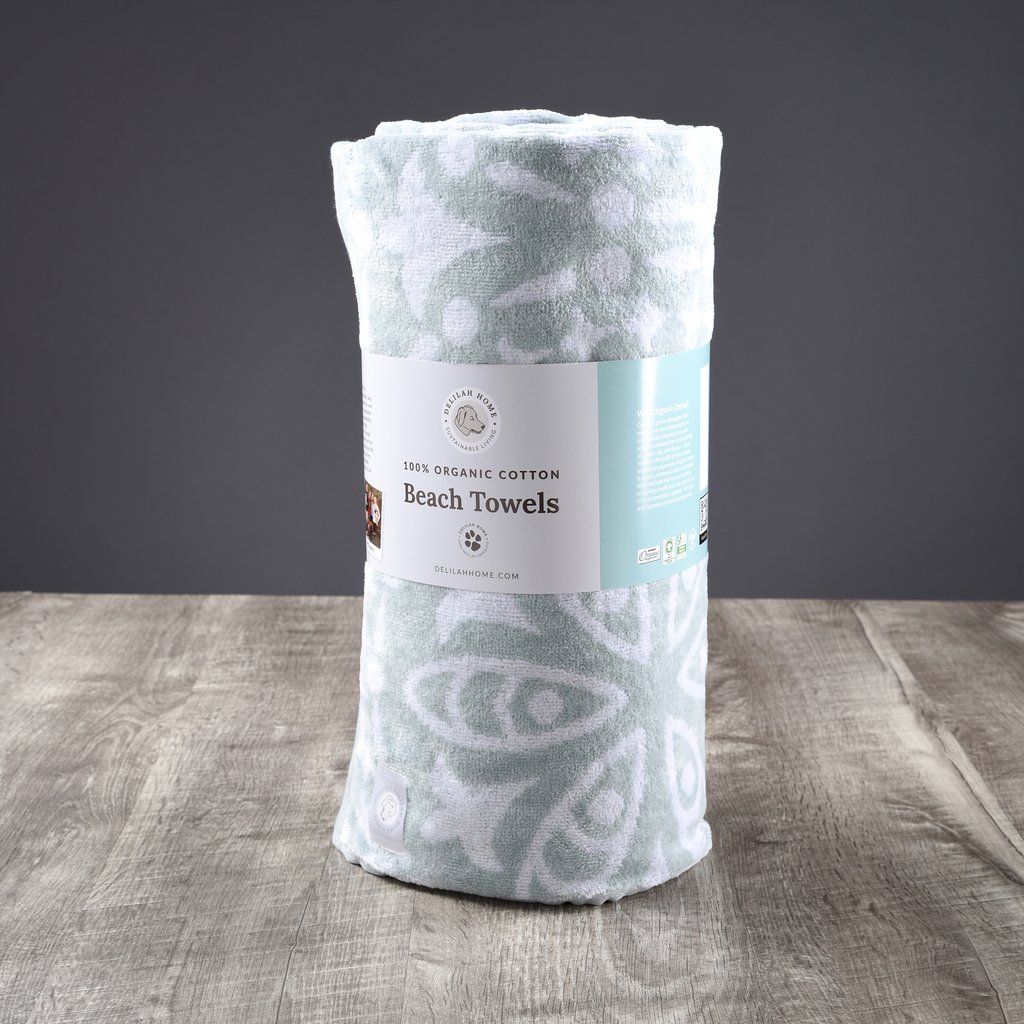
Dream of warmer months with the 100% Organic Cotton Kiawah Beach Towel ($49.99) from Delilah Home! This plush, soft, luxurious towel is made from organic Turkish cotton and is highly absorbent.

These darling Triceratops Felt Baby Shoes ($26), sold by Fair Trade Winds, are made with fair trade practices from wool, making them natural and eco-friendly. If your baby or toddler is not a dinosaur fan, Fair Trade Winds has more than a dozen other adorable animal slipper styles.

Cozy up with Big Dipper Wax Work sculpted candles! From pinecones to songbirds and pumpkins to Abraham Lincoln, these delightful candles come in various sizes and are all under $25.

Gift some lovely jewelry for the holidays this year! These Kantha earrings ($15) from World Finds are made from recycled Kantha textiles, meaning each pair of earrings will vary in color and design, making them one-of-a-kind!
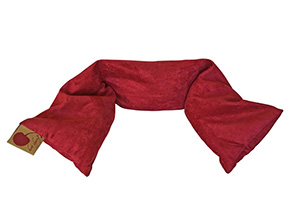
The US-made Ultra Suede Neck Wrap pillows ($39.99) from Hot Cherry can be heated or chilled to provide comfort to sore muscles or a just some soothing aromatherapy. They’re filled with clean, hollow, heat-retaining cherry pits, a by-product of Michigan’s cherry industry—so the pillow smells like cherry pie when you heat it up!
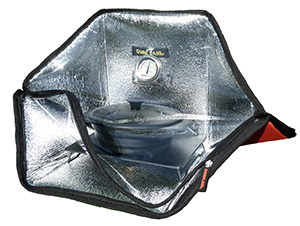
Try cooking in a new way while camping or in your backyard. Sunflair’s Mini Solar Oven Kit ($104.99) comes with a solar oven, thermometer, trivet, collapsible silicone pot, and stuff bag. It uses no electricity and doesn’t give off sparks or flames, so it’s very safe, making it a great option for emergencies, too.
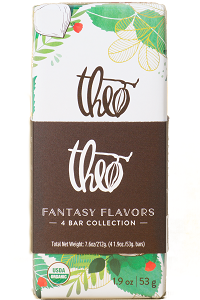
For your favorite foodie with a sweet tooth, what else would do besides organic, fair trade chocolate? The five chocolate bars in Seattle-based Theo Chocolate’s Fantasy Bar Collection ($15) come in unique and interesting flavors: Bread & Chocolate, Hazelnut Crunch, Root Beer Barrel, Grapefruit Ginger and Cinnamon Horchata. Packs with more traditional flavors are also available.
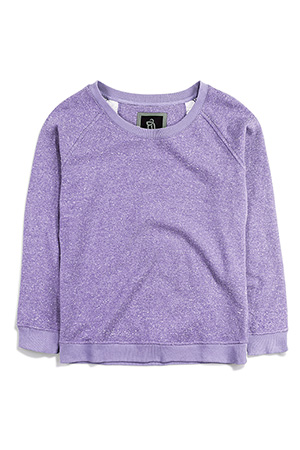
This hemp and organic cotton women’s Crewneck Sweatshirt ($84) is light enough for wearing year-round. From sustainable and ethical fashion brand OOLOOP.

Max Green Alchemy Scruff Rescue Face Scrub ($9.99) uses finely ground walnut shells and gentle lactic acid to clean and buff skin, all with a woodsy and citrus scent. Daily use will also help reduce ingrown beard hairs. Unlike conventional scrubs, it’s paraben-free, micro-bead-free, and vegan.
|
|
Ghanaian Farmer Urges Others to Adopt Regenerative Dynamic Agroforestry |
Bismark Kpabitey is a 33 year old dynamic agroforestry cocoa farmer from Ghana, where farmers typically earn $0.84 per day. Bismark has been practicing dynamic agroforestry for three years on seven acres to support his 16 family members. He sells his cocoa to Kuapa Kokoo, a Fairtrade-certified cocoa farmers organization.
In an interview with digital regenerative agriculture crowdfunding platform Grow Ahead, Bismark shares the story of how he discovered dynamic agroforestry and his vision for the future of agriculture in Ghana. We learn that, while deforestation is causing climate change in Ghana and making it increasingly challenging for farmers to predict when to plant their crops, dynamic agroforestry presents a regenerative solution that promotes food security and climate resiliency. Bismark warns that if Ghanaians continue to farm conventionally, soon the land will not be able to support its people. He calls for large-scale farmer training in dynamic agroforestry.
The actions of farmers like Bismark and support from the international community are what’s needed to transition agriculture from a cause to a solution in the fight against climate change.
How did you become interested in farming?
BK: Both of my parents are farmers, they’ve been in the farming system since I was born. It was through farming that I was able to obtain a Bachelor of Business Administration in Human Resource Management. I’m glad to be a farmer because I’ve seen how agriculture has helped me, my siblings, and family.
Not many people your age are farming. What is the trend with youth and farming in Ghana?
BK: Youth don’t get involved in agriculture here. The moment they complete high school, they leave their villages and go to big cities in search of jobs. Young people have the perception that those who are elderly or uneducated should farm. Not only the illiterate can farm, anyone can manage a farm. And if you manage your farm well, you become one of the richest people in your community. I’m hoping to provide an example that farming can be a great livelihood for anyone, regardless of age or education.
Tell us about agriculture in your region in Ghana.
BK: From what I’ve experienced, agriculture has changed considerably in the past 30 years. Output and productivity are decreasing unless you apply chemicals or other substances. Our forests are turning into grasslands. Our land is degrading. We are fortunate that a new system, dynamic agroforestry, is being introduced by our farmer cooperative Kuapa Kokoo.
When did you first learn about dynamic agroforestry?
BK: In 2015, the Sankofa project of Kuapa Kokoo, which provides support for agroforestry projects for farmers, came to our region and connected with my uncle John Narh. We visited their agroforestry demonstration plot, and we were inspired to do something similar.
When we first began installing our agroforestry system, we didn’t understand the approach—it was odd to us. As time went on, we began to understand and see the positive changes. We got to know that dynamic agroforestry respects every species. There’s nothing like a bad weed or an unwanted weed. We respect every plant.
Can you give us an example of that?
BK: With dynamic agroforestry, we leave the weeds to help with regeneration and stratification of the system. Stratification refers to the importance of having many levels of trees and crops to create a harmonious growing environment that mimics natural forests.
The amount of effort we apply in the field has reduced drastically. We used to weed more than 10 times per season when we were farming conventionally, and now we do it maybe 2-3 times per year. We used to consider elephant grass harmful, but in dynamic agroforestry, we cut it and cover the soil with it to hold in moisture for the crops during the dry season.
Why is agroforestry important for the future well-being of Ghanaian cocoa farmers, society, and the environment?
BK: On my farm, we are almost in our third year since starting dynamic agroforestry, and things are gradually starting to change. Dynamic agroforestry has enabled us to grow our own food in addition to generating revenue by growing cocoa. There are 16 of us in my family and we farm on seven acres, with that said we are able to get almost all of our food crops from our own field. Conventional farmers practice monocropping, and when their crop is finished, they have to go buy other food crops to support their families. We get ginger, tomato, eggplant, and most other perishable food crops from our field.
For society, we are helping change and regenerate a degraded system, showing people the importance of dynamic agroforestry. People are becoming interested in it and are understanding its essence.
And for the environment, we used to not plant timber trees in our cocoa fields but now--with dynamic agroforestry--we are trained to plant timber trees, which drawdown carbon to help our climate and will help in the future for other developmental projects or infrastructure. We are now regenerating the organisms in the soil to create new biodiversty, which makes healthy crops. We don’t burn the bush, and we don’t clear the land, both of which are better for the environment.
How is climate change affecting farmers in your region?
BK: We used to have seasons where we expected rain, but that is no longer the case. We know that these changes come due to environmental degradation and the way we treat our natural resources. Deforestation has really changed our local climate. Trees are cut down without replanting or afforestation and when dry season comes, the sun is dangerously hot for farmers and crops. If a farmer doesn’t have money for irrigation, they will suffer. We are coming to expect the unexpected, but it’s difficult to know what to plant and when because the rain and the sun are irregular.
What is the future of agriculture and how can the international community support smallholder farmers?
BK: If we continue with the conventional system, within 15-20 years we will have degraded land that won’t be able to produce much. This would really affect the people in this region. However, with dynamic agroforestry, even land that has lost almost all of its nutrients is able to re-establish its soil health for increased crop yields.
The future of agriculture depends on widespread adoption of regenerative, dynamic agroforestry. This could be supported by the international community with massive trainings for farmers. Trainings should be done in the communities, face to face, and teach the essence of changing from a conventional system into dynamic agroforestry that protects soil health long into the future.
Is there anything else you’d like to add?
BK: With the little experience I’ve had in my recent transition to dynamic agroforestry, I advise neighboring farmers and everyone I get in touch with to practice this system so that it will help our community, our society, and the country itself.
Learn more about Kuapa Kokoo: https://www.kuapakokoo.com/
Learn more about Grow Ahead: https://growahead.org/
|
|
6 Steps to Recycle More and Create Less Waste |
While everyone can waste less, we can’t all do it the same way. This work starts with individual action, then we join hands with neighbors to form and improve communities. Our communities can work together to hold companies and government accountable.
But local action starts with individuals. Here are six ways to recycle more and create less waste.
- Identify things you only use once before throwing away or recycling. For example: grocery bags, plastic utensils, takeout cups and boxes, straws, shipping boxes, cans and bottles, plastic/foil wrap, printer paper. Some of these items are commonly used for only a few minutes until they’re thrown out.
- Think of how you could reduce your reliance on single-use items. Buy reusable shopping bags and utensils, and make sure they’re always in your car or purse. Keep your reusable mugs clean and toss them in your bag when you’re headed to the coffee shop. Buy in bulk (or larger sizes) when possible so your goods use less packaging. Can you kick your canned soda habit and try a soda-maker or homemade fruit-infused water instead?
- Consider how you can reuse what you have. Can you double up on an object’s original use, like reusing a shipping box or shopping bag? Or can you reuse in a creative way, like turning an old wooden ladder into a plant stand.
- Recycle right. Do you know what can be recycled in municipal bins and what can’t? Find out by contacting your municipal waste authority. For things that are not recyclable in your city’s bins, there might still be an answer for you—Earth911.com has recycling options for nearly every product imaginable, and maps of recycling resources around the country! Search by zip code and the item you’re looking to recycle.
- Rethink the way you consume. One reason recycling isn’t valued as highly as it should be is because there’s simply not a high demand for recycled products in most cases. If you can afford to pay a little extra for a product made from recycled materials, it’s a vote with your dollars for a world in which recycled plastic has value and there’s a closed waste loop for products.
Buying fewer products overall helps reduce waste. With plastic products that you use for a long period of time (e.g. pens, Tupperware, hairbrushes, cutting boards, flip-flop sandals, etc.), treat them (and all possessions) well, so they will last a long time. - Don’t give up when you slip up. We’ve all read the articles about people who create one tiny bag of waste in a year. That takes a lot of effort and probably many years of reducing their consumption. While they’re great models to aspire to, keep in mind that nobody’s perfect: if you leave your reusable mug at home or buy something you realize is way over-packaged, forgive yourself, and try to do better next time.
What will you do as an individual, and as part of the global community, to reduce your waste this year? Learn more about zero-waste, the buy-nothing movement, and moving beyond the Walmart economy.
|
|
Green Living: 10 Habits of Highly Sustainable People |
Green Americans are interested in green living. Many of you want to help others learn how to create a sustainable, fairer world too. To help you do that, we've put together this list of ten high-impact actions for social justice and environmental sustainability.
While these categories don’t encompass all the things you can do to help create a better future, our Green Living blog is full of more ideas and resources.
When Green Americans across the country take individual actions, they add up to a lot of change. Please share this list of sustainable living tips with your friends, family, and social networks today!
Green Living Tips:
1. Save Water
According to the EPA, the average American family typically uses over 300 gallons of water every day. With climate change causing droughts across the nation and around the world, it’s critical to save water whenever you can. And while US drinking water is safe for most people, toxic runoff from agriculture, industrial pollution, fossil fuels, and degraded lead-pipe infrastructure has put thousands of communities at risk. Take care not to toss chemicals down your drain at home, to avoid polluting local water tables, and to conserve water whenever you can.
2. Go Nontoxic at Home
You’ve probably heard the statistic from the EPA about indoor air being up to ten times more polluted than outdoor air, due to the toxic chemicals often found in conventional cleaners and other products. If you haven’t yet done anything about it, make this the year to start. When you choose eco-friendly, less-toxic cleaning products, detergents, fragrances, candles, body care, and more, you keep your indoor air cleaner and make your home healthier for yourself and your family.
3. Green Your Closet
Americans buy too much clothing, and it’s glutting landfills. In addition, donated clothing often winds up being sent to developing countries, where it’s overwhelming local economies. The prescription for all this waste? If you want to live sustainably, buy less, and when you do buy, buy organic and green clothing that lasts longer than flimsy “fast fashion” pieces.
4. Green Your Energy Use
If you really take advantage of all of the opportunities to amp up the energy efficiency of your home and office, it’s possible to shave your energy bill in half. And then, green the rest of your energy use to reduce your carbon footprint even more.
5. Bank and Invest Responsibly
Your money can do good in the world, if you put it in the right places. By choosing socially responsible bank accounts and investment products, your finances can work for you and for people and the planet. Right now, more than $8.7 trillion under professional management is invested responsibly, adding up to a lot of economic power pressuring corporations to clean up their acts.
6. Choose “Good Food”
At Green America, we work towards a world that has organic food, planted and harvested fairly in ways that don’t exploit farmworkers, and isn’t cruel and inhumane to animals. Lately, we’ve also started including food grown using regenerative farming methods, as well. Regenerative agriculture heals the soil, so it can better act as a carbon sink. Studies like those conducted by Rodale have found that a global switch to regenerative farming could actually reverse the climate crisis.
7. Build Green
Buildings—new and existing—have a huge impact on the environment. By implementing green features and using renewable or recycled and salvaged materials, home and building owners can live more sustainable and greatly reduce a building’s impact on the environment and the climate.
8. Reuse and Recycle
Reusing products instead of buying them new—whether you find innovative ways to use things you already own, or swap, buy, or barter for someone else’s items—helps save energy, curb global warming emissions, and preserve the Earth’s precious resources. Choosing reusable products instead of single-use throwaways (bottled water, anyone?) curbs waste and reduces the burden on landfills, as well.
And, whenever possible, recycle unwanted items that can’t be reused to preserve resources.
9. Green Your Transportation
Transportation is one of the world’s largest sources of global-warming pollution. Walk, bike, or take public transit instead of driving. You’ll cut down on air pollution and help reduce emissions that are contributing to the climate crisis.
10. Travel Sustainably
Air travel in particular contributes to climate change, and so do all of the vehicles on roads worldwide. Whenever you can, walk, bike, or take public transportation to curb air pollution and global warming emissions. And when it’s time to go on vacation, choosing locally owned hotels, organic restaurants, and green businesses can help minimize your travel footprint.
We hope these ten green living suggestions illustrate how you can live a sustainable life and adopt earth-friendly habits. Please share this post with friends and family!
|
|
Grains As Thy Medicine? |
When we think of foods that are healthy for us we often think of fruits and berries, superfoods like nuts, vegetables like kale, and proteins like meat. We don’t necessarily think about grains. Maybe we don’t think about grains because nowadays 1 in 5 people can’t tolerate them. And maybe that is a societal thing where grains aren’t trendy, maybe its corporate America confusing us with all their labels and questionable health claims, or maybe we are just not educated enough on grains in general. Are grains healthy? What are the different types? Is there a difference between ancient grains and modern grains?
Food-as-Medicine Movement
The food-as-thy-medicine movement has been around since the beginning of time but is now gaining ground as we are seeing physicians and medical institutions incorporate food as a formal part of treatment for a range of illnesses, and not relying solely on medications. By prescribing these nutritional changes they're trying to prevent, limit, or even reverse diseases by changing what patients consume. We are learning that ancient wheat can be a part of a healing diet.
Modern wheat has gotten a bad reputation and has been linked to symptoms or illnesses like bloating, IBS, fatigue, stomach pain and others experienced by patients with celiac disease and gluten intolerance are attributed to the consumption of wheat products. The blame is placed on gluten, which is a protein in wheat. More and more people are reporting being gluten intolerant these days and having wheat sensitivities. People with general wheat sensitivities vastly outnumber those with celiac disease, which affects less than 1% of the population. Could their sensitivity to wheat be tied to modern strains of this grain? It has been suggested that ancient grains show lower immunogenic properties and therefore can be introduced in the diet of gluten intolerant individuals (non-celiac).
So, what is the difference between ancient wheat and modern wheat? The answer is simple: genetic manipulation. In the 1950’s and 60’s wheat was cross-bred to increase yields and to make harvesting, transportation, and storage uniform for industrial purposes. Further, modern milling methods have exacerbated the problems of modern wheat. Industrialized techniques separate of the parts of the kernel – leading to the “white flour” that is in most baked goods. The downside to these innovations, is that modern wheat is proving to be less healthy than ancient varieties.
Recent studies have shown that those who have incorporated ancient wheat like KAMUT® brand khorasan into their diets have seen total cholesterol decrease on average 4.0%, and with that those who suffer from chronic inflammation diseases saw their markers drop a significant amount. In addition, another study tested patients with diabetes. Those patients not only showed reductions in bad cholesterol, but those individuals blood insulin levels fell 16.3% and their glucose levels decreased 9.1%.
Ancient grains, like KAMUT® wheat, have many beneficial properties. They are rich in fiber, iron, potassium, magnesium, and protein. Whole grain KAMUT® wheat is much richer in polyphenols and fatty acids as well as minerals (which we often don’t think about) like selenium which helps support a healthy immune system. In addition to helping reduce inflammation in the gut. As Bob Quinn, PhD, president and founder of Kamut International states “As a country, we are well-fed, but not well nourished.” An important step to changing that is to change the grains we eat, and going back to healthy varieties of the past.
|
|
Environmental Justice, fossil fuels, and telecoms |
By Ayate Temsamani, Green America's Climate Fellow
A few years ago, a young boy named Kevin Brown made national news after pollution from an industrial factory near his home triggered repeated asthma attacks. Kevin was going to emergency rooms week after week. His mother, Lana Brown, said, "I would look outside and I would see him just leaning on a tree or leaning over a pole, gasping, gasping, trying to get some breath so he could go back to playing.” The Chicago neighborhood where Kevin grew up has some of the country’s most polluted air. Across the country many industrial facilities, including fossil fuel powered generators, are located in lower-income communities. Residents often seek help from activist groups and non-profit organizations to strengthen their voice and fight back against polluters, but these environmental justice groups are often under-resourced and can’t fight all the companies that poison low-income communities.
Unfortunately, Kevin's case is not uncommon in low-income communities of color, specifically in Black and Latino neighborhoods where the asthma rate is extremely high. In the United States, asthma is the most prevalent chronic disease of childhood as it affects more than 6 million or 8.3% of the United States’ children. However, Black children are disproportionately affected compared to white children, as Black children are “79% more likely to live in neighborhoods where industrial pollution is suspected of posing the greatest health danger.”
Impacts from fossil fuel plants are suspected contributing factors to higher mortality rates in these communities as they are more exposed to pollution. According to the National Association for the Advancement of Colored People (NAACP) report, “68% of African Americans live near a coal-fired power plant”. Latinos are also disproportionately exposed to these toxic chemicals. A 2016 report from the Clean Air Task Force states that “the air in many Latino communities violates air quality standards intended to protect human health” and Latino children are more likely to die from an asthma attack than white children.
Fortunately, there are environmental justice solutions ready to be implemented to protect the planet and the most vulnerable communities burdened with fossil fuel effects. Let’s explore the problems, solutions, and how you can get involved.
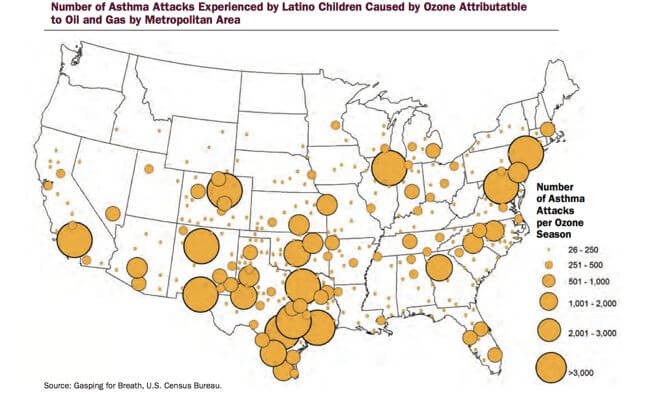
How Fossil Fuels Damage Communities
The combustion of fossil fuels releases fine particles and ground-level ozone, which are harmful pollutants. Carbon dioxide and other gases emitted in this process amplify the greenhouse effect and spur climate change. The combustion of oil and coal releases nitrogen oxides, sulfur and carbon as well as hydrocarbons, lead, soot and heavy minerals. Surface mining of coal through destructive practices (e.g. strip mining and mountaintop removal) is responsible for releasing toxic chemicals including heavy metals and arsenic. These chemicals pollute waterways, contaminating community groundwater. As for natural gas extraction, and in particular fracking for natural gas, the chemicals used are hazardous, and are usually stored in open-air waste pits, releasing toxins in the air. These toxic chemicals affect human health causing not only physiological damages to the lungs, kidneys and blood streams but also damages to the brain as well.
Particles from burning fossil fuels may exist in the air for several weeks at a time and can travel miles. When we breathe, toxic particles invade the lungs and get carried into the bloodstream. The World Health Organization estimates that worldwide 1.6 million people die from lung cancer each year. In the US, heart disease, stroke, cancer and respiratory illnesses are among the leading causes of deaths, and toxins released through the combustion of coal are directly linked to these diseases. A United Nations organization has calculated that global climate change is already the cause of 400,000 premature deaths every single year; recent reports show that pollution kills three times as many people as AIDs, tuberculosis, and malaria combined. These health risks extend from our heavy reliance on fossil fuels. In 2017, 31.8% of energy came from natural gas, 28% from petroleum and 17.8% from coal, whereas energy produced by renewable energy was only 12.7%. Major users of electricity like the telecoms sector should be purchasing and demanding clean energy sources.
The Role of the Telecom Industry in Environmental Justice
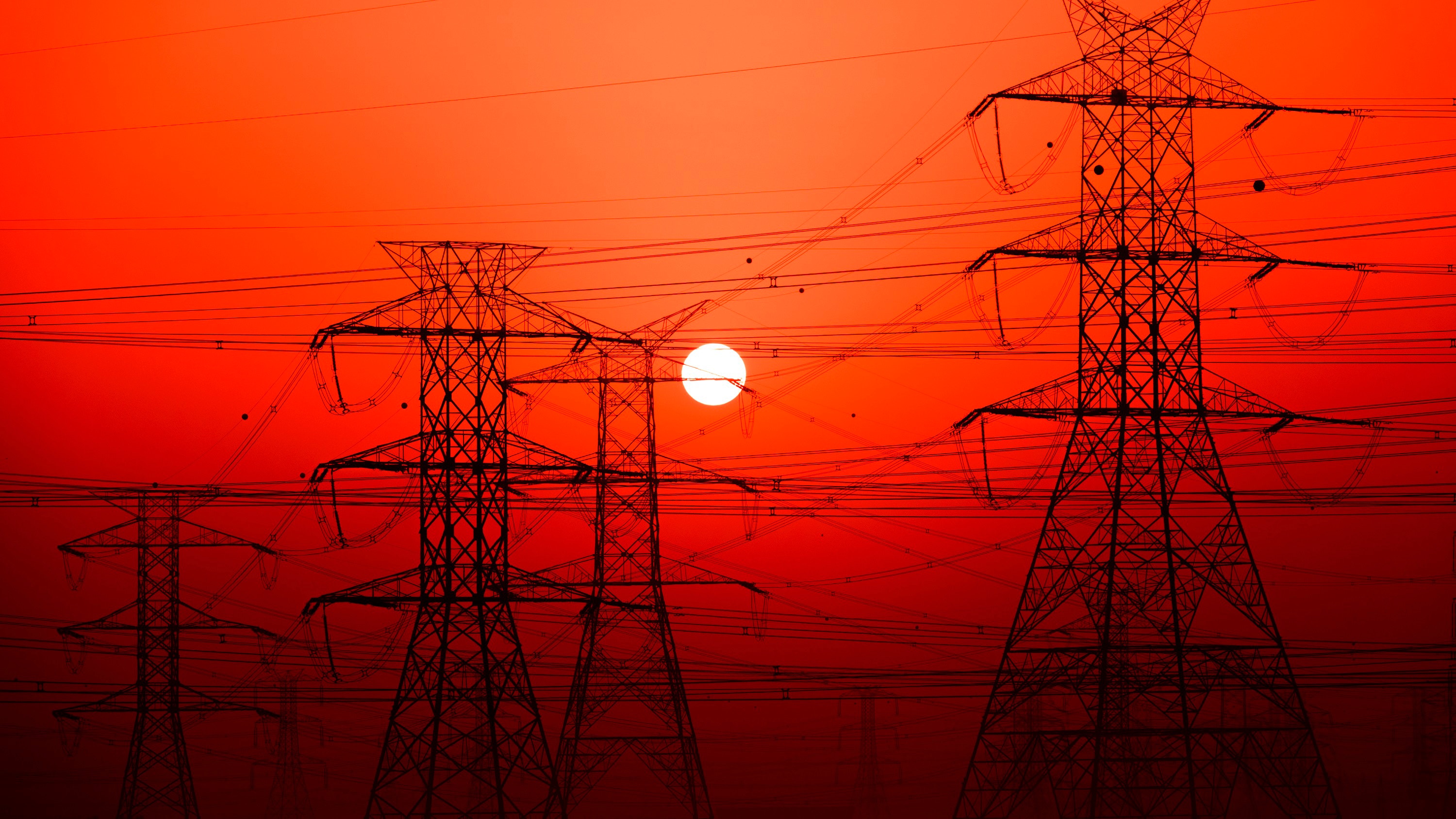
The burning of fossil fuels presents a significant environmental justice issue: harming public health and contributing to premature deaths in our country. Switching to renewable energies would decrease air pollution from energy sources and the risks associated with it. In identifying sectors which lag in clean energy use, the telecommunications industry stands out as a large entity with significant influence on the climate with its use of over 3 million megawatt hours (MWh) of energy usage, mostly from fossil fuels. This industry emits 16 million tons of CO2 every year from its heavy reliance on dirty energy.
AT&T and Verizon, the two leading US companies in the industry, have a combined electricity usage that could power 2.6 million homes for a year. Most of the sector’s energy use goes to maintain networks and data centers. The telecommunications industry relies heavily on these centers and access networks running 24/7 so we can stay connected. That connectivity comes at a high environmental and human health cost as data centers and networks serving the telecom industry are powered by fossil fuels.
One of the effects of climate change is an increase of intensified storms that pose severe threat to human life and widespread devastation. Natural disasters leave in their wake destroyed communities and costly recovery efforts that are both labor and resource intensive. Telecom companies, particularly Verizon, call attention to the assistance they lend to impacted areas. These efforts are commendable, however when companies fail to take direct action to reduce their own greenhouse gas emissions, they are neglecting the most impactful way they can curb climate change.
Consumer interest and pressure urging these telecom giants to move to renewable energy sources is having an impact. In just the past year, T-Mobile committed to 100% renewable energy and AT&T has made commitments to purchase wind power that equal about 30% of its energy use. But, Verizon, which is the largest player in the industry, only gets 2% of its energy from renewable sources, and is only committed to doubling that, to a paltry 4%, over the next few years. And Sprint derives less than 1% of its energy from renewables. As the demand for energy from telecoms grows, they need to do more. All telecom companies in the US need to commit to reaching 100% renewable energy by 2025.
Environmental Justice: Pushing for Equitable Solutions
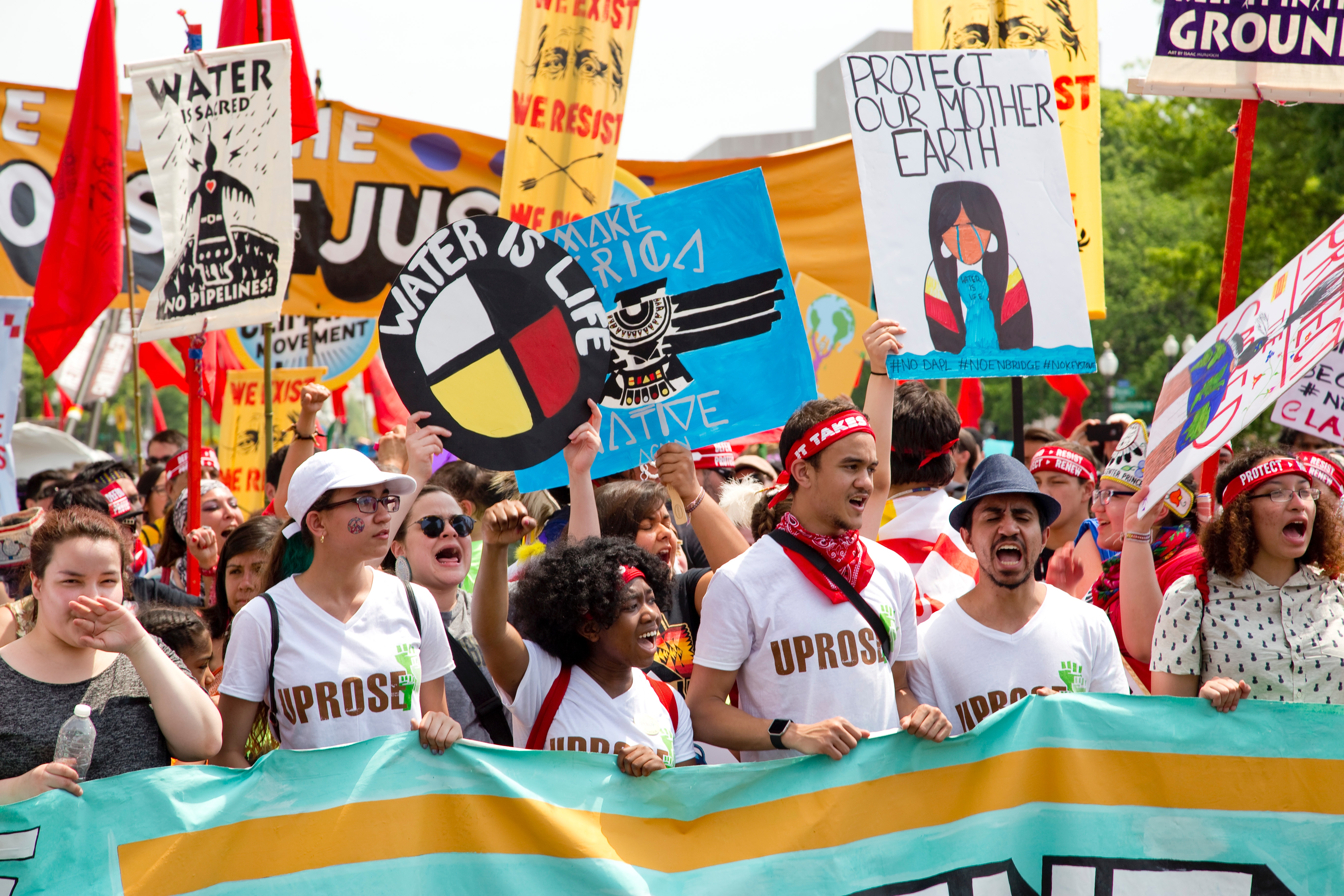
The long-term consequences of pouring greenhouse gas emissions and other pollutants into our atmosphere are dire, and there are also immediate impacts, which often afflict the poorest people worldwide. Studies have shown that the effects of climate change affect communities differently, and that minorities and marginalized groups are the most affected. The question of environmental justice then becomes that of the distribution (among individuals, social groups, countries) of the burdens related to environmental policies (risk prevention, changes in practices, restoration of degraded environments). Who will pay for the environmental degradation? and how? The burden is usually felt by the most vulnerable, known as "frontline communities". We could prevent 7,000 deaths a year caused by heart disease just by cutting pollution in communities of color to the same level of white neighborhoods. There are many climate justice organizations including Hip Hop Caucus, California Latino Water Coalition, Center of Race Poverty and the Environment, Indigenous Environmental Network, among others fighting daily for equal protection against climate change.
Fossil fuel projects impact communities nationwide, including both “Red” and “Blue” states. This is a problem that cuts across political party lines. In 2016, the state of Maryland issued a permit for the construction of a new power plant in Brandywine, rural southern Prince George’s county, which is a majority Black community. The Panda Mattawoman power plant would be a new gas-fired power plant expected to increase the already high level of air pollution in the area, where a total of five power plants will be operating by 2019. According to the American Lung Association, Prince George’s county violates air quality standards, mostly due to the highly polluted air in Brandywine, where power plants are clustered. A coalition of environmental groups and activists are outraged by the state’s decision to permit another power plant to open near their homes. Residents of Brandywine filed a federal civil right complaint as they believe state legislators discriminate against their community, where 72% of residents are Black. Kamita Gray, president of the BTB Neighborhood Coalition stated, “we deserve a healthy quality of life, and we don’t deserve to be disproportionately and adversely impacted in our daily lives as it pertains to air quality, traffic and noise.”
Legislators of Prince George’s county firmly believe that the new power plant will raise millions in tax revenues and will be economically beneficial for the state, ignoring the community's concerns altogether. The neighborhood coalition has taken action refusing to be the victims of another fossil fuel power plant’s hazard, and has partnered with Earthjustice to assess the impacts the project will have on their community. Most importantly, the power plants are clustered around an elementary school that suffers from the pollution and is surrounded by heavy black smoke. Brandywine’s residents count on the members of the BTB Neighborhood Coalition and nonprofits mainly because the town is not incorporated in Prince George's county and thus, doesn’t have a mayor to advocate for the issue. The situation in Brandywine caught the attention of Thriving Earth Exchange, a non-profit organization that has been helping Kamita Gray and the rest of the coalition collect scientific data on the town’ air quality. Without rigorous scientific data, the EPA and the state won’t consider even looking at the issue.
Despite the hard work of Kamita Gray and the rest of the BTB Neighborhood Coalition and the help of these nonprofit organizations, lack of funding remains a major roadblock and the ongoing fight between the residents and the power plants is far from ending. Fred Tutman, the head of another nonprofit advocating for Brandywine, says this is an environmental injustice on a vulnerable community that lacks power, stating “by power I don't mean electricity, I mean political power. I mean economic power”. Community-led efforts to block or shut down polluting power plants result in varying outcomes. Unfortunately, these efforts are not always successful in blocking a plant however they can spur companies to retrofit facilities to limit pollutants. But, the health of vulnerable communities should not be compromised in order for us to keep watching our favorite movies or sharing memes.
The fight over the Brandywine power plant is just one example of the many low-income communities nationwide that are fighting the impacts of coal mining, gas fracking, power plants, and pipelines that threaten their air, water and lives. These are the same communities that are often last to benefit from clean energy sources – such as solar and wind – and the well-paying jobs that come with clean energy.
How You Can Help
Green America urges large corporations to do their part in shifting away from fossil fuels to clean energy. Our Hang Up On Fossil Fuels campaigns urges the telecom industry to switch to renewable energies and set an emission target, which could have a significant impact in reducing environmental justice issues and human health risks that disproportionately affect marginalized groups. Switching to renewable energies not only fights climate change, it also saves lives and promotes social justice.
1. Support the work of environmental justice organizations and search for a local movement near you to support.
2. Explore our climate justice resources to learn more about organizations and experts on the frontlines as well as legislation to support.
3. Sign our petition urging telecom companies to Hang Up on Fossil Fuels. Take a step further by contacting companies directly via social media or phone.
4. Search our Get a Better Bank database to find community development banks and credit unions that support people and the planet. Our Fossil Fuel Divestment Campaign provides resources for divesting more broadly from fossil fuels through your mutual funds and stock holdings, including lists of financial products and service providers who can help create fossil-fuel-free portfolios.
5. Take action directly by cutting your own carbon emissions through energy efficiency measures and switching to clean energy sources.
Take an action above to contribute to environmental justice, reverse climate change, and get your telephone company or bank to do more for people and the planet! |
|
Socially Responsible Investing: What to Know about Mutual Funds |
Socially Responsible Investing (SRI)—also called sustainable investing; impact investing; Environmental, Social and Governance (ESG) investing; mission-based investing; faith-based investing; and other names—is a powerful tool more investors are using both to meet their financial needs and to make their money work toward their social and environmental goals. The Forum for Sustainable and Responsible Investment (US SIF) reported that in 2016 the market for sustainable, responsible and impact investing reached $8.7 trillion in assets under professional management in the US, a 33% increase since 2014. [Update: On November 1. 2018, US SIF reported that SRI assets now total $12 trillion.]
Key concerns of socially responsible investors include climate change, human rights, weapons avoidance, and corporate governance issues.
At Green America, we believe the increase in SRI assets comes as good news for people and the planet. As SRI assets grow and with a significant portion of U.S. households investing in mutual funds, it is important to understand how mutual funds are being evaluated in terms of social and environmental responsibility also called "sustainability". This blog addresses two mutual fund rating systems, one from the leading investment research and investment management company, Morningstar Inc., and the other from the socially responsible investment advisory firm--and Green Business Network (GBN) member--Natural Investments.
This May, Natural Investments released the report, Rigor In Ratings: A Comparison of Morningstar’s Sustainability Rating and Natural Investments’ Heart Rating, which compares and contrasts the methodologies used by these two firms to evaluate the sustainability of mutual funds.
What Do These Ratings Rate?
As more investors become involved in SRI, it is imperative that everyone, from financial professionals to curious investors, understands how the SRI landscape is evolving. One aspect of this is understanding the difference between various mutual fund rating systems that address the environmental, social and governance (ESG) factors that mutual funds may or may not address, or address to varying degrees.
The key to using mutual fund rating systems effectively lies in understanding what the rating actually evaluates. A key part of Natural Investment’s Heart Rating is that it considers a fund’s intention to create a more socially and environmentally just society through actions like shareholder advocacy, extensive company screening, and community investing to support lower income populations. Morningstar’s Sustainability Rating differs in that it uses a best-in-class approach, measuring the overall sustainability performance of the holdings in a fund’s portfolio relative to the fund’s peers, without regard to “intentionality” (i.e. a stated commitment to ESG goals).
Funds in each Morningstar category, such as International Equity funds, are scored based on a bell curve in which those in the top 10 percent of scores (the best) receive five globes and the bottom 10 percent receive only one globe. Morningstar’s Sustainability Rating uses data from the global research firm Sustainalytics. That firm scores ESG criteria for over 6500 companies as well as “controversies” or events associated with the company that have negative ESG impacts. Morningstar uses this combination of ESG data and “controversy” data to determine a score and award globes -- the symbol for their sustainability score.
Unlike Morningstar’s Sustainability Rating, the Heart Rating does not use a bell curve but rather scores on “absolute terms of breadth and depth” of a fund’s ESG factors. In addition to awarding extra points for certain sector exclusions such as fossil fuels, the Heart Rating also considers engagement in shareholder advocacy, community investing and research capacity as part of the scoring process which also entails questionnaires and interviews with fund managers. Funds are awarded a score of 1 to 5 hearts depending on their SRI commitment and activity.
GBN spoke with Morningstar Director of Sustainability Research, Jon Hale to learn more about the thought process behind the Sustainability Rating:
“The Morningstar Sustainability Rating came from an idea I had in 2015, that company-level ESG data had become more robust over the past decade but was only accessible to a few asset managers,” says Hale. “I thought it would be useful for investors to use those company ESG scores to analyze the sustainability of mutual funds based on their holdings and do it at scale so that many funds across the world could be compared with each other.” Hale says that anyone using Morningstar’s Sustainability Rating should understand that it is a best-in-class category rating, meaning it ranks companies in the same business sector (i.e., agriculture, finance, retail, entertainment, etc.), by measuring them against each other’s combined ESG and controversy scores as noted above.
What’s Behind the Scores
The Rigor in Ratings report highlights how the different methodologies used by the Sustainability and Heart ratings affect how funds are scored. Invesco Energy, (FSTEX), a fund with top holdings in fossil fuel companies, provides an example that could be confusing to investors who do not understand what’s behind different sustainability scores. In this example, we have a fund that received 4 out of 5 globes from Morningstar – a good sustainability rating. Many SRI-inclined investors may think a 4-globe rating would mean that this fund focuses primarily on renewable energy companies when it does not. Rather, it receives a high Morningstar rating because of its best in class score among fossil fuel-holding funds. Natural Investments, on the other hand, does not even evaluate this fund because it has no expressed intentionality regarding SRI. Interestingly, a fund dedicated to renewable energy holdings could actually have a low Morningstar score, as Hale notes: “On the flipside, a lot of the funds that do focus on renewable energy don’t get great ratings because they’re not really taking any steps to select particular stocks based on overall ESG performance of the company.” In other words, a clean energy fund might not pay attention to a range of ESG issues and thereby receive a low Morningstar rating even though clean energy investments are in keeping with SRI values.
For Natural Investments, the intention to make progress on ESG issues is what makes or breaks a fund’s score on the Heart Rating. It’s this intentionality that researchers at Natural Investments believe is a key, missing factor in Morningstar’s Sustainability Rating. “We don’t recommend that Morningstar only score SRI-mandated funds, we simply suggest that the highest level of their rating system be reserved for those funds that do have an SRI mandate,” says Natural Investments Managing Partner and Rigor in Ratings co-author, Michael Kramer. Kramer added: “SRI managers have explicit exclusionary screens in terms of both sectors and corporate practices and simply won’t hold certain types of companies. This is a higher standard because it takes a stronger stand about what’s ok to own and what’s not.”
Natural Investments recommends that the Sustainability Rating award more points to funds with an SRI mandate, replace the best-in-class approach with absolute criteria for all sectors, and establish minimum requirements for receiving four or five Globes.
Working Toward A Common Vision
Hale points to several significant contributions that the Morningstar Sustainability Rating has made to sustainable investing. First, he notes that the Sustainability Rating has expanded the scope and consideration of ESG criteria by a wider audience: “By in some ways, expanding the scope of what sustainability means in an investment context, I think we’ve helped expand that field for those who may not see sustainability or SRI as something that they want to make a comprehensive orientation but do want to see it reflected in their portfolio.”
The Sustainability Rating has increased awareness of ESG issues particularly among mainstream asset managers who previously, without this tool, were not, or only very minimally, integrating sustainability issues into their work with clients.
A second contribution he cites is validation of intentionally-SRI funds, since the vast majority of SRI-mandated funds receive high Morningstar ratings. Hale believes the Sustainability Rating’s methodology further confirms or validates that SRI funds are indeed walking the talk. And a third contribution is that the development of the Sustainability Rating provides an opportunity for SRI-dedicated firms, like Natural Investments and others, to clearly articulate their stance that funds should not only provide competitive returns but should also benefit society and the environment.
As it turns out, we will actually see more commonality between Morningstar and Natural Investments in the near future, as Morningstar will soon update its database to provide a closer look at what certain intentionally-SRI funds do.
“Right now in our database you can’t find information about what intentionally SRI funds do. So, we’re going to have information for the intentional funds on what screens they use, whether they engage in shareholder advocacy, and if they have any kind of impact orientation. I think that will be a really interesting improvement to our database,” says Hale.
“We’re going into a more granular assessment so people who want to look for funds that are fossil free or are impact-oriented can search for them and get a list. The results would not be an assessment of, for example, what funds are doing impact investing better than others, but it would help investors figure out where to go with intentional funds.”
Both the Heart rating and Morningstar rating provide useful information to investors seeking to better understand their mutual funds’ sustainability scores. What’s crucial is to understand the meaning of these ratings. For Green Americans seeking funds that are “intentionally SRI” and that align with their values and social and environmental goals, the Heart Rating is more likely to meet expectations. Green America is pleased to feature the Heart Rating on our website at www.greenamerica.org/socially-responsible-investing .
To find Socially Responsible Investment firms, financial advisors, and SRI mutual fund companies that are members of Green America’s Green Business Network, visit the Green Pages Online.
|
|
Read Our Publications |
If you prefer online reading that feels almost like reading a paper magazine, you've come to the right place. Browse through our current and past publications, including the Green American, Your Green Life, and Guide to Social Investing and Better Banking. For articles that are easier to share online, head to our full magazine archive.
|
|
Program Manager, Clean Electronics Production Network |
Program Manager, Clean Electronics Production Network
Hours: full-time (4-days, 32 hours/week)
Salary: $46,000 - $53,000/Grant Track Position
Benefits: medical, dental, sick days, holidays
Supervisor: Director, Clean Electronics Production Network
Green America is a non-profit organization dedicated to creating a just and sustainable society by harnessing economic power for positive change. Our unique approach involves working with consumers, investors and businesses. Our workplace reflects our goal of creating a more cooperative, environmentally sound economy. We have a participatory decision-making process, which aims to build consensus within the departments and teams.
The Clean Electronic Production network (CEP) is a multi-stakeholder, cross-industry collaboration (Innovation Network) that launched in 2015. The goal of the network is to move the electronics industry towards zero exposure to toxic chemicals in the manufacturing process.
CEPN is an Innovation Network (IN) of the Center for Sustainability Solutions, which brings all of Green America’s green economy supply-side work into a powerful new flagship program for Green America. The Center convenes multi-stakeholder initiatives dedicated to accelerating the shift to environmental sustainability and social justice, while eliminating environmental and human abuses in key areas such as energy, agriculture and manufacturing.
The Center builds on Green America’s work over the years, where we’ve brought together industry groups across supply chains to create major shifts in such areas as solar, community investing, recycled paper procurement, and sustainable agriculture. Our innovation network methodology is effective, compelling, and attracting significant attention as a faster and more effective way to solve some of society’s most challenging and complex problems.
The CEPN Program Manager is responsible for providing project management, coordination and technical development support for CEPN’s ongoing Initiatives, and assisting with management of biannual Network meetings. The Program Manager also assists the Director in stakeholder engagement and recruiting, working group facilitation, and facilitation design for Initiative Group and full Network meetings.
The position involves travel 2-4 times per year for 2+ days to working group meetings and events, to be negotiated. CEPN is a virtual Network – the position may be housed in Washington, DC at the Green America offices but may also be filled remotely (with a preference for location in the Bay Area if remote).
Duties and Responsibilities:
Communications
- Participate in new participant and CEPN member engagement, including conducting interviews (and pitch meetings, with Director approval) with potential participants.
- Work closely with team to ensure that CEPN members are effectively and efficiently engaged in Initiative Group work (and market initiatives, if any).
- Support and engage in the development of key project deliverables, including prototype tools (e.g. database development, spreadsheet tool production, survey drafting), meeting reports, fundraising materials and other outputs.
- Lead and coordinate select Initiative Groups.
- Assist with content and materials development for CEPN’s web and print presence, and supervise contractor execution of such work.
- Provide general operations support to Center for Sustainability Solutions as needed.
Meeting Logistics & Team Coordination
- Responsible for planning CEPN meetings and related events for up to 60 participants in a remote location, including securing meeting venues, hotels, meals, and staff transportation; communicating with event participants; procuring A/V and meeting materials; and other aspects of event production (with assistance from Green America staff).
- Support program team during all-Network meetings as needed – documentation, site owner communication/coordination.
- Coordinate the work and participation of contract researchers, designers/developers and facilitators as needed.
- Support and engage in the development of meeting strategy, design, and tools.
Project Management Support
- Support the CEPN Director in managing the Innovation Network and its priority initiatives.
- Support the CEPN Director in securing funding and project commitment from new and returning participants.
- Assist with coordinating program team and working group meetings.
- Support the Director in ensuring knowledge gained is converted into “knowledge capital” for the Center for Sustainability Solutions, including documenting work processes involved in managing INs, and successful strategies used in CEPN operations.
- Participate in Green America staff meetings and processes and other duties as required.
Qualified Candidates should have the following skills and qualities:
- Demonstrated project management skills, with experience managing several projects simultaneously.
- A passion for and strong knowledge of sustainability and the electronics industry
- Strong technical skills at a level that enables development of working tool prototypes for Initiative Groups -- i.e. mastery of Excel, proficiency with simple database development familiarity with common web platforms (SquareSpace, Wordpress)
- Strong interest in and willingness to conduct group facilitation
- Strong research and writing skills.
- Bachelors degree required
- Master’s degree in sustainability, engineering or chemistry helpful
- Experience with business development or fundraising a plus.
How to Apply:
Send cover letter and resume to centerjobs@greenamerica.org or to Green America, 1612 K Street NW, Suite 600, Washington, DC 20006
No calls, please.
Green America is an equal opportunity employer. All qualified applicants will receive consideration for employment without discrimination regarding: actual or perceived race, color, religion, national origin, sex (including pregnancy, childbirth, related medical conditions, breastfeeding, or reproductive health disorders), age (18 years of age or older), marital status (including domestic partnership and parenthood), personal appearance, sexual orientation, gender identity or expression, family responsibilities, genetic information, disability, matriculation, political affiliation, or credit information. Harassment on the basis of a protected characteristic is included as a form of discrimination.
|
|
Is There Child Labor in Your Halloween Candy? Chocolate Scorecard Identified Good, Ghoulish Companies |
WASHINGTON, DC – October 11, 2018 – This Halloween, much of the candy that trick-or-treaters will receive will have been produced by their own peers — child laborers working halfway around the world. More than 2 million children in Western Africa work in often hazardous conditions growing the main ingredient in chocolate, cocoa. That is why Green America updated its Chocolate Scorecard, which grades major candy companies on social and environmental practices, including certifications for forced labor, child labor and discrimination. The Green America Chocolate Scorecard can be found here: https://www.greenamerica.org/end-child-labor-cocoa/chocolate-scorecard.
Only one “F” was assigned in the scorecard and that went to Godiva. Other laggards include “D” graded Ferrero and a “C-” to Mondelez (maker of Cadbury products and the more upscale Green and Black’s chocolate bars). Six companies got “A” grades: Alter Eco, Divine, Endangered Species, Equal Exchange, Shaman and Theo Chocolate.
“Every Halloween, there’s plenty to be scared of in the candy aisle,” said Todd Larsen, executive co-director of Consumer and Corporate Engagement at Green America. “That’s why Green America provides the Chocolate Scorecard, so consumers know which of their favorite chocolate brands are using ethically sourced, high-quality ingredients.”
“Child labor is a global problem, and there is a cruel irony in the fact that it is used to produce candy for other children,” said Caroline Chen, social justice manager at Green America. “When shoppers hit the stores to purchase candy to hand out on Halloween, they should consider the other children of the world that are affected.”
The Chocolate Scorecard identifies ethically sourced, certified sweets. The scorecard will also help consumers understand what the major chocolate companies are — and are not — doing to combat child labor in their supply chain.

The scorecard also identifies which companies have employed innovative programs and projects to address other underlying issues of child labor in cocoa-producing countries. Such programs include:
- Child Labor Monitoring and Remediation Systems, which work with communities and families to address why child labor is happening on farms;
- Farmer income generating programs;
- Traceability mechanisms for fuller supply chain transparency.
Consumer also should consult Green America’s The ABCs of Food Labeling guide, which defines common food labels and identifies those that are authentic, those that are mere marketing tricks, and many that fall in between.
###
Green America is the nation's leading green economy organization. Founded in 1982, Green America (formerly Co-op America) provides economic strategies and practical tools for businesses and individuals to solve today's social and environmental problems.
|
|
Green America's Chocolate Scorecard |
|
|
Hope Credit Union |
|
|
ppawins4 |
|
|
Vulcan Materials Company |
To start, our plant requires air permit compliance, therefore we implement multiple dust control measures throughout our site to reduce opacity. This includes spray nozzles at any transfer point of dry material throughout the entire plant and anywhere rock is being crushed. We also use a 12,000 gallon water truck, filled with onsite fresh water, to saturate our dirt roads and areas that pose high dust emission opportunities.
We also protect any and all natural occurring springs, rivers, creeks and lakes. Many measures are taken to keep natural waters flowing and clean such as:
- constructing protective berms to keep contaminated rain water out
- never mining where natural bodies of water are established
- installing culverts/bridges where traffic may have to cross natural creeks
- helping sustain natural wildlife that uses the water
We also have multiple programs to keep the environment clean. These include our Storm Water Pollution Prevention Plan (SWPPP) as well as our Spill Prevention, Control, and Countermeasures (SPCC) program. Our SWPPP outlines regulations pertaining to the quality of the storm water that leaves our property. Our site designs outfalls (exact area where storm water crosses our property line) with maximum filtration in mind. These outfalls are regularly monitored and updated as needed. We use various products to filter the runoff, including but not limited to, vegetation, straw waddles, and a conglomerate of limestone. In addition to the measures, we also collect water samples at lease twice a year and send them to be tested for suspended solids and pH levels. When it comes to maintaining the environment with fuels and oils on site, we implement our SPCC plan. This plan outlines prevention of any kind of chemical spills and the countermeasures to take if any substance comes into contact with the environment. We utilize concrete containment around our fuel and oil storage and fueling stations. We also supply readily available spill kits across the site and regularly review countermeasures with all employees. It is insured that all hazardous substances are clearly labeled as well. These standards are maintained by myself personally as the Safety, Health and Environmental Coordinator.
Other conservation methods you will find here are wildlife conservation measures. We have a Wildlife Habitat Council Certification and have maintained its status for many years. To keep this certification we are always looking for ways to keep the wildlife at our site safe and healthy. One of our projects is housing for a flock of Purple Martins. These birds are supplied with three birdhouses for mating and shelter. They are actual very particular birds to monitor. In fact, during a storm one year, one of the houses was blown over by the wind. The house was righted and peculiarly all of the birds seem to prefer the two houses that were not damaged. They are thriving none the less. In addition to the Martins, we have also had bird boxes on our freshwater ponds in the past. We are currently working on getting this project up and going again. Another project we are introducing will be strategically place food plots for deer in the area. The hope is to keep them on the property and thriving, while also diverting them away from coming into contact with any dangers in the area (ie. - large mobile equipment, plant equipment or contractors).
Our plant also regularly stores used oil for recycling, recycles light bulbs, batteries, scrap metal, tires, and has a certified waste company pick up and properly dispose of any other material we do not have the means of disposing.
|
|
instagra icon |
|
|
Vulcan Materials Company |
To star, our plant requires air permit compliance, therefore we implement multiple dust control measures throughout our site to reduce opacity. This includes spray nozzles at any transfer point of dry material throughout the entire plant and anywhere rock is being crushed.
We also protect any and all natural occurring springs, rivers, creeks and lakes. Many measures are taken to keep natural waters flowing and clean such as:
- constructing protective berms to keep contaminated rain water out
- never mining where natural bodies of water are established
- installing culverts/bridges where traffic may have to cross natural creeks
- helping sustain natural wildlife that uses the water
We also have multiple programs to keep the environment clean. These include our Storm Water Pollution Prevention Plan (SWPPP) as well as our Spill Prevention, Control, and Countermeasures (SPCC) program. Our SWPPP outlines regulations pertaining to the quality of the storm water that leaves our property. Our site designs outfalls (exact area where storm water crosses our property line) with maximum filtration in mind. These outfalls are regularly monitored and updated as needed. We use various products to filter the runoff, including but not limited to, vegetation, straw waddles, and a conglomerate of limestone. In addition to the measures, we also collect water samples at lease twice a year and send them to be tested for suspended solids and pH levels. When it comes to maintaining the environment with fuels and oils on site, we implement our SPCC plan. This plan outlines prevention of any kind of chemical spills and the countermeasures to take if any substance comes into contact with the environment. We utilize concrete containment around our fuel and oil storage and fueling stations. We also supply readily available spill kits across the site and regularly review countermeasures with all employees. It is insured that all hazardous substances are clearly labeled as well. These standards are maintained by myself personally as the Safety, Health and Environmental Coordinator.
Other conservation methods you will find here are wildlife conservation measures. We have a Wildlife Habitat Council Certification and have maintained its status for many years. To keep this certification we are always looking for ways to keep the wildlife at our site safe and healthy. One of our projects is housing for a flock of Purple Martins. These birds are supplied with three birdhouses for mating and shelter. They are actual very particular birds to monitor. In fact, during a storm one year, one of the houses was blown over by the wind. The house was righted and peculiarly all of the birds seem to prefer the two houses that were not damaged. They are thriving none the less. In addition to the Martins, we have also had bird boxes on our freshwater ponds in the past. We are currently working on getting this project up and going again. Another project we are introducing will be strategically place food plots for deer in the area. The hope is to keep them on the property and thriving, while also diverting them away from coming into contact with any dangers in the area (ie. - large mobile equipment, plant equipment or contractors).
Our plant also regularly stores used oil for recycling, recycles light bulbs, batteries, scrap metal, tires, and has a certified waste company pick up and properly dispose of any other material we do not have the means of disposing.
|
|
ppawinners |
|
|
Skip The Slip Infographic |
|
|
University of Louisiana Federal Credit Union |
|
|
University of Louisiana Federal Credit Union |
|
|
Urban UpBound Federal Credit Union |
|
|
US Community Credit Union |
|
|
US Community Credit Union |
|
|
US Community Credit Union |
|
|
US Community Credit Union |
|
|
US Community Credit Union |
|
|
US Community Credit Union |
|
|
US Community Credit Union |
|
|
US Community Credit Union |
|
|
Security Federal Bank |
|
|
Security Federal Bank |
|
|
Marine CU |
|
|
Brewery CU |
|
|
Appalachian FCU |
|
|
Appalachian FCU |
|
|
Southern Bancorp Bank |
|
|
Southern Bancorp Bank |
|
|
Southern Bancorp Bank |
|
|
Southern Bancorp Bank |
|
|
Southern Bancorp Bank |
|
|
Southern Bancorp Bank |
|
|
Southern Bancorp Bank |
|
|
Southern Bancorp Bank |
|
|
Southern Bancorp Bank |
|
|
Southern Bancorp Bank |
|
|
Southern Bancorp Bank |
|
|
Latah CU |
|