Content by specific author

Body
girls hugging
father and kids running
"Making American Green Again:" Largest Ever Victory Garden Project Since World War II Launched

May 21, 2018//Washington DC//Americans who want to fight climate change and high food bills are being urged today to follow the World War II lead of their grandparents by planting a “Climate Victory Garden” in order to reduce carbon emissions while growing safe, healthy and less expensive food. 

Green America today announced their new Climate Victory Gardens campaign. The campaign urges all Americans to plant a “Climate Victory Garden” in their backyard or community garden. Climate Victory Gardens include practices like no-till, cover crops, perennials, and composting that help to create healthy soils. The effort is aimed at mitigating carbon emissions and storing carbon in the soil while growing safe and healthy foods.

During the first and second World Wars, Americas rallied to feed their communities at home and support troops overseas by planting “Victory Gardens.” By 1944 nearly 20 million victory gardens produced eight million tons of food, equaling about 40 percent of the fresh fruits and vegetables consumed in the US at the time.  

How realistic is it to assume 40 million Climate Victory Gardens can be started? According to the National Gardening Association, 35 percent of all households in America, or 42 million households, are growing food at home or in a community garden.  In addition to new Victory Gardens, many of the of these existing gardens could adopt climate-sensitive practices.

“Americans want to take actions that have a direct impact on climate change,” said Todd Larsen, Green America’s executive co-director of consumer and corporate engagement. “They are also increasingly concerned about the chemicals on store-bought produce.  Climate Victory Gardens gives us all a way to reduce our impact on the planet, while ensuring the food we feed our families is safe and nutritious.”

“Agriculture is currently a major contributor to climate change,” said Jes Walton, food campaigns specialist at Green America. “Climate Victory Gardens are a way for all Americans to change that, turning food into a practice that feeds the earth and reduces greenhouse gasses.  The gardens are also a great way for all Americans to better understand where our food comes from and the importance of preserving healthy soils for generations to come.”

The U.S. must immediately sequester carbon from the atmosphere, putting back what has been released from the soil because of years of destructive industrial agricultural practices. 

Industrial agriculture is one of the most carbon and water-intensive industries, and the massive chemicals used in industrial farms damages the soil, pollutes local communities, and put the consumers’ health at risk.  Climate Victory Gardens are a campaign of Green America Re(store) It! Program that advocates for a regenerative agricultural system in the US that protects our soils and sequesters carbon, while eliminating toxic chemicals.

A recent study found that if the state of California alone planted gardens that nourish the soil and used compost for their gardens, it could meet 7 percent of California’s climate mitigation goals. On a national level, Climate Victory Gardens can be an important way for all Americans to help mitigate climate change, while growing healthy foods for their families.

All the resources they needed to get started are available here: https://greenamerica.org/climate-victory-gardens. Americans are asked to pledge their commitments here: https://greenamerica.org/climate-victory-gardens/commitment-grow-climate-victory-garden.  Climate Victory Gardens across the U.S. are being mapped here: https://www.greenamerica.org/climate-victory-gardens-map

###

About the Groups 

Green America is the nation's leading green economy organization. Founded in 1982, Green America (formerly Co-op America) provides economic strategies and practical tools for businesses and individuals to solve today's social and environmental problems. http://www.GreenAmerica.org

Media Contact:   Max Karlin, for Green America, (703) 276-3255 or mkarlin@hastingsgroup.com.

skiptheslipreport
skiptheslip practices chart
Company Receipt Practices Chart
Get Connected: Join thousands of peers in the green business community
Build Your Business: Connect your social enterprise to our green consumers
Get Certified: Stand out with your green business certification
Envest Microfinance

Envest Microfinance is a microfinance investment vehicle dedicated to making financial services universally available by connecting the microfinance sector to capital markets. It lends to small, but financially solid, microfinance institutions (MFIs) that, in turn, lend to traditionally marginalized borrowers. This approach allows Envest to support the ongoing development of a more dynamic microfinance sector.

boy in sprinkler2
boy in sprinkler
Editorial Communications Fellow, GBN
Operations Manager, Green Business Network
Dirt is a Dirty Word: The Wonderful Complexities of Soil Health

Are dirt and soil the same thing? NO! This blog explores some major differences and highlights why understanding soil is so important to discussions around regenerative agriculture, carbon sequestration, and climate change.


Soil. You might have noticed this word coming up more and more around here at Green America, especially in our new Re(Store) It! campaign. We’re excited to be talking about building healthy soils to reverse climate change and improve farmlands in this campaign. But, as we do more research and talk more about soil, we’ve come to realize that this important resource is often misunderstood and oversimplified. Isn’t it just stuff that holds plants in the ground? Soil is oftentimes mischaracterized as lifeless and unimportant. It’s treated like dirt. We’re hoping this blog will shed some light on this complex and magical biosphere!


How Can Soil be Healthy or Unhealthy? Isn’t It Just dirt?

We love this statistic: a teaspoon of healthy soil holds more tiny organisms than there are people on earth. Isn’t that incredible? And, it’s not just about quantity; the diversity of this same teaspoon has been compared to that of the Amazon rainforest. This is an impressive quarter of all of Earth’s biodiversity. Some of these organisms are visible to the eye—things like earthworms, beetles, and ants—while others are impossible to discern from other elements in the soil—such as bacteria, algae, fungi, nematodes, and many more. In fact, soil organisms are so numerous and abundant that scientists are still in the very early stages of identifying and understanding them. These little creatures are major players in soil health and should be respected for the hard and important work they do.
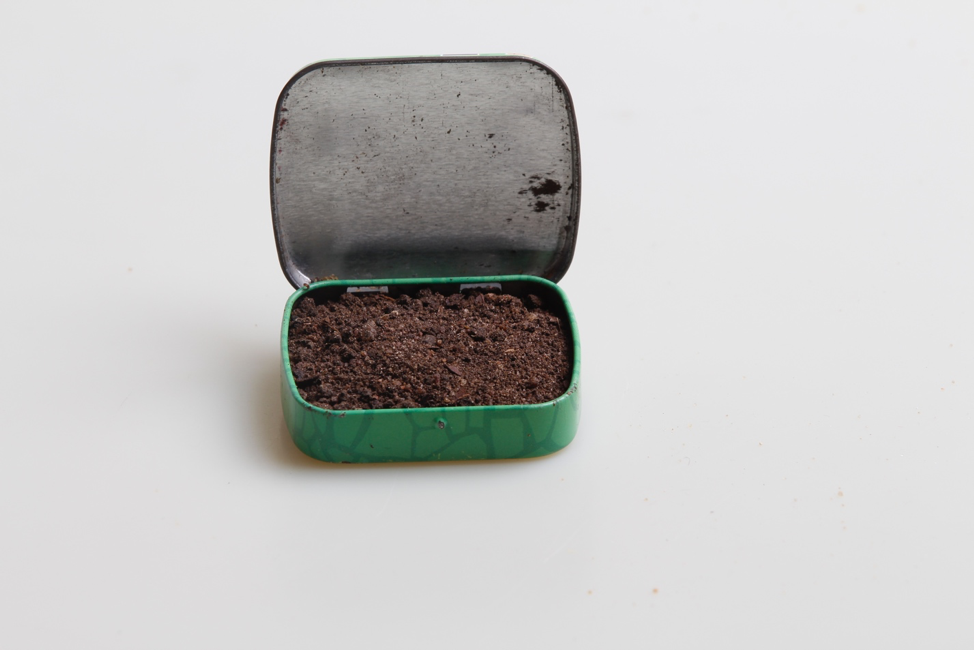
small canister of dirt

When talking about soil health, we think it’s helpful to think of soil as a “macro-organism” or living network made up of smaller lifeforms. Soil is a complex web of interrelated organisms that rely on and support one another. It’s an ecosystem. Some use the analogy of a human body to show the importance of each (organ)ism to the whole. Soil is made up of these hard-working organisms along with organic matter, minerals like sand, clay, and rock particles—the non-living “dirt”—and the air and water in the spaces between. The health of soils is all about the balance and diversity of these components.


Another thing that makes this ecosystem unique is that most of these organisms don’t merely exist in the soil, they physically create it. They break down organic materials like dead leaves—burrowing, eating, and churning them up—resulting in the rich humus that crops and other plants need to grow. We (and all living things) rely on these organisms’ role in growing the food we eat and, increasingly, the potential for drawing harmful carbon dioxide gas out of the air. 


Organic Matter: Why it Matters, from the Tiniest Microorganisms to the Entire Planet

Let’s consider the components of healthy agricultural soils. All soils are different, but generally consist of around 25% air, 25% water, and 45% minerals. The remaining three to six percent are soil organic matter (SOM). SOM includes all organic materials and soil organisms—essentially everything that is or was alive in the soil. This is a small percentage, but it’s also one of the most important components of soil.


There are so many benefits to having healthy soils, rich in SOM. These range from the physical—like reducing rain runoff and increasing the capacity of farmlands to hold water—to the chemical and biological—like increasing nutrient availability for crops and attracting insects that control agricultural pests. These are perks for consumers, farmers, and the environment, but there’s potential for amazing benefits to be realized at a global level too (check out our infographic to see how the full system works and benefits YOU!). 


SOM contains humus, which has the potential to draw carbon dioxide (a major greenhouse gas) from the atmosphere. Here’s another important buzzword: soil organic carbon (SOC). Humus contains soil organic carbon, it’s the result of all that decomposition taking place in the soil. SOC depends on SOM, meaning that soil holds more carbon when it has more organic matter


So, to quickly recap: soil is filled with tiny organisms that break down organic materials (SOM) to create humus that contains carbon (SOC).


Healthy Soils Fight Climate Change, But Farming Needs to Change

Unfortunately, much of our food comes from an industrial agricultural system that treats soil like dirt. It uses the soil like a pincushion for plants and synthetic chemicals. The majority of agriculture in the United States today relies heavily on disruptive farming practices, including invasive tilling and heavy chemical use—both of which wreak havoc on these sensitive soil communities. When soils are disturbed, carbon leaves the soil (known as respiration) and goes into the air where it creates a warming effect. 


Conversely, regenerative agricultural practices aim to support the soil to ensure the carbon stays where it belongs. These practices include: planting perennial and diverse crops, reducing or eliminating tillage and using mulching on fields, rotating crops and using cover crops, composting, and using careful livestock management practices. Carbon gets into the soil through decomposition and photosynthesis. This happens in all agriculture, but regenerative agriculture ensures this carbon stays in the ground. Regenerative agriculture builds SOM and SOC, benefits food production, and has the potential to reverse climate change.


Soil is a nonrenewable resource, meaning it cannot be created within a human’s lifespan. Unhealthy soils are subject to wind and water erosion, blown and washed away to areas where they cannot be used for agriculture. In the United States, we lose the equivalent of a 116 mile-long train full of soil every day. Globally, some scientists estimate that we have only 60 years of farming left, if we continue to degrade our soils. These facts are an important indication of the need for regenerative agriculture and building up soil carbon.


These statistics are scary and show just how important soil health and regenerative farming practices are to the survival of our species. Farmers are our allies in these uncertain times and regenerative agriculture is one way we can fight climate change and ensure adequate food supply into the future

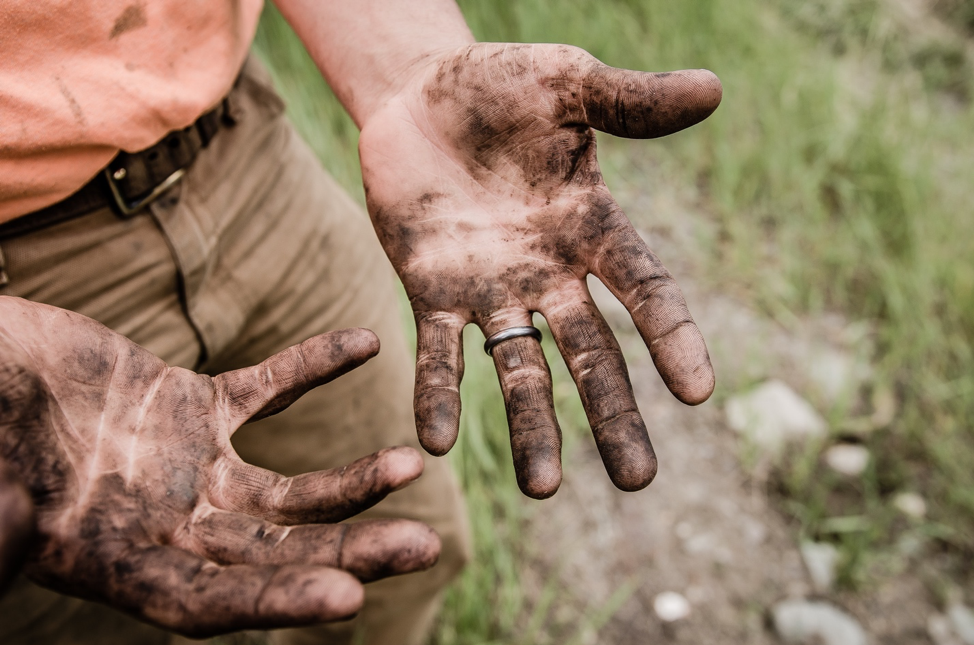
image of a farmer's dirt-covered hands

It’s time we start showing soil the respect it’s due. Soil is the basis for life as we know it on this planet, and as the current stewards of the land we must build up the soil and save it for future generations.  


Learn more about how you can honor and build up the soil in your own backyard and communities by starting a Climate Victory Garden

Zen Coffee Company

Zen Coffee Company is a Woman Owned Business in Omaha, NE. We strive to bring the community together by sharing the love of high quality coffee beans and delicious espresso beverages, in a warm and welcoming environment. We at Zen enjoy creating a unique place that customers can experience, while also providing many drink options so that everyone is included!  


All of us having worked in the corporate environment at one point in our career beginnings, choose to kick the trend and used our passion and personality to create Zen, where we aspire to rise above and continuously learn and grow within our team and coffee community.  We will continue to educate ourselves and support our staff and customers, as they continue to grow on their own paths. 


We strive to maintain a zero waste environment and follow green business practices while offering the highest quality products within every aspect of our store. 


One way to think of zen is this: a total state of focus that incorporates a total togetherness of body and mind.  Zen is a way of being.  It is also a state of mind.  Zen is often used to describe someone/something that has reached an UBER state of coolness and inner peace.  This is the experience we want to leave you with after each visit and after each delectable sip of our coffees and teas.  


Zen features coffee from our partner, Dapper & Wise Roasters in Beaverton, OR.   Do not be thrown off by the location, these Fair Trade beans are truly the best in the Midwest and we are thrilled to bring them directly to you! Just try it for yourself! Our roasters take great care in selecting quality sourced beans and farmers while roasting them to perfection so that each cup is more exquisite than the last! 


Come and Experience Zen....

skipslip graphic
Skip the Slip Infographic
SkipTheSlipPDF
Sip the Slip PDF
Skip the Slip Table
Skip the Slip Report 2018
Skip the Slip Report PDF
“Skip the Slip” Report Release 2018

*For updated impacts and explained methodology, please see our June 2019 revised report here.

May 10, 2018//Washington DC// Nearly every U.S. consumer handles a dozen paper receipts every week, and retail store employees may touch thousands in the same time. But few are aware of the toxic nature of the paper receipts, which utilize Bisphenol-A (BPA) or Bisphenol-S (BPS). Even fewer know of the major environmental and climate harms linked to the receipts, which are an easily avoided now that non-BPA receipts and digital sales confirmations are readily available, according to a new report from Green America.

Titled “Skip the Slip,” the new Green America analysis available online at https://greenamerica.org/report-sts* finds:

  • Only one-third of retailers have adopted digital options, and the vast majority of retailers issuing paper-based receipts continue to use papers with BPA or BPS coatings. Among the leaders identified in the report as having moved away from BPA/BPS receipts are Apple, Best Buy, GNC Live Well and Lidl Grocery.  Laggards cited in the report as still using traditional paper receipts are Family Dollar, Petco, Target, TJ Maxx/Marshalls, Walgreens and Walmart. The report also finds that several companies, including CVS and Whole Foods offer digital receipts, but primarily give customers BPA or BPS receipts.


  • An estimated 93 percent of paper receipts are coated with Bisphenol-A (BPA) or Bisphenol-S (BPS), known endocrine-disruptors. Paper receipts coated with BPA contain between 0.8 to nearly 3 percent pure BPA by weight. The total mass of BPA on a receipt is 250 to 1,000 times greater than the amount of BPA found in a can of food or baby formula, or in plastic baby bottles. Retail employees are at the greatest risk, as studies show workers who have regular contact with receipts have over 30 percent more BPA or BPS found in their bodies, and many employees may exceed the European Union’s limit for safe amount of BPA to absorb in a day.


  • Digital receipts provide a relatively low environmental impact. Each e-receipt is estimated to have a footprint of 4 grams of carbon dioxide.  Since a mature tree can absorb roughly 21,772 grams of carbon dioxide each year, by keeping trees in the forests rather than using them for paper receipts, one tree can accommodate the emissions of over 5,443 digital receipt emails.

“The data are clear: Paper receipts coated in toxic chemicals pose risks to our health and have huge environmental impacts,” said Green America’s climate and recycling program director, Beth Porter.  “That’s why Green America is advocating for a wider use of paperless solutions, while also ensuring recyclable, phenol-free paper will be used for customers who still request a paper receipt.”

The Skip the Slip report highlights cost-effective digital and non-toxic solutions for retailers to protect their employees and customers, and reduce their impacts on the environment, while reducing fraud and increasing sales.

"Most consumers and retail cashiers would be shocked to learn that the seemingly innocent receipt paper they handle day in and day out can be laden with toxic chemicals," said Mike Schade, Mind the Store Campaign Director for Safer Chemicals, Healthy Families. "These chemicals don't just stay on the paper but can make their ways into our bodies just from handling the receipt paper. Retailers should move swiftly to eliminate these harmful chemicals and transition to safer options like e-receipts."  

"In response to a growing, national wave of concern and customer backlash about single-use and non-recyclable materials, more and more companies are demonstrating their leadership by beginning to make changes that reduce waste," said Joshua Martin of the Environmental Paper Network. "Based on the threat they pose to public health and the readily available alternatives, offering non-toxic and mostly digital receipts should be among the first steps on every retailer's immediate action plan. By reducing an unnecessary and non-recyclable use of paper, retailers and their customers are taking action to reduce the pressure on the world's forests resulting from today's rising global paper consumption."

A related infographic highlighting the costs of paper-based receipts coated in BPA and BPS is available https://www.greenamerica.org/report-skip-the-slip.

Consumers and employees who are concerned about the impacts of paper-based receipts and associated toxins can take action to encourage retailers to move to digital and non-toxic options here.


About the Groups


Green America is the nation's leading green economy organization. Founded in 1982, Green America (formerly Co-op America) provides economic strategies and practical tools for businesses and individuals to solve today's social and environmental problems. http://www.GreenAmerica.org


Safer Chemicals, Healthy Families fights for strong chemical policy, works with retailers to phase out hazardous chemicals and transform the marketplace, and educates the public about ways to protect our families from toxic chemicals. https://saferchemicals.org/


The Environmental Paper Network (EPN) is a world-wide network of over 140 civil society organizations working together towards the Global Paper Vision. This Vision expresses our common goal to create transformational change in the pulp and paper industry and wider society, so that paper production and use contributes to a clean, healthy, just and sustainable future for life on earth. http://environmentalpaper.org/

SkiptheSlip chart
Skip the Slip Infographic 1
Skip the Slip infographic
Skip the Slip Report: Environmental Costs & Human Health Risks of Paper Receipts

Why "Skip the Slip and decline paper receipts? 

Paper receipts have unnecessary environmental impacts and expose workers and customers to toxic chemicals. Every year in the United States, receipt use consumes over three million trees and nearly nine billions of gallons of water. Receipt production creates nearly 300 million pounds of solid waste and emits the greenhouse gas equivalent of over 400,000 cars on the road each year.   
 
Receipts also pose exposure to toxic chemicals as most thermal paper used for receipts is coated with Bisphenol-A (BPA) or Bisphenol-S (BPS), endocrine-disruptors which serve as color-developers to make the text appear on receipts. These toxic chemicals are linked to reproductive impairment, type 2 diabetes, thyroid conditions, and other health concerns. 

In this report, we discuss the updates and key findings listed below in greater detail, as well as alternatives to toxic paper receipts and suppliers of these alternatives.

Download full PDF report here

CVS Makes Progress on Receipts  

In 2017, our Skip the Slip campaign began urging CVS to address its wasteful, BPS-covered paper receipts. Thousands of individuals signed our petition requesting that CVS switch to phenol-free paper and boost its digital receipt program reduce paper waste. This campaign led to a dialogue between Green America and CVS on its receipt practices.  

In 2020, CVS announced the switch to phenol-free paper in all 10,000 stores and increased promotion of its digital receipt option.  The company reports that increased digital participation has led to saving 49 million yards of receipt paper – more than enough paper to circle the globe. 

More details on report page 5.

Reducing paper receipts and other disposable items can be good for business.  

Analysis from Grand View Research shows that the consumption of thermal paper for receipts has been increasing in the United States and worldwide each year but decreased in 2020 due to the COVID-19 pandemic. In 2019, the U.S. consumed 280,000 metric tons of paper for receipts but estimates show that this will decrease to 252,000 tons this year.

The cost of thermal paper has continued to rise due to a shortage of leuco dye used in thermal paper. In 2019, the retail sector spent more than $312 million on receipt paper: a high cost for items that are frequently discarded by customers after leaving the store. This cost increase is one reason why reducing the automatic printing of unwanted paper receipts can cut costs.   

Market research on thermal paper

More details on report page 4.

Consumer Preference Data  

In 2019, Green America surveyed Americans on receipt preferences and learned that 89 percent of respondents would like retailers to offer digital receipts as an option. Nearly 40 percent of respondents have already signed up for digital receipts from stores that offer that option. The largest support for digital receipts came from those identifying as 44 years old or younger. Most respondents estimated that they throw away or lose over half of paper receipts that they receive and a third of all respondents want to see companies do more to reduce receipt waste.

These findings are in line with the goals of Skip the Slip. We want businesses to offer a digital option, phenol-free paper receipts by customer request, and an option for no receipt so that customers can have the choice. 

Click here for full survey results.

Barriers to Digital Receipts  

Although Green America advocates for more digitization and e-receipts, we recognize that there are customers who experience barriers to using digital.  

Paper receipts can serve as an immediate proof of purchase, and Black and Brown shoppers are demanded by store employees to prove purchase at disproportionally higher rates.  All customers have a right to shop in a store, including exiting the store, without fear of harassment or racial discrimination. Green America will urge retailers to adopt anti-discriminatory practices and advocate for a more equitable and inclusive society. 

The global pandemic has further exposed gaps in internet access within communities.  According to a 2018 Pew Research study, nearly one-third of Americans still do not have internet access at home. The digital divide is mainly experienced among older populations and less affluent ones. In a world where technological innovations are becoming more significant every day, all individuals should have easy access to the internet.  

More details on report page 11.

Company Scorecard on Receipt Practices 

Green America groups selected retailers and businesses by in-store receipt practices in the scorecard below. Data for the scorecard was gathered from: direct contact with company, publicly-available information, or research published by The Ecology Center or the Center for Environmental Health.  


Skip the Slip Company Scorecard
*This denotes a company that offers a no receipt option or is exploring other receipt practices. 
 

Past editions of the Skip the Slip report are archived here.


Latah CU
Mt Zion Indianapolis FCU
Mount Vernon NY Postal Employees CU
New Covenant Dominion FCU
Nebraska Rural Community FCU
St. Elizabeth’s Credit Union
Nueva Esperanza Community Credit Union
Montana Community Development Corporation
Craft3
Union Baptist Greenburgh Federal Credit Union
Union Baptist Church Federal Credit Union
Unified Homeowners of Illinois FCU
UBC Southern Council of Industrial Workers FCU
Tuscaloosa Credit Union
TRUST Federal Credit Union
Trius Federal Credit Union
Tri-State Bank of Memphis