

Microplastics. The term haunts every conversation about sustainability and health. And with good reason—they’re found in every global ecosystem as well as human and animal tissue, and they pollute both the environment and health of all living things.
Thanks to unregulated industrial practices, microplastics have become increasingly pervasive, but there are many ways we can reduce their impact and the dangers they pose to ourselves and our planet.
Every Plastic, Everywhere, All at Once
What started as a turn of the 20th century invention to make people’s lives easier is now one of the planet’s biggest pollutants. Every year, the world produces 400 million metric tons of plastic that ends up in oceans, our waterways, even our bloodstream.
The most pervasive is microplastic, solid particles that range in size from 5mm to 1nm (for comparison, the EPA states a single strand of human hair is 80,000nm wide).
There are two types of microplastics: primary and secondary. Primary microplastics are those intentionally manufactured and found in things like cosmetics and air blasters. Secondary pieces are the ones derived from degrading plastic debris.
It is not hyperbole to state that microplastics are found nearly everywhere and travel through seemingly endless pathways.
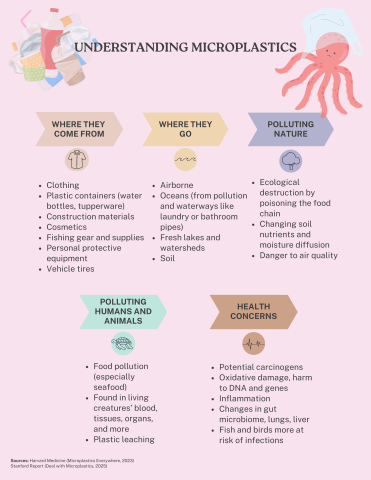
Though microplastics are related to and used interchangeably with PFAs and phthalates in conversation, they are not the same. While micro- and nanoplastics are small pieces of plastic, phthalates, BPA, and PFAs are all toxic chemicals found in plastics with their own litany of health problems.

The danger of microplastics to people and the planet is a minefield, particularly because our awareness of their dangers is relatively recent, and ongoing studies have only scratched the surface of the ways they affect the environment and our bodies.
What to Do?
The question of how to combat the effects of microplastics can feel overwhelming. But there are important and straightforward strategies to minimize microplastic creation and consumption. Ingestion, inhalation, and skin absorption are the most common way microplastics pollute and bioaccumulate inside human bodies. Many solutions to prevent this are habit- and process-based. Here are four changes you can make today:
Swap out your cleaning products. Ditch the jelly-like detergent pods, especially the dishwasher ones. Heat is microplastic’s best friend and can cause the plastic to leach into your kitchenware.
What to do instead: Use organic and nontoxic dishwashing products, like the vegan solid dish soap from Hill+House or plastic-free detergent pods from companies like Blueland. And don’t forget about handwashing tools—check out Airnex’s natural cleaning brushes and sponges. For general cleaning, try making your own home cleaners with ingredients like baking soda, water, and vinegar.
Speaking of the kitchen, opt out of plastic packaging. Plastic tupperware, especially when exposed to heat through warming food in the microwave or being run through the dishwasher, can release millions of micro- or nanoplastics. The same goes for kitchen tools and water bottles.
What to do instead: Invest in high-quality, durable, and safely reusable products like stainless steel water bottles, glass tupperware, plastic-free food storage containers from Food Huggers, or wood cutting boards and utensils.
If possible, opt for more organic food and try to avoid highly processed foods. A 2023 study in Environmental Pollution revealed processing machinery like conveyer belts can make microplastics leach in products. Pesticides have also been shown to contain microplastics that can get absorbed into crops.
What to do instead: Go to your local farmer’s market. At the grocery store, shop for organic and non-packaged foods when possible. And advocate with your local grocers and elected officials to provide greater accessibility to affordable quality and sustainably produced food.
Invest in better-quality clothing and fabrics. A lot of modern clothing is made with synthetic and manmade materials, whether as a blend or whole cloth. These are the materials that should be avoided whenever possible: nylon, spandex, polyester, and acrylic.
What to do instead: Apparel businesses within the Green Business Network® feature clothing and raw textiles made of hemp, 100% organic cotton, eco-friendly wool, bamboo, linen, and more. Thrifting is also a great option. But if you purchase secondhand clothes made of synthetic blend, wash by hand and
line-dry—exposure to the agitation and heat of the washer and dryer will release microplastics.
Finally, do not spiral with shame or guilt if you do use plastic. Corporate marketing strategies and lax government regulations have intentionally designed a world that requires considerable effort and cost to avoid the use of plastics in every day life because it increases corporate profits—even at the expense of the public’s health. I still have plastic in my house because I can’t replace every single kitchen or bathroom product in one fell swoop, least of all an entire wardrobe. But each swap, each habit change, makes a difference.