In February 2026, Green America tested five of the most popular beers in the U.S. for the harmful pesticide glyphosate, as well as aminomethylphosphonic acid (AMPA), a breakdown product of glyphosate.
Independent laboratory results showed all five tested positive. These results are concerning given the amount of beer consumed on average in the U.S. and how much people are exposed to these chemicals from farmers to consumers.
Even small exposures matter because they can increase cumulative risk – people are exposed to a wide range of harmful pesticides through their daily diets. Additionally, U.S. regulations defining “acceptable levels” of glyphosate in food and beverages don’t reflect current scientific understanding of risk.
Summary
- What is glyphosate: A widely used herbicide and an active ingredient in agricultural Roundup and other products that can result in residues on food crops.
- What we tested: Five (5) major beers: Budweiser, Bud Light, Corona, Heineken, Michelob Ultra
- What we found: Glyphosate and AMPA were detected in all five samples (see results table). AMPA is the primary breakdown product of glyphosate.
- Range detected: Glyphosate: 0.25–2.93 ng/g; AMPA: 0.23–0.71 ng/g; Effective glyphosate level: 0.60–3.33 ng/g.
- Why it matters: Beer is widely consumed; residues can reflect farming practices for barley, wheat, and other grains. Farmers, farmworkers, and rural communities may be exposed, and local environments may be contaminated with glyphosate.
- What should change: Companies should set supplier standards, test routinely, and transition sourcing away from glyphosate-dependent practices as part of an overall plan to reduce and then eliminate toxic pesticides in their supply chains.
Small Exposures to Glyphosate Matter
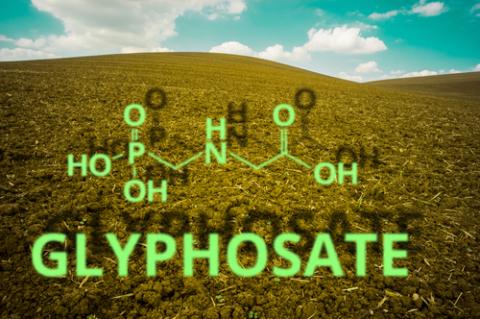
Glyphosate, which is an active ingredient in Monsanto's Roundup, is the most common weed killer in the U.S. It’s used so heavily on crops that residues show up in many foods and beverages. Bayer recently removed glyphosate from consumer Roundup products, but it is still used widely in agriculture.
Many health advocates argue that all exposure to pesticides should be minimized—while the amount in one glass of beer will not cause immediate harm, it contributes to the broader reality that people are routinely exposed to a mixture of chemicals and pesticides through their diets and the environment. There are growing scientific concerns about low-dose effects, vulnerable populations, and real-world exposure to multiple chemicals.
Many cities, states, and countries have banned glyphosate or are in the process of banning or restricting it. However, regulators, including the U.S. Environmental Protection Agency (EPA), still allow legal residue levels that are concerning.
- Why even low levels of exposure can be concerning: Even low-level residues can matter because pesticide exposure is cumulative across diet and environment. Studies have shown that lower dose, repeated exposures are likely more harmful than acute exposures. A recent study done on mice found that “glyphosate exposure at doses approximating the U.S. Acceptable Daily Intake (ADI) significantly impacts gut microbiota composition.” Essentially, it means supposedly “safe” amounts of glyphosate can still alter the balance of good and bad bacteria in the gut. Another study found multi-generational impacts of low doses of glyphosate when tested on mice. Taken together, these findings suggest that even low, repeated exposures—though individually small—may have cumulative and longer-term biological effects that warrant concern.
- Evidence of cancer links and corporate interference: Over the past decade, scientific research has increasingly tied glyphosate exposure to cancer. In addition, the 20+ year-old study that supposedly demonstrated the safety of glyphosate was recently retracted because it came to light that the original publication was largely ghost written by Monsanto scientists. In the retraction, Martin van den Berg, co–editor-in-chief of Regulatory Toxicology and Pharmacology, noted, “the lack of clarity regarding which parts of the article were authored by Monsanto employees creates uncertainty about the integrity of the conclusions drawn.” The leading global authority on cancer classification, led by independent scientists—the International Agency for Research on Cancer—classifies glyphosate as a probable carcinogen.
- EPA allows higher levels of glyphosate on our food than the EU: The U.S. Environmental Protection Agency does not fully account for cumulative, long-term exposure or the potential effects of chemical mixtures over time. The EPA’s position that glyphosate does not pose harmful risks to human health when used according to label instructions and is unlikely to be carcinogenic has been the subject of sustained criticism, including documented concerns about regulatory capture and industry influence (e.g. Merchants of Poison)—such as reliance on industry-funded studies. In contrast, the legal limits for residue levels for glyphosate in food in the European Union are substantially lower—in some cases orders of magnitude lower—than those permitted in the U.S.
Why We Tested Beer
Green America launched its Better Beer campaign in the fall of 2025. On average, Americans drink 26.5 gallons of beer/year, and that high consumption rate and broad reach means many people experience a substantial cumulative exposure to pesticides in beer. Furthermore, the U.S. is the #1 exporter of hops (unless you count the EU as a whole) and the U.S. is the #7 exporter of barley. Given beer’s popularity, this could potentially harm millions of Americans and beer-drinkers worldwide, and pesticide applications to crops used in beer could expose growers, farmworkers, beer producers, local communities, and the environment to toxic pesticides as well.
While the main ingredients in beer—barley, wheat, and hops—are treated with different problematic pesticides, glyphosate is pervasive in our environment and food system. Researchers have even found glyphosate in the rain.
In 2019, the Public Interest Research Group (PIRG) tested 20 beers and wines, 19 of which contained glyphosate. We wanted to re-test some of those beers to see if the companies had improved their supply chains since the PIRG study. Our 2025 study found glyphosate present in all the beers we tested.
The State of Pesticides in Beer
Previous studies have found that there are many pesticides used on the crops that go into beer. For example, Green America’s ally, Beyond Pesticides, found 58 pesticides on barley alone! While the brewing process reduces concentrations of some pesticides, there are several that survive the process at higher levels.
One study, “Comprehensive Review on Monitoring, Behavior, and Impact of Pesticide Residues during Beer-Making” found: “Specifically, nine pesticides were identified as remaining at high levels in beer due to their high water solubility (log KOW below 2): methamidophos (retaining ~80%), 2-(1-naphthyl)acetamide and imazaquin (70–80%), and fluoroxypyr, flumetsulam, thiamethoxam, imibenconazole-desbenzyl, imidacloprid, and tebuthiuron (60–70%)”
Another study, “Fate of Pesticide Residues in Beer and Its By-products,” found that over 80% of glyphosate is transferred from the sweet wort—liquid extracted from mash during the brewing process—into the final beer.
As noted above, a PIRG study previously found[1] glyphosate present in 19 of the 20 tested beers and wines, including in organic beverages; the supply chains of organic beverages may have been contaminated by residues found in water, fertilizers, or compost, since glyphosate is prohibited in organic production.
Findings
On February 5, 2026, the five beers tested were delivered directly to Health Research Institute (HRI), a High Complexity CLIA Certified clinical laboratory and an ISO/IEC 17025: 2017 Accredited analytical laboratory. The beers were delivered in their original containers, and opened and tested by HRI on February 15, 2026, with findings reported on February 18, 2026.
Lab results summary (ng/g or ppb):
| Beer | Glyphosate ppb | AMPA (ppb) | Effective glyphosate level (ppb) |
| Corona | 0.98 | 0.71 | 2.04 |
| Heineken | 2.93 | 0.27 | 3.33 |
| Budweiser | 0.63 | 0.37 | 1.19 |
| Bud Light | 0.31 | 0.33 | 0.81 |
| Michelob Ultra | 0.25 | 0.23 | 0.60 |
Note: The lab reports “Effective glyphosate level” using the FAO residue definition: total glyphosate residue = glyphosate + 1.5 × AMPA.
What these numbers mean: The Health Research Institute reports residues in ng/g (nanograms per gram), which is the same as parts per billion (ppb). In this set of five beers, glyphosate was detected in every sample, and the highest “effective glyphosate level” reported was 3.33 ng/g (Heineken). These are low concentrations—below levels the EPA allows—but they matter because beer is widely consumed and because people may be exposed to glyphosate residues from many foods and drinks—not just one product. And since we are all exposed to multiple pesticides every day, small exposures to any one pesticide contribute to an overall cumulative exposure to pesticides in general.
As noted above, there is also a growing body of research demonstrating that low levels of chronic exposure to glyphosate may be harmful to human health. Recent research demonstrates that counties with the highest usage of glyphosate demonstrate higher incidence rates of non-Hodgkin lymphoma.
The fact that glyphosate is present in all five beers tested indicates that the crops used to brew the beer were treated with the chemical. The people most exposed are those who work and live near where those crops were grown—local communities, farmers, and farmworkers, as well as the environment.
Methodology
- Sampling: 5 beers (Budweiser, Bud Light, Corona, Heineken, Michelob Ultra). Sampling date: 2026-2-05. Sample description: Beer.
- Laboratory: Health Research Institute (HRI Labs), Fairfield, Iowa. ISO/IEC 17025:2017 accredited (Accreditation # 92657).
- Analytical method: LC-MS/MS. Testing date: 2026-02-15. Report date: 2026-02-18. Method listed as HRI Method TM #7 “Glyphosate in Water, Cation H method.”
- Analytes: Glyphosate and AMPA (aminomethylphosphonic acid).
- Limits: Glyphosate LOQ = 0.025 ppb; LOD = 0.007 ppb. AMPA LOQ = 0.025 ppb; LOD = 0.014 ppb. (“Trace” = between LOD and LOQ; “ND” < LOD.)
- Effective glyphosate: Calculated per FAO residue definition: glyphosate + 1.5 × AMPA.
- Method basis: Sample preparation/analysis employed modifications of methods described in Chamkasem et al. (2016) and Jensen et al. (2016). Measurement uncertainties are available from the lab upon request. In this project, the lab analyzed beer using LC‑MS/MS, a highly sensitive testing method commonly used to measure pesticide residues.
Why This Matters
For many people, beer isn’t an occasional product—it’s a regular purchase. When a pesticide residue shows up in a commonly consumed drink, it raises questions that go beyond individual exposure: What agricultural practices are being used upstream? Are major brands verifying their supply chains and testing ingredients in general? And are regulatory thresholds keeping pace with the most cautious interpretations of the science—especially for chemicals used at massive scale?
- Population exposure: Beer adds to overall dietary exposure to pesticides and chemicals; residues across many foods can accumulate.
- Consumer expectations: Many consumers assume beverages are “cleaner” than raw commodities; our findings contradict that assumption. Nearly 86% of global consumers say they view natural flavors positively in beer — a signal that transparent brewing is becoming an “expectation,” not an exception, states the report. Two out of three shoppers say they are also very likely to pay attention to the use and callout of natural flavors on beer labels.
- Occupational and environmental links: Residues in products can reflect broader patterns affecting farmworkers, soil and water, and biodiversity.
- Regulatory disconnect: The tolerances/“legal” levels set by the EPA can be far higher than what advocates consider acceptable based on precaution and evolving science.
- Market signal: Testing can push transparency and safer sourcing across the industry. Beer producers will only address toxic chemicals in their supply chains if they are aware and their consumer audience is also concerned.
What These Beer-Producing Companies Should Do
- Make a time-bound commitment to eliminate harmful pesticides: Set a clear deadline to phase out harmful pesticides from supply chains, starting with high-impact ingredients like barley and hops.
- Work with suppliers to implement better farming systems: Partner with growers to adopt integrated pest management (IPM) and expand organic farming practices.
- Set ingredient standards and prohibit high-residue practices: Require suppliers to avoid practices that drive higher residues (including pre-harvest glyphosate applications, where relevant) and to document pesticide use.
- Ensure complete supply chain transparency: Publicly disclose pesticide policies, supplier standards, and regular progress updates.
- Support farmers and farmworkers in the transition: Provide funding, technical assistance, training, and protections to help move toward regenerative and organic agriculture.
- Fund substantial assistance for pesticide-free methods: Offer meaningful financial support (e.g., cost-sharing, longer-term contracts, transition premiums) for suppliers adopting pesticide-free farming methods.
- Use third-party verified measurement and verification: Implement routine third-party testing and independent verification to measure performance and demonstrate a commitment to health and quality.
- Collaborate with environmental organizations and use science-based approaches: Work with credible partners to prioritize evidence-based standards, monitoring, and continuous improvement.
What You Can Do as a Consumer: Take Action and Protect Yourself
- Choose organic: Certified organic beers tend to have the lowest levels of glyphosate and are already working to end pesticide use and improve agricultural practices in the supply chain.
- Ask questions: Contact brands and local breweries to ask where they source barley/wheat from. Do they restrict pre-harvest glyphosate? Do they test for glyphosate/AMPA?
- Support better agriculture: Buy from producers using verified organic and regenerative practices that restrict pesticide reliance.
- Advocate: Sign onto Green America’s action to halt the use of toxic pesticides in beer production, submit comments to regulators, support policy proposals that lower tolerances and require more robust, independent testing.
- Share information: Help others understand that “legal” does not always mean “safe,” and that repeated low-dose exposure is a key concern. You can learn more about problematic pesticides here.
- Reduce overall exposure: Consider broader dietary shifts (more organic where feasible) and filter drinking water if relevant to your area.
References
- Barnett, J. A., Josephson, J. K., Yuzbashian, E., Haskey, N., Hart, M. M., Soma, K. K., Verdugo, A., McComb, C. J., Bandy, M. L., Ghosh, S., Letef, C., Copp, A., Ishida, R., Gibon, J., Ye, J., Giebelhaus, R. T., Murch, S. J., Jung, M. M., & Gibson, D. L. (2025). Prenatal exposure to dietary levels of glyphosate disrupts metabolic, immune, and behavioral markers across generations in mice. Science of the Total Environment, 1002, Article 180437. https://doi.org/10.1016/j.scitotenv.2025.180437
- Chamkasem, N., Morris, C., & Harmon, T. 2016. “Direct Determination of Glyphosate, Glufosinate, and AMPA in Milk by Liquid Chromatography/Tandem Mass Spectrometry.” Journal of Regulatory Science 3(2): 20–26.
- Cook, K. (2019). Glyphosate Pesticide in Beer and Wine [Review of Glyphosate Pesticide in Beer and Wine]. In US PIRG Education Fund. https://publicinterestnetwork.org/wp-content/uploads/2023/09/WEB_USP_Glyphosate-pesticide-beer-and-wine_REPORT_022619-2.pdf
- Food Ingredients First. (2026, February 16). Beer innovation trends: Kalsec reveals what's driving consumer choices. Retrieved April 15, 2026, from https://www.foodingredientsfirst.com/news/beer-innovation-trends-kalsec-reveals-whats-driving-consumer-choices.html
- Hakme E, Kallehauge Nielsen I, Fermina Madsen J, Storkehave LM, Skjold Elmelund Pedersen M, Schulz BL, Poulsen ME, Hobley TJ, Duedahl-Olesen L. Fate of pesticide residues in beer and its by-products. Food Addit Contam Part A Chem Anal Control Expo Risk Assess. 2024 Jan;41(1):45-59. doi: 10.1080/19440049.2023.2282557. Epub 2024 Jan 17. PMID: 38039344.
- Health Research Institute (HRI Labs). 2026. COA 4 V1.8 Certificate of Analysis: Beer—Glyphosate & AMPA (Samples S14163–S14167). Report date: 2026-02-18. (On file with authors.)
- Jensen, P. K., Wujcik, C. E., McGuire, M. K., & McGuire, M. A. 2016. “Validation of Reliable and Selective Methods for Direct Determination of Glyphosate and Aminomethylphosphonic Acid in Milk and Urine Using LC-MS/MS.” Journal of Environmental Science and Health, Part B 51(4): 254–259.
- Leasca, S. (2026, March 26). High glyphosate use, higher cancer rates? A new report raises questions. Food & Wine. Retrieved April 15, 2026, from https://www.foodandwine.com/high-glyphosate-use-higher-cancer-rates-report-11932542
- Lehman, P. C., Cady, N., Ghimire, S., Shahi, S. K., Shrode, R. L., Lehmler, H.-J., & Mangalam, A. K. (2023). Low-dose glyphosate exposure alters gut microbiota composition and modulates gut homeostasis. Environmental Toxicology and Pharmacology, 100, Article 104149. https://doi.org/10.1016/j.etap.2023.104149
- Malkan, S., with Klein, K., & Lappé, A. (2022, December). Merchants of poison: How Monsanto sold the world on a toxic pesticide: A case study in disinformation, corrupted science, and manufactured doubt about glyphosate [Report]. U.S. Right to Know. https://usrtk.org/wp-content/uploads/2022/12/Merchants_of_Poison_Report_final_120522.pdf
- Pall Corporation. (2024, April). The future of beer: Sustainability and consumer demand. Retrieved April 15, 2026, from https://www.pall.com/en/food-beverage/blog/beer-consumer-survey.html
- Pérez-Lucas G, Navarro G, Navarro S. Comprehensive Review on Monitoring, Behavior, and Impact of Pesticide Residues during Beer-Making. J Agric Food Chem. 2023 Feb 1;71(4):1820-1836. doi: 10.1021/acs.jafc.2c07830. Epub 2023 Jan 18. PMID: 36651341; PMCID: PMC9896562.
[1] Note: The 2019 PIRG study used an ELISA immunoassay, while in 2026 Green America worked with HRI lab, which used the LC-MS/MS assay, which is generally considered a more precise and accurate method. ELISA can sometimes overestimate results, which offers an explanation why the PIRG study found somewhat higher levels of glyphosate than Green America’s study.