How welcoming insects into your garden creates a more resilient, lower-maintenance outdoor space
It might seem counterintuitive, but one of the most powerful things you can do for your garden is to make it attractive to insects. A garden rich in biodiversity — including the crawling, flying, and burrowing creatures most of us cringe at — is better equipped to handle the challenges of a changing climate. And, perhaps more surprisingly, it often means less work for you.
"The truth of the matter is that building natural biodiversity in your outside space will be a key tactic against the more volatile weather of the climate-changed future. A much more naturalistic, low-maintenance space is less work for [the gardener] and is better able to withstand the vagaries of our future weather."
— Sally Morgan & Kim Stoddart, The Climate Change Garden
When a wide variety of species share your garden, it becomes much harder for any single problematic one to take over. And with milder winters giving harmful pests more opportunity to thrive, encouraging beneficial insects — like ladybugs that feast on aphids — is more important than ever. (We've written before about leaving your leaves and dried up plants as a simple first step.)
Plant for the whole season
A steady supply of nectar from spring through late autumn gives insects what they need to thrive — and to overwinter successfully. Aim for a mixture of flowering plants, as native as possible, that bloom at different points in the season. Don't be too tidy with your vegetable patch either: letting some crops bolt and flower attracts pollinators early in the spring, exactly when they need it.
Simple habitat ideas
🪵Log and leaf piles
A humble pile of leaves or logs is a surprisingly rich habitat. Helpful pollinators shelter here, as do garden allies like frogs, toads, and ground beetles.
🌿Be careful when mowing
Long grass offers daytime shelter for amphibians and moths. If you have a lawn, consider leaving patches uncut — a strategic strip of tall grass can make a real difference.
🏨Build a bug hotel
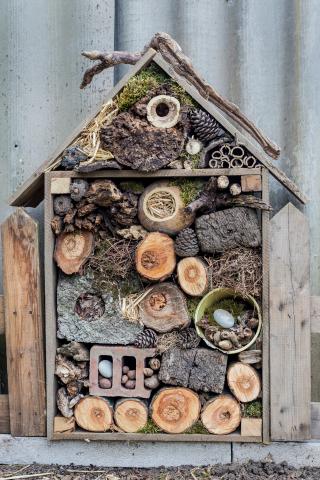
Morgan and Stoddart are enthusiastic advocates of the bug hotel. Stack old pallets to create layers and fill the gaps with recycled materials — bamboo canes, bricks, clay pipes, bits of wood. The nooks and crannies become perfect homes for insects, spiders, and even amphibians. The more variety of materials, the greater the diversity of guests.
A spotlight on solitary bees
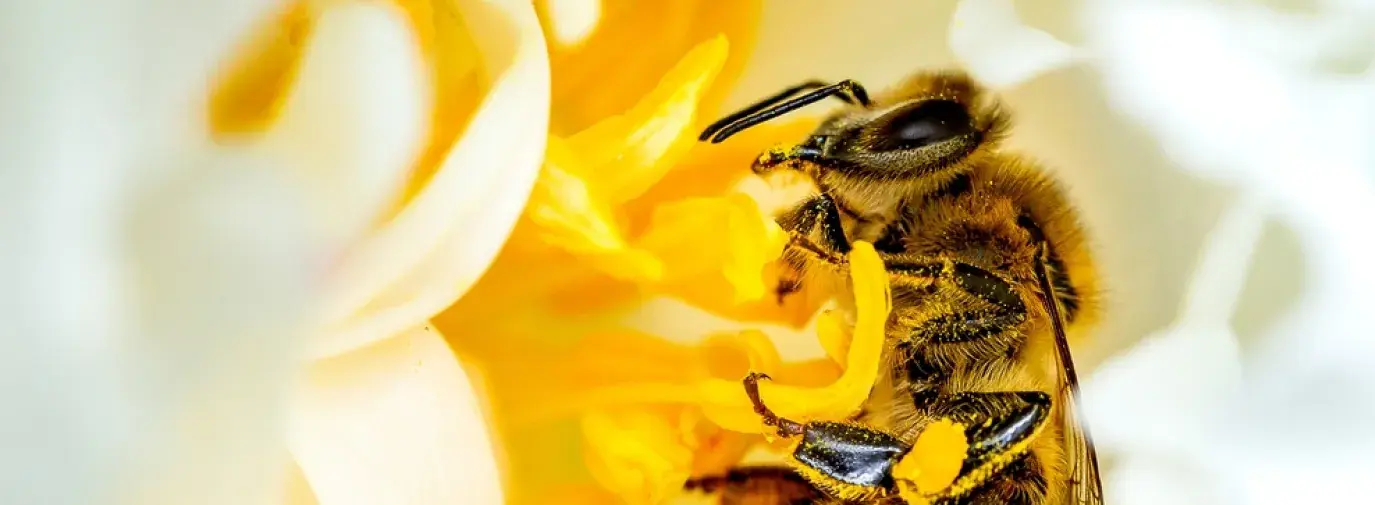
Honeybees get most of the attention, but solitary bees are some of the most effective pollinators in any garden. Unlike their hive-dwelling cousins, they don't sting aggressively, and they're remarkably easy to welcome.
Carpenter bee, an excellent pollinator
These industrious bees drill into wood to lay their eggs. You can encourage them by placing a piece of soft, untreated wood somewhere sheltered from rain — a simple invitation that costs almost nothing. If your own house is made of wood, providing them with an alternative wood supply will help keep them away from your home.
Mason bee, 100-120× more effective than honeybees
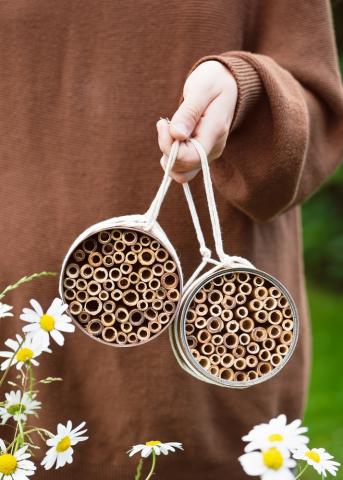
Mason bees are extraordinary pollinators. They are more effective than honeybees, because they carry dry pollen on their bellies rather than in baskets. To attract them, roll up paper towel or toilet paper tubes and bundle them together in a sheltered spot. That's genuinely all it takes to build them a home they'll use.
Remember: A garden that works with nature rather than against it is one that looks after itself. The less we try to control every corner, the more resilient — and alive — it becomes.