All natural resources on planet Earth are in an endless cycle of decomposition and renewal. Water travels from the sea to the sky and returns to the earth as rain. Vegetable scraps in our composts turn into feed for worms and bacteria that transform dirt into usable soil to grow more plants. Even man-made materials are part of a cycle—paper is shredded and turned into pulp to be renewed as recycled paper for printing once more.
When foreign materials are introduced into these cycles, they don’t just disappear, they become part of it. And for “forever chemicals” like PFAS—a group of synthetic, fluorine-based chemicals prized for being waterproof, flame-resistant, and most notably, very long-lasting—their impact can upend ecosystems and the livelihoods of those who depend on them, especially under the current administration’s hostility toward regulations about their use and production.
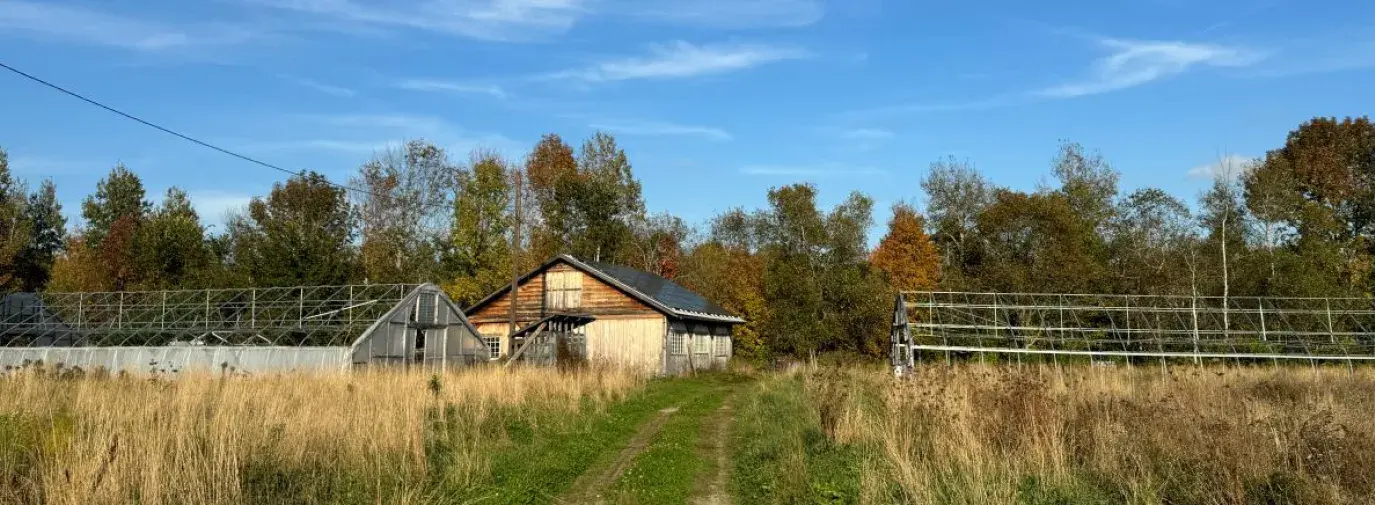
This is the situation Maine farmers Adam Nordell and Johanna Davis found themselves in a few years ago. In 2014, Nordell and Davis bought land to raise a family and start Songbird Farm, an organic farming operation. They were successful—until soil testing in 2021 determined that their land had high concentrations of PFAS. But as an organic farm, they had not used synthetic fertilizer in their fields.
Instead, the contamination came from biosolids, a byproduct of wastewater facilities used as nutrient-rich fertilizer that had been spread on the land decades before Nordell and Davis purchased it. After the Clean Water Act went into effect in 1972, chemicals and toxins that had previously been allowed to flow freely into Maine’s waterways became processed through sewage plants. And the injection of PFAS into wastewater systems—through domestic washing and using of PFAS and industrial manufacturing waste—meant this centuries-old method of using biosolids as fertilizer became one of many pathways PFAS and other toxins entered the food web.
Up the Food Chain
Initially discovered in 1934, PFAS is now used in everyday products, such as nonstick cookware, aircraft manufacturing, rain jackets, medical devices, automotive parts, cleaning supplies, firefighting foam, and much, much more. But it’s only within the last decade that researchers have discovered that PFAS found in groundwater today likely came from manufacturing PFAS-laden products as far back as the Truman presidency.
So far, researchers have determined that PFAS exposure is connected to increased cancer risks, liver damage, high cholesterol, immune system damage, reproductive harm, and developmental issues in children. Still, companies continue to profit from using PFAS in their products while the chemicals seep further into soil and water—and people like Nordell and Davis bear the consequences.
In 2021, Songbird Farm was one of 60 sites identified by the Maine Department of Environmental Protection as “posing the highest risk to human health” because they’d had biosolids applied to the land. While some Maine farms recovered, Songbird Farm had to shut down. But thanks to a state buyback program enacted by Maine’s legislature, Nordell and Davis sold the land to Maine Farmland Trust in 2023 to make it available for PFAS research while the state geared up to launch a buyback program enacted by Maine’s legislature. (The couple did not return to farming.)
The trust is dedicated to supporting farms and the future of farming through conservation easements, technical assistance, farmland access, and policy advocacy. It was their efforts in coalition with other groups that brought the passing of L.D. 1911 in Maine of April 2022, which banned the land application of PFAS contaminated biosolids. Maine was the first state to enact such a ban.
Brett Sykes, Co-Director of the Farmland Protection Program at Maine Farmland Trust says that it was a policy priority for the bill to include “$60 million in the supplemental budget that would support a state income replacement program, funding research on remediation, and funding a state buyback program.”
Unfortunately, not all farmers and ranchers can rely on programs like Maine’s for support.
Jason Grostic, a multigenerational rancher in Michigan, was told in January 2022 that he was not allowed to sell his cows or forage crops anymore because the PFOS (a chemical in the PFAS family) levels were too high in the food he produced.
Turns out, PFOS was in the biosolids he had applied to the hay he used to feed his cows. The biosolids came from treated wastewater from an automotive parts manufacturer in Wixom—and illegally so, because the manufacturer, Tribar Technologies, was negligently dumping the pollutants in municipal wastewater (Grostic sued Tribar in 2022, and the lawsuit is ongoing as of printing.)
Unable to sell any meat products or move the livestock off the land for the next two years, Grostic’s cows essentially became large pets. It was a blow to his operation and his ability to support his family, until he was able to partner with the Michigan State University Center for PFAS Research. Now, he’s paid for having his cows tested for PFAS at the research center as part of ongoing grant-funded studies examining where and how PFAS bioaccumulates, how PFAS travels from crops to livestock, and strategies to mitigate PFAS exposure.
Down Into the Soil
While stories like those of Nordell, Davis, and Grostic illustrate just how dangerous it can be when we only become aware of risks posed by chemicals used in everyday products after the damage has been done, they also tell us what we can do better to protect our food systems and ourselves moving forward.
Sykes agrees that PFAS is a major issue but also notes that some farms can handle PFAS contamination by making different decisions around what crops to grow and how to grow them.
“Different management practices—for instance, corn uptakes PFAS at a much lower rate than hay—can help the final product stay below state action levels,” says Sykes.
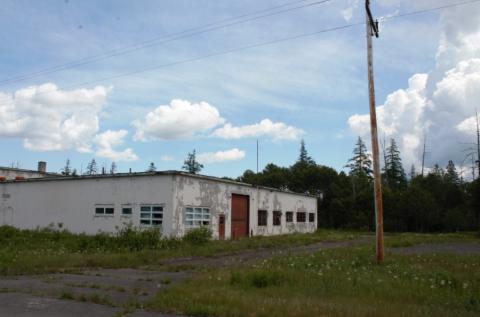
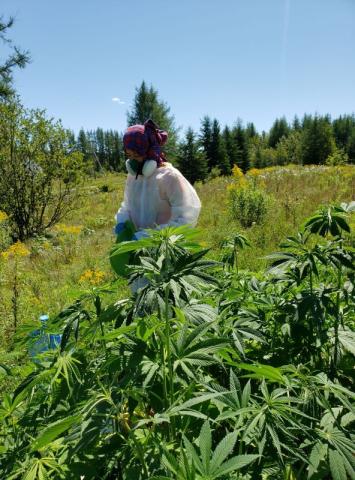
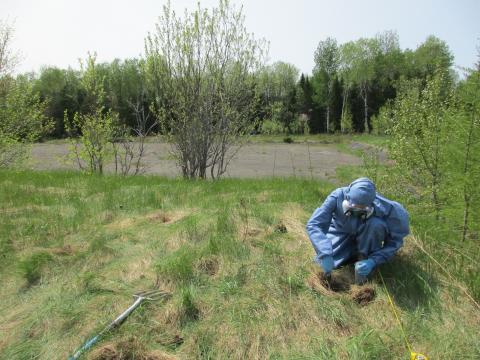
Other affected communities, such as the Mi’kmaq Nation in northern Maine, are exploring phytoremediation, in which living plants are used to remove dangerous toxins from soil, air, and water. The Mi’kmaq Nation owns a portion of land that was once the Loring Air Force Base and is contaminated with PFAS, coal ash, petroleum jet fuel oil, PCBs (polychlorinated biphenyls that were banned in 1979), and many more pollutants. In 2019, Upland Grassroots was founded to test fiber hemp’s phytoremediation properties on Mi’kmaq land, as hemp is very effective at pulling up a gamut of chemicals—from heavy metals to petroleum and PFAS—and it grows very large in a short amount of time.
According to Chelli Stanley of Upland Grassroots, one step in solving the forever chemicals problem involves understanding how to break down long chain PFAS—which are less mobile—into short chain PFAS, so that it can be more readily taken up into the hemp. A 2023 joint testing effort conducted by the Mi’kmaq Nation, Upland Grassroots, the University of Virginia, and the Connecticut Agriculture Experiment Station revealed that while hemp absorbs PFAS, it doesn’t break down the chemical, so the next step is figuring out how to break PFAS into something harmless.
“Otherwise, we just have contaminated hemp that you’re then having to put in a landfill,” says Stanley. “For us, that’s not a solution at all, because we don’t want to move contaminants from one place just to cause problems in another.”
Preliminary research also shows that the Phanerochaete chrysosporium fungus can break down PFAS and PFOS into their short chain forms, but the technology to bring it to scale is not viable—yet.
Through Research Comes Informed Solutions
PFAS affects all of us through the food we eat and the water we drink. Efforts like Upland Grassroots’ highlight the importance of funding research to understand how PFAS moves throughout the environment and what is being affected so that we have a fighting chance at remediation in the future. Which is why federal funding for scientific research and regulations are important tools in building environmentally sustainable and responsible systems to produce our food and safeguard our health.
But they’re not the only tools we can use to create those systems.
Support from local groups like the Maine Farmland Trust and its coalition have demonstrated that emergency and mutual aid can go a long way in helping farmers recover from PFAS pollution. But to prevent total fallout for farmers like Grostic, Nordell, and Davis—and to safeguard our food supply—stricter oversight on PFAS use and disposal is necessary.
Additionally, state and municipal governments have been stepping up to fill the gaps left by the current administration’s anti-environmental science and anti-regulation policies. In New Mexico, the state Environmental Department and Department of Justice are suing the U.S. Air Force to clean up PFAS contamination at the Cannon Air Force Base, which has devastated local agriculture in neighboring towns like Clovis, New Mexico. (3,500 dairy cows were poisoned from drinking contaminated groundwater coming from the base and had to be euthanized.)
Also, much of PFAS regulation has come from action at the state-level. Working with and supporting local advocacy groups to protect our food and the soil and water we use to produce that food shows a track record of success. Maine’s victory of passing L.D. 1911 was made possible by the work of Maine Farmland Trust and several advocacy groups, leading to Maine being the first state to have a ban on PFAS in biosolids. As of June 2024, the Connecticut legislature signed a comprehensive ban on PFAS in various products. Maryland, Massachusetts, and Michigan conduct monitoring and testing of PFAS in land-applied biosolids.
Action on PFAS by State Bills >>>
The lack of consistent regulation across state lines also means that public pressure to ensure corporate responsibility—whether that be for enforcing stronger policies around waste or conducting thorough research before putting a material to use—remains crucial.
In our daily lives, the most likely way we consume PFAS is through our drinking water. You can reach out to your local water utility to ask how they are addressing PFAS in the water supply. If your water comes from a home well, it is important to conduct regular testing yourself as there is no oversight organization to ensure that your water has not been contaminated by irresponsible corporate and military actors. You can also install in-home water filters certified NSF/ANSI to lower PFAS levels.
PFAS is deadly persistent, both as a chemical and a public health problem. It requires solutions that can be scaled properly to both remediate and prevent contamination. With local advocacy groups, researchers, and our collective voices demanding protection from and prevention of PFAS, a future without it is still within reach.