The green living journey is one full of starts and stops, learning new habits, and imperfect growth. But there's one big way you can have a say demanding for a better world that doesn't require constant work—switching your bank. Because megabanks are bad news.
Ten of the largest banks worldwide are U.S.-based and the top two alone, JPMorgan Chase and Bank of America contributed $100 billion to fossil fuels in 2024, with environmentally damaging investments growing year over year. It doesn't matter if you have $50 or $500,000 in your bank—moving your money from these megabanks to a credit union or community development financial institution gives them less funds to invest in a future you don't believe in.
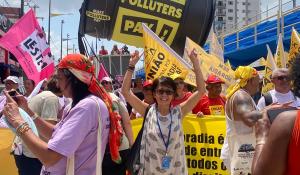
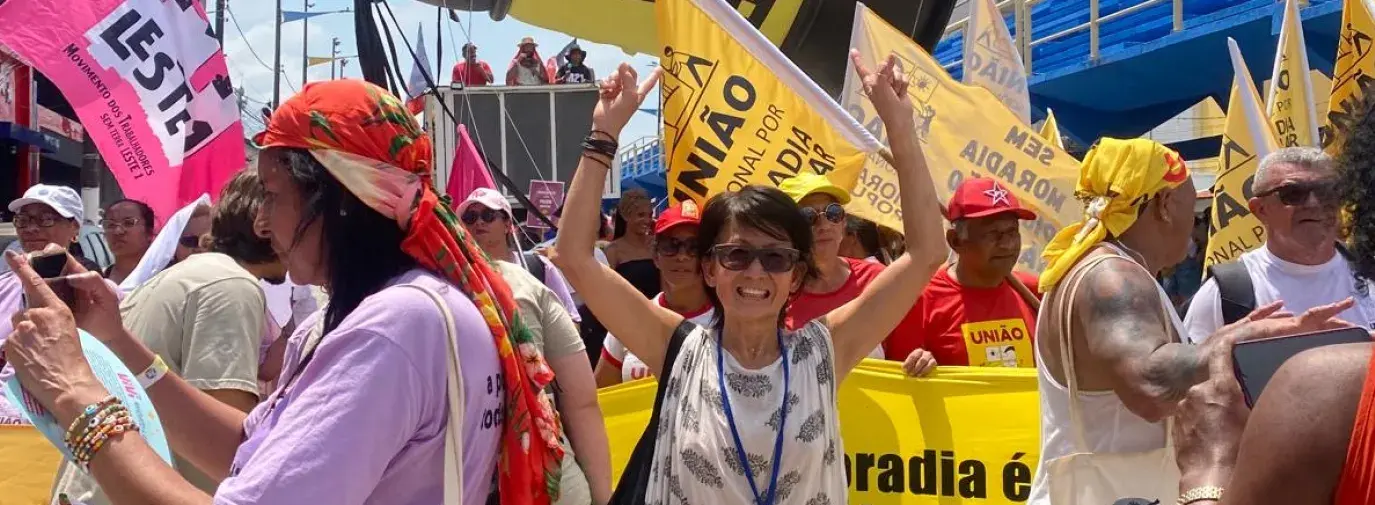
This is what Green American Jussara Lee realized when she changed her bank, but that's not all: changing your insurance is similarly effective, and Green America helped Lee with that, too. Lee is a fashion designer and environmental activist. Our conversation below shows how straight-forward and empowering this change is.
Anya Crittenton: When and how did you first realize you needed to change your bank / property insurance?
Jussara Lee: It was during Trump’s first mandate when I read an article by Lennox Yearwood Jr. from Hip Hop Caucus and Bill McKibben from Stop The Money Pipeline about investments in the fossil fuel industries by the big banks. I had been a Chase customer since I was a college student, proud of knowing my bank account number by heart, and completely oblivious to how financial institutions operated. Until then, I had never questioned what they did with my deposits.
Only when I watched two Green America webinars, on Greening Your Finances and the encore edition, did I understand how my bank deposits and insurance policy purchases were used to fund fossil fuel expansion. I am a nature lover who grieves the loss and the continuous plundering of our planet. That awakening lead me to switch to banks and insurance companies that align with my interests.
Crittenton: What was your process for weighing new bank and credit union / insurance options?
Lee: Once I learned my deposits were helping fund destruction, I felt a certain urgency to move my money to a different bank and ended up making the mistake of switching to TD Bank around 2014. For some reason it was important to see their branches everywhere. It gave them clout and convinced me my money would be safe there. I was also told they didn’t invest in fossil fuels, but some years later I saw the bank’s name at the bottom of a list of banks that did invest in “natural” gas and pipeline expansions. Once I learned this, I started taking the next steps to move banks again.
What scares people the most, is the idea of safety. Once they understand the safety the big banks exude is smoke and mirrors, I believe it makes it easier to switch banks.
Crittenton: How did you make sure your new bank or credit union / insurance option met all of your needs?
Lee: After watching the webinars offered by Green America ( thank you!) and studying the map ( thank you again!), I found a bank that had a branch near where I live in Manhattan. I visited the branch, asked questions and felt they were able to provide everything I needed. I am also financially savvier than I was when I first started to “follow the money” and realize that much of the big banks’ allure is based on marketing tactics that give the public the preconceived notion that our money is safer there. This false image also disguises their wrongdoing.
I also similarly used Green America's Climate Smart Insurance Directory to find a new insurance provider.
Crittenton: Okay, you’ve picked a new institution. What steps did you take to make the switch and what was the level of difficulty?
Lee: Once I chose the mission-driven bank that best suited my needs, I visited the branch with a blank check and my ID. Then I simply opened a personal account and made a deposit while closing the old bank account. The B Corp accreditation also gave me an extra peace of mind.
My determination to switch banks and insurance companies led me to chat with the representatives. I was charged with a sense of purpose that was motivating to achieve my goals so the simpler lobby and less flamboyant building didn’t make a dent on my decision. It actually made sense that the mission driven institutions didn’t have a lavish space since they were not working with the powerful industries that destroy the environment to make money.
Crittenton: Did you let your former bank / insurance company know why you left? If so, what did you say?
Lee: My bank agent asked the reason I was closing the accounts, and I told him that I was switching to a bank that didn’t invest in fossil fuel.
The letter provided on your website was very helpful as a template.
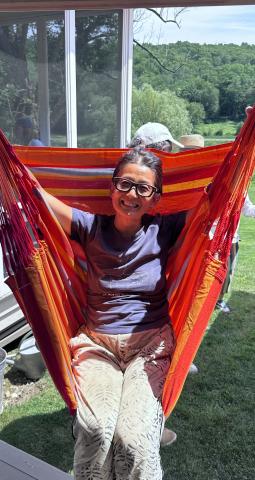
Crittenton: What would you say to people navigating this process or who have hesitations about switching their financial institutions or insurance companies?
Lee: What scares people the most, is the idea of safety. Once they understand the safety the big banks exude is smoke and mirrors, I believe it makes it easier to switch banks. The mission-driven banks also have deposits up to $250K FDIC insured. The remaining hesitation is probably based on people’s dependence on convenience. But once they are better informed, people tend to get motivated to break the shackles with the institutions that are financing the destruction of the planet we live.
I encourage people who want to line up their beliefs with their finances to make the switch. They will sleep better knowing their money is being used for the greater good. It is also empowering to make a dent in a cruel system that only enriches the greedy people of the fossil fuel industries.
Crittenton: What have you learned about financial institutions, insurance companies, and the environment throughout all of this?
Lee: I learned that the big banks exude false confidence, that they fund the most destructive projects and can’t be trusted specially with our money. I learned that we actually have more power than we are aware of and can exercise it and make a positive impact based on how we use our money.
Crittenton: What excites you most about your new bank/credit union/insurance company?
Lee: I am excited about not financing bad behavior! I'm thrilled my money is not being used on fossil fuel expansion and armaments. I wish I could say the same about my taxes…
Crittenton: That's the next crusade.
Anyone can switch their bank or insurance provider and it's easier than you think. Find your new bank or credit union from hundreds of options at Get a Better Bank now and a new insurance provider with the Climate Smart Insurance Directory.