
It might sound harder and more annoying then it is, but switching your bank is straightforward and one of the most effective ways to take a stand for climate justice.
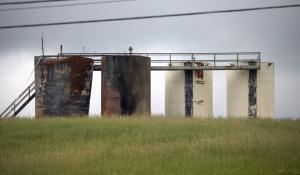
In a single decade, when the Paris Agreement was first unveiled in 2015, the world's 60 largest banks, like Wells Fargo and PNC, committed $6.9 trillion to the fossil fuel industry. Projects in this industry include fracking on national parks to pipelines with over 400 water violations.
The money anyone puts in a bank doesn't just sit there, the bank uses it for financing loans—for whatever projects they want. While US Bank and Goldman Sachs disproportionately fund fossil fuel projects, other banks like community development banks and credit unions prioritize community projects: mortgages, small businesses, public works, and more.
This is exactly what Laurie Kay, a longtime Green American, was looking for when she switched banks.
Below, Kay discusses how she switched and what she's already learned in # years.
Anya Crittenton: When did you realized you wanted to switch your bank?
Laurie Kay: It was around the time a story came out in the Green American Magazine about two banks making loans that were not only free of fossil fuel investments, but important for people like me who want to get loans for clean energy products and people who have been regularly overlooked by "big banks." The banks were Clean Energy Credit Union and Self-Helf Federal Credit Union, and I switched that year in 2023.
It was important to find a bank that would be helpful to friends and neighbors.
Crittenton: How soon did you begin the process to switch banks?
Kay: Immediately. Once I found those banks, I started transferring money and feeling a lot better about my money working for good causes.
Crittenton: Did you look into any other banks as possibilities for switching?
Kay: Those first two were easy, but I've recently needed another so I went to Get a Better Bank and began going through options. I had three different criteria I was looking at. First, it had to be a credit union. Then I looked at the types of certification the institution had. Finally, I compared CD rates. Though I had no preference about an online only or brick and mortar bank, I ended up settling on Rize Credit Union this year, which has offices in my area.
Crittenton: What made you settle on Rize?
Kay: They met my criteria, with especially excellent rates. Also, my area was impacted by a big fire and it was important to find a bank that would be helpful to friends and neighbors in need of loans. I'm also really proud of them for helping foster kids as they get older by opening an account with them to set them on their way to becoming financially secure.
Crittenton: What was the process of switching banks like for you?
Kay: Each of the three credit unions I mentioned were easy to open accounts and transfer money into. I opened the accounts online and had wonderful staff that guided me through. I basically opened an account, then transferred a small amount from my checking account, and then started opening CDs as funds became available. I have one last IRA CD maturing shortly and will celebrate when it's out of my old fossil-fuel supporting bank, woohoo!

Crittenton: Did you tell your former bank why you closed your account?
Kay: I didn't tell my former bank why I was moving my money out. They didn't ask. And, honestly, the people there were very friendly and I totally get that they are just trying to make a living.
Crittenton: Have you talked to your family and friends about switching banks?
Kay: Not a lot yet, but they know I'm happy and if anyone asked about my banking choices, I'll gladly share as much as they want to hear. I've given my friends copies of the Green American Magazine and maybe they'll want to jump on board.
Crittenton: What have you learned through this process and since you first transferred banks two years ago?
Kay: I was clueless about how banks actually make their money, so I'm ever so grateful to Green America for educating me on the subject! It's one thing when you don't know, but when you do, the little effort to make the switch to good banks that help the community and the planet is well worth it!
Crittenton: What excites you most about what's next?
Kay: Knowing my money is helping real people, the planet, and me! I read the annual board meeting statements eagerly, something I never did before, and have attended board meetings on Zoom. It's interesting and encouraging hearing from professionals that are not pulling the wool over people's eyes as to how their money is being used.
Anyone can switch their bank—and it's easier than you think. Find your new bank or credit union from hundreds of options at Get a Better Bank now.