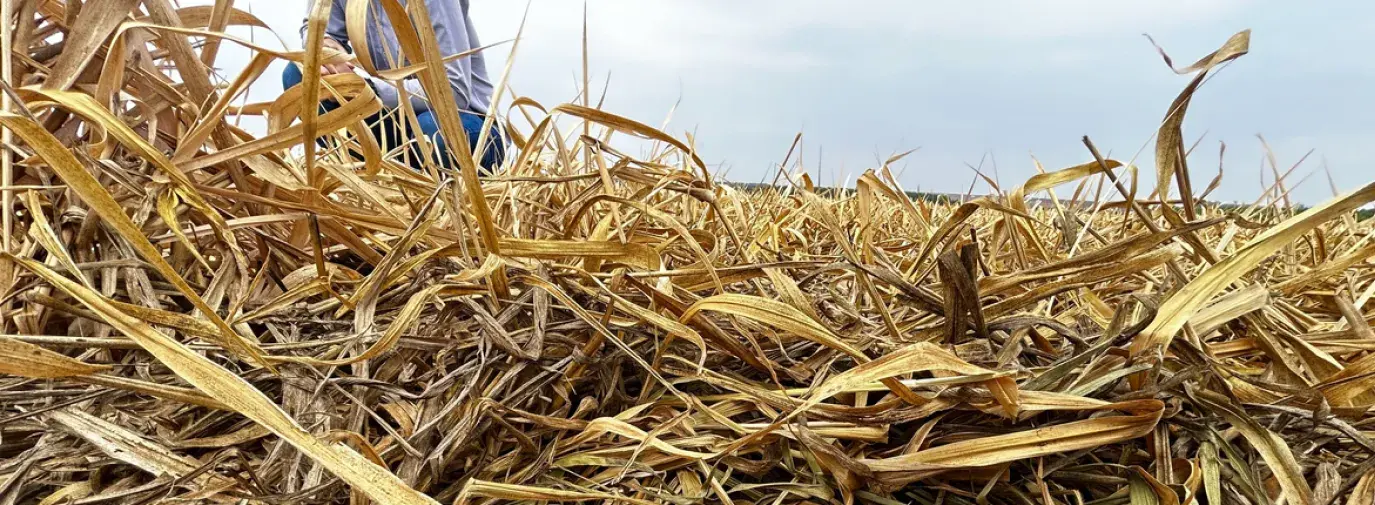
A quick fix for weeds should not come at the expense of farmers, farmworkers, communities, and living ecosystems. The toxic pesticide paraquat comes at too high a cost.
Weeds are a normal part of farming. They compete with crops, complicate harvests, and create real challenges for growers. But a chemical that makes weeds disappear can create unexpected harms that are much harder to undo. Paraquat is one of those chemicals, and is highly toxic.
Paraquat is a fossil fuel-based pesticide. The Environmental Protection Agency (EPA) warns that swallowing even a small amount of paraquat can be fatal, and there is no antidote. Scientists have also linked exposure to Parkinson’s disease, while EPA’s ecological assessment identifies risks to wildlife and plants. This is not just a question of what works against weeds. It is a question of who—and what—pays the price.
Paraquat is now banned in over 70 countries worldwide, because applying it to crops can too easily end up harming people. China banned the use of paraquat in 2016 "to safeguard people's life, safety and health." Nevertheless, trade records show that virtually all U.S. imports of paraquat originate from Chinese-owned manufacturing facilities.
What is paraquat, and where is it used?
Paraquat is an herbicide, or weed killer, often sold under the brand name Gramoxone. It is used to control weeds and grasses and to dry out some crops, such as cotton, before harvest. Crops grown with paraquat use include corn, soybeans, wheat, potatoes, sweet potatoes, almonds, peanuts, grapes, and strawberries.
That does not mean every farm growing these crops uses paraquat, or that eating them is equivalent to exposure to concentrated herbicide. In its 2019 assessment, EPA found no dietary risks of concern when paraquat was used according to label instructions. The agency did, however, identify potential risks for workers and people near treated fields. Data from the National Institutes of Health Agricultural Health Study show that farmworkers who mixed or applied paraquat were 2.5 times more likely to develop Parkinson’s disease than those who had never used paraquat. Others have reported burning skin, blisters, and permanent lung damage.
Paraquat is not a home-garden product. In the US, only trained, certified applicators may use it. There are no approved homeowner uses or residential applications.[T(1]
Why paraquat is dangerous for people
Immediate harm—and no antidote
Paraquat can cause severe poisoning, damaging tissues and triggering toxic reactions, particularly in the lungs, liver, and kidneys, according to the Centers for Disease Control and Prevention.[M(2] Poisoning can lead to lung scarring and organ failure. Skin exposure can also cause poisoning, especially with prolonged contact or damaged skin, and inhalation can injure the lungs.
The people handling this chemical face the most direct risks. EPA identifies potential exposure concerns for workers who mix, load, and apply paraquat, as well as workers entering treated fields. The agency also identifies potential risks to bystanders from spray drift at field edges. Protecting the people who grow our food needs to be central to how we grow it—not an afterthought.
The Parkinson’s connection
Immediate poisoning is not the only concern. A systematic review and meta-analysis published in 2019 found a statistically significant association between paraquat exposure and Parkinson’s disease, and California found that paraquat is linked to birth defects and thyroid disorders.[T(3] [T(4] A later scientific review describes how paraquat is used in laboratory models to reproduce features of the disease, including damage associated with oxidative stress—the harmful effects of reactive molecules on cells.
It is important to be precise: An association does not prove that paraquat caused any individual person’s Parkinson’s disease. Studies differ in their findings and in how they estimate exposure. In its 2021 decision, EPA said the evidence did not establish a clear link between labeled paraquat uses and Parkinson’s disease, citing conflicting studies. That disagreement should be made visible, not used to erase the studies that raise serious concerns. Furthermore, there are class action lawsuits moving forward against paraquat manufacturers for its link to Parkinsons. [T(5]
Why paraquat is bad for the Earth
Protecting farms and the surrounding land means looking beyond whether a spray controls [EK6] weeds. Due to drift and agricultural runoff into our waterways, paraquat also threatens wildlife, aquatic organisms, and other plants and animals that are not its intended targets[J(7] .
EPA’s 2019 preliminary ecological risk assessment concluded that registered paraquat uses pose potential direct risks to birds, reptiles, terrestrial-phase amphibians, and terrestrial and aquatic plants. It also identified potential effects, to a lesser degree, on mammals, pollinators, fish, and bottom-dwelling invertebrates.
Plants outside the target area are not disposable. Neither are the animals that share agricultural landscapes. EPA’s findings make clear that paraquat’s potential impacts reach beyond unwanted plants/weeds. The assessment also noted that its pollinator evaluation was incomplete pending additional toxicity data. A gap in data is not evidence of safety.
There is a broader problem, too: Replacing one hazardous herbicide with another keeps farming dependent on chemical quick fixes. Beyond Pesticides describes rising paraquat use in response to weeds resistant to glyphosate as part of a “pesticide treadmill.” There is growing evidence that some weeds that are already becoming resistant to paraquat. We should be moving toward farming systems that prevent problems and protect living ecosystems, rather than simply reaching for the next toxic spray.
We can grow food differently
Farmers need effective weed control, and changing practices takes resources. The solution is not to blame growers or leave them to manage the transition alone. It is to invest in approaches that reduce dependence on hazardous chemicals.
Safer alternatives—like mechanical weeding, cover cropping, flame and steam, living mulches, grazing and integrated weed management—exist. There is no single practice that fits every farm. The goal should be a locally appropriate system, supported with technical assistance and funding—not a promise that one replacement product will solve everything.
Why should preventable hazards remain part of our food system?
What you can do
You do not have to be a farmer to help change how food is grown. Start with these steps:
- Ask for stronger protections. Tell your elected representatives you support ending paraquat use and funding farmers’ transition to safer weed-management systems.
- Support growers making the transition. When accessible and affordable, choose certified organic products and talk with local farmers about how they manage weeds. Support should include fair prices, not just demands for change.
- Push companies to take responsibility. Ask food companies for time-bound pesticide-reduction commitments, transparent reporting, and meaningful financial support for suppliers. Green America’s pesticide work connects these demands with a transition toward organic and regenerative farming practices.
- Share what you learn. Explain the difference between paraquat’s established acute toxicity and the scientific evidence linking exposure to Parkinson’s. We can make a strong case for precaution without overstating what the research proves.
The highly toxic pesticide, paraquat, does not belong on our food, in our environment, or exposed to workers. We should not have to choose between growing food and protecting the people and ecosystems that make farming possible. Let’s put our support behind a food system that does both.
Resources:
Beyond Pesticides. “Beyond Pesticides Urges Ban of Weed Killer Paraquat Using Same Criteria Used in the Landmark Dacthal Ban - Beyond Pesticides Daily News Blog.” Beyond Pesticides Daily News Blog, Oct. 2024, https://beyondpesticides.org/dailynewsblog/2024/10/beyond-pesticides-urges-ban-of-weed-killer-paraquat-using-same-criteria-used-in-the-landmark-dacthal-ban/. Accessed 2 Nov. 2026.
Beyond Pesticides. “Paraquat Linked to Parkinson’s Disease in U.S. County With Among the Highest Rates, Supporting Call for a Ban.” Beyond Pesticides Daily News Blog, 10 June 2026, https://beyondpesticides.org/dailynewsblog/2026/06/paraquat-linked-to-parkinsons-disease-in-u-s-county-with-among-the-highest-rates-supporting-call-for-a-ban/. Accessed 2 Nov. 2026.
Center. “California Regulators Link Herbicide Paraquat to Health Risks in People, Wildlife.” Center for Biological Diversity, 30 Dec. 2024, https://biologicaldiversity.org/w/news/press-releases/california-regulators-link-herbicide-paraquat-to-health-risks-in-people-wildlife-2024-12-30/. Accessed 3 Nov. 2026.
“Designed to Kill: Who Profits from Paraquat.” Coming Clean, 20 Feb. 2025, https://pesticidestorymap.com/. Accessed 2 Nov. 2026. https://storymaps.arcgis.com/stories/9b20fa5024174a2e898ba66a8ac350d2. Accessed 2 Nov. 2026.
“Map of Pesticides Banned by Country.” Pesticide Info, 31 Aug. 2020, https://www.pesticideinfo.org/pesticide-maps/global-ban/. Accessed 2 Nov. 2026.
“Which Crops Is Paraquat Sprayed on? | ELG Law.” Www.Elglaw.Com, https://www.elglaw.com/faq/which-crops-is-paraquat-sprayed-on/. Accessed 2 Nov. 2026.