
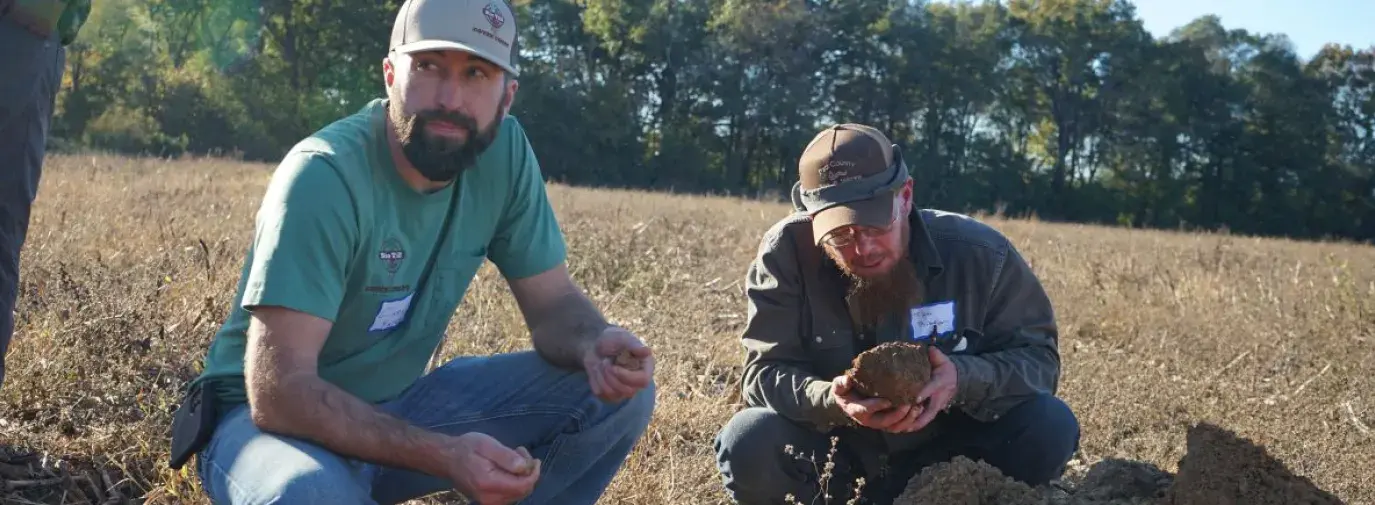
Like the America song, “A Horse with No Name,” soil can appear like a desert to the human eye. But just like the desert, there is life underground—hundreds of thousands of microorganisms that make the soil vibrant and alive. These creatures return carbon, nitrogen, oxygen, and much more to the soil, which plants can then absorb to grow to their fullest potential.
Organic farming practices have helped the agriculture industry decouple from synthetic pesticides, giving these microorganisms a chance to live in the soil. Regenerative practices compliment existing organic practices by healing the soil. And Green America’s Soil & Climate Initiative is helping the agriculture industry see biodiversity as a boon to people, the planet, and their bottom lines.
Meet the Soil & Climate Initiative
Community is embedded in the Soil & Climate Initiative (SCI) system. Like the diverse array of creatures in the soil, SCI draws from the diverse perspectives of farmers, scientists, food companies, and nonprofit allies to nurture a holistic look at today’s agriculture industry. All these minds work together on the shared goal of creating agriculture systems that support soil health and regenerative food.
“That network … saw a need for a program that could provide accessible and practical solutions to the problems in our food system, but also do it with a level of rigor and integrity that would prevent greenwashing,” says Adam Kotin, SCI’s Managing Director.
The practical solution that emerged? A certification label dubbed Soil & Climate Health Initiative Verified. The label marks products that are made with regeneratively grown ingredients. This gives farmers and brands marketable proof that they are doing the necessary work to heal soil.
“PACHA is dedicated to nourishing the health of people and our planet through regeneratively grown foods. We are so grateful for the farmers making changes to provide our buckwheat, and for SCI’s work that is making our mission a reality!”
— Maddie Hamann, Director of Marketing and Co-Founder of PACHA
Why Certification?
Green America is very familiar with third-party verification labels. In the 1980’s, when Green America was known as Co-op America, its Green Business Network membership seal demonstrated to consumers which businesses were sustainable and socially responsible. Since then, many other similar certifications have emerged from the garden Green America sowed (B-Corp, 1% for the Planet, and Global Green Tag, to name a few).
“The focus of our work is actually helping to achieve regenerative outcomes for communities, for the climate, and on the ground. We’ve chosen to translate that through a label because [certifications communicate] trust, transparency, and integrity,” says Kotin.
What makes SCI different from other certifications is that it is much more than checking boxes on a survey. Brands that seek the Soil & Climate Health Initiative Verified label must commit to a three-year transition with SCI’s guidance. In that time, farmers are given resources to transition their land to regenerative practices such as cover cropping, integrating livestock, and reducing synthetic fertilizers and pesticides. A three-year commitment reduces risk for the farmers—it takes time for acreage to adjust to regenerative practices, and three years gives them enough of an on-ramp to see the fruits of their labor.
And with the label appearing in Whole Foods, it’s an opportunity to spread the good word on regenerative agriculture across the nation.
Why Whole Foods?
Many certifications flock to Whole Foods—its 500+ locations serve one out of ten U.S. shoppers across the country, according to analytics firm Numerator—but only a handful of certifications are approved. The retailer has its own standards and approval process before any brand can claim regenerative and sell at Whole Foods. It’s an additional benchmark to prevent greenwashing. And it’s an incredible opportunity for brands seeking a market of organic-minded buyers.
“There’s a lot of credibility when it comes to Whole Foods,” says Megan Tymesko, Senior Manager of Partner Engagement. “[SCI gets] to be part of that growing community and work together with other certifications to amplify the message of regenerative agriculture.”
“We are delighted to recognize the Soil & Climate Initiative as a rigorous third-party verification that supports Whole Foods Market’s commitment to regenerative agriculture. SCI’s holistic program provides consumers with the confidence that regenerative claims are backed by tangible improvements on the land.”
— Ann Marie Hourigan, Quality Standards Principal Advisor for Agricultural Programs at Whole Foods Market
John Strohfus, Founder and CEO of Field Theory Foods and an SCI-verified farmer managing 1,000 acres in Minnesota, has helped build regenerative supply chains for brands such as PACHA, Seven Sundays, and Simple Mills. He says that “the Whole Foods Market approval opens premium market access for our farm, as well as the growers and brand customers Field Theory works with.”
SCI is currently working with these allied certifications to create a “regenerative month” to educate customers in grocery stores nationwide.
“This moment for regenerative agriculture is a big deal,” says Tymesko. “That’s how Non-GMO Project Verified was [popularized] back in the day.”
After the label’s initial public launch, brands have been most keen to undergo verification. Tymesko says this is particularly exciting, because it means SCI can move upstream in the supply chain to transition even more acres to regenerative. As of 2026, SCI has verified 30,000 acres to its regenerative standard; over 460,000 acres are currently part of SCI’s transition program.
It’s an exciting future for food, farmers, and soil, and Green America’s Soil & Climate Initiative gets to play a major role it. Regenerative agriculture is growing into a kitchen table conversation through the Soil & Climate Health Initiative Verified label.
The network that SCI has cultivated is moving acres and acres of farmland from extractive and harmful monocultures to practices that support biodiversity, soil and plant health. Which in turn, feeds us the best food around.