
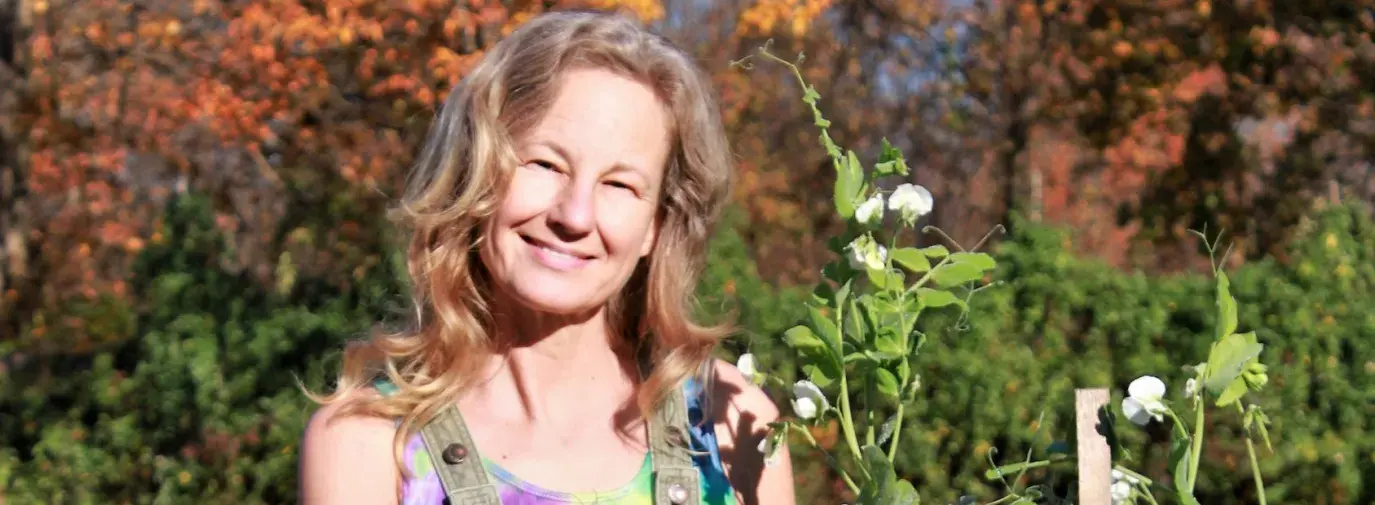
From Half-Barrel Gardens to a Thriving Micro-Farm: Lisa's Oak Spring Farm
Oak Spring Farm, an organic farm in Freeland, MD is proof that you don't need hundreds of acres to make a real impact. On less than two acres of cultivated land, Lisa has built something remarkable — a community-rooted farm that has sustained her family for over a decade and grown from the seeds of a lifelong love of the outdoors.
"I was just always an outdoor farm kid," Lisa recalls, thinking back to her childhood in central New York, where she helped her father tend the family garden on their few acres of land. That early connection to the earth never left her — not even when she traded rural life for Los Angeles at 19. There, she kept half-barrel gardens on whatever patch of space she could find, nurturing that instinct to grow something of her own.
A Move to Maryland
It was a move to Maryland, though, that changed everything. After years of being spoiled by the vibrant, fresh food culture of Southern California farmers' markets, Lisa found herself underwhelmed by what the local grocery store had to offer. So she did what came naturally: she started growing her own.
One thing led to another. What began as a backyard garden gradually expanded into a small CSA, first serving friends, family, and the local mom's club she was part of. "That was almost 20 years ago," she says. From there, the momentum only grew — helping launch the Hereford Farmers Market in 2012, completing the Beginner Farmer Training program through Future Harvest CASA—a year-long training program that teaches farmers to use sustainable and regenerative practices—and steadily building Oak Spring Farm into the operation it is today.
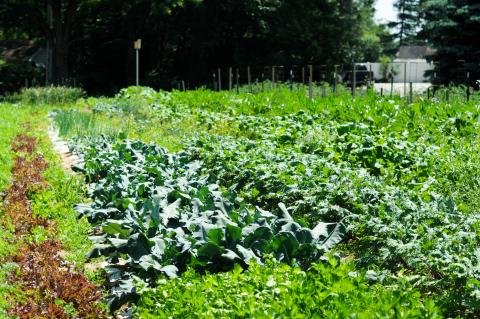
Oak Spring Farm is a certified-organic farm. Lisa explained that the farm’s soil is tested every year to retain its organic certification. In twenty years, Lisa was able to completely transform the soil from nearly all clay to high organic matter with a high nutrient profile. This high organic matter helps Oak Spring Farm be resilient in the face of more frequent flooding and warmer temperatures.
The farm's story is one of quiet tenacity. For more than ten years, Oak Spring Farm supported Lisa and her three children — a feat made all the more striking given that the entire operation takes place on less than two cultivated acres. "It's amazing what you can do with a little bit of space," as Lisa put it.
Planting Seeds of Knowledge: CSALove
For Lisa, farming was never just about what she could grow — it was about what she could teach. Before Oak Spring Farm, she spent six years as a high school biology teacher, and that love of teaching never left her. Over the years, she mentored beginner farmers through Future Harvest/CASA's training program; ran an informal intern program on the farm; took on volunteers; and taught gardening classes. "I feel like people were always looking for a farmer that would take them under their wing," she says.
That spirit of mentorship has now evolved into something bigger: CSALove, her full-time coaching and consulting business. After becoming a certified business and marketing coach, Lisa began formally working with aspiring and early-stage farmers, as well as backyard gardeners who dream of turning their passion into something more. "CSALove comes from believing that you can run a small, profitable farm and be happy," she says. "You can be a happy CSA farmer."
Her approach fills a specific gap in the farming education landscape. While there's no shortage of resources on how to grow food, Lisa focuses on what comes next — the business side of small farming that often trips people up. She helps clients figure out the right crop mix, craft marketing strategies to attract and retain CSA members, and prepare for their first farmers' market. Currently working with about half a dozen clients, she offers in-person consultations for those in the Mid-Atlantic region and Zoom coaching sessions for those further afield.
But her work isn't purely practical. Lisa is equally focused on mindset. "Entrepreneurs wear all the hats," she notes, "and mindset is a big part of it." Whether she's working with a first-time CSA farmer or a home gardener tempted to just buy their vegetables at the grocery store, Lisa's goal is the same: to help people recognize how fulfilling it is to grow their own food — and to empower them to keep going.
Looking ahead, she's building out resources on her website, csalove.com, and has plans for webinars and an online course. "I just want to share my knowledge and empower people," she says simply.
For Lisa, the philosophy behind her farming has always been inseparable from her identity as an environmentalist. From those half-barrel gardens in LA to the fields of Freeland and now to CSALove, her work has been guided by a belief that how we grow our food matters — for the land, for the community, and for the future.
Oak Spring Farm — and now CSALove — is a reminder that big change can take root in small places.