
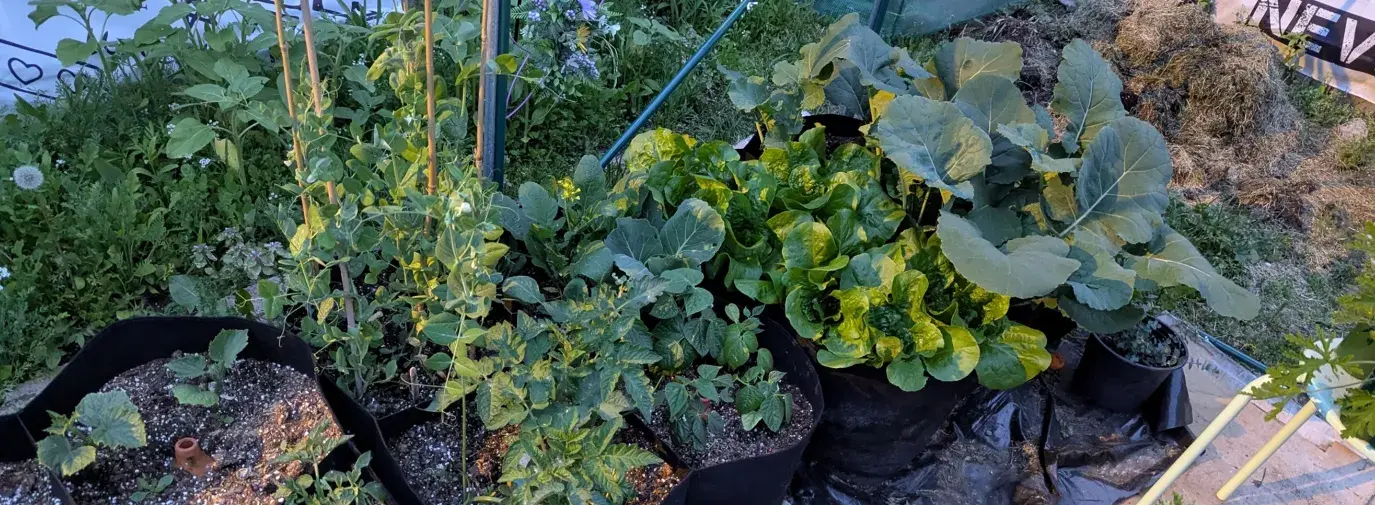
Chicago Grows Food: Growing Possibility, One Container at a Time
Born out of the uncertainty of the pandemic, Chicago Grows Food began with a simple question: how can we support people at home during a difficult time? What started as a collaboration among nonprofits and community members, became a practical way to bring food growing directly to families—first through free garden kits, and then through a broader vision of making gardening feel possible for more people across Chicago.
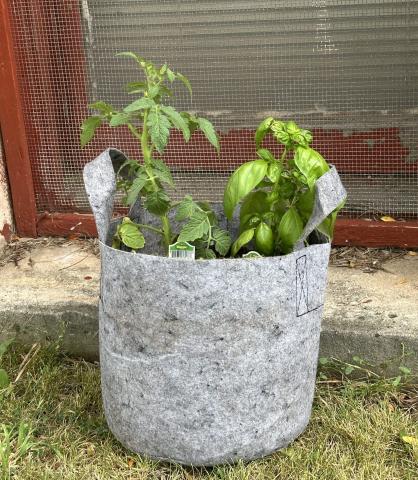
In the early days, the organization distributed garden kits that included fabric pots, soil, and seeds that teachers could order and send home to students. The design was inspired in part by small-space growing methods used around the world, where individuals grow in anything and everything, including used coffee bags. After just one season, participants reported spending more time outside, eating more fresh food, moving their bodies more, and connecting more with family members. That feedback made it clear that even one plant could make a meaningful difference—and that people were eager for more. When students returned to the classroom 6 months later, teachers and families wanted to continue receiving the gardening kits.
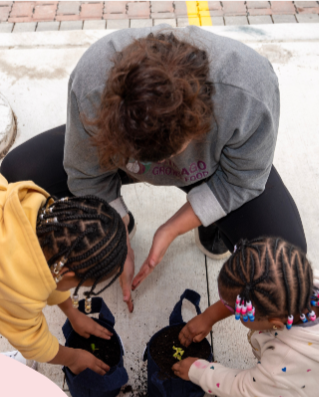
One of the participating teachers illustrated how, "The students demonstrated environmental awareness by learning sustainability, composting, and climate impact. [They] demonstrated ownership by caring for living things consistently. [And they] demonstrated social-emotional learning by practicing teamwork and collaboration as they worked together to plant seeds in the grow kits."
Today, Chicago Grows Food is serving 70 out of 77 Chicago neighborhoods; counts 250 community partners; and distributed 22,554 kits between 2020-2024.
The organization offers multiple entry points for new gardeners. Its beginner kit includes a fabric pot, soil or compost, seeds or a seedling, and educational support. The smallest version is especially well-suited for schools and community centers: it is compact, beginner-friendly, and accessible for children, older adults, and people with varying physical abilities. Additionally, the group strongly encourages container gardening, because many urban growing spaces face soil contamination. The fabric pots help by providing strong drainage and healthier growing conditions for plants like lettuce and herbs.
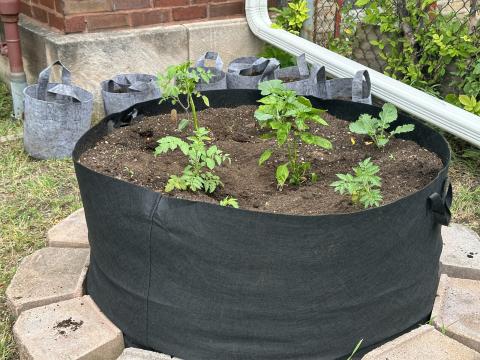
For participants ready to go further, Chicago Grows Food also creates customized home garden installations. Some start with six five-gallon pots; others expand to a dozen containers or larger setups, depending on whether they rent or own, how much sun their space gets, and whether they are gardening on a balcony or at ground level. The organization works with each household to recommend a setup that fits both the space and the gardener’s experience level, making it easier for people to imagine food growing where they live.
Just as important as the materials is the growing guidance. One of the core practices Chicago Grows Food encourages is succession planting, with three seasonal seedling deliveries for spring, summer, and fall crops. The approach helps gardeners see that Chicago’s growing season can be longer and more productive than many people assume. By learning what thrives in each season and adapting accordingly, participants can harvest more food over the course of the year and build confidence as growers.
They also encourage participants to avoid synthetic pesticides and store-bought fertilizers, hosting various workshops on pests and other animals in the garden. They emphasize creating an ecosystem. For example, what can be planted to attract birds that will then eat the pesky insects? Participating gardeners are also taught about the importance of compost and building healthy soils.
The program offers so much more beyond the practicality of growing food. One participant shared, “It is happiness. It is pride. It is therapy. The satisfaction of achieving the harvest—that’s what this program gives us.”
At its heart, Chicago Grows Food is about expanding access—to fresh food, to practical skills, and to the experience of growing something yourself. What began as an emergency response has become an invitation: In whatever space people have, and at whatever level they begin, they deserve the chance to grow nutritious food for themselves and feel the possibility that comes with it.